


1. Grains are naturally grown from plants like grasses, which are a staple food for humans across the world. Grains are seeds and have basically 3 main parts: a hard outer covering called Bran, which is fibrous in nature. The second covering is called the Germ, which is the most nutritious part and contains vitamins, healthy fats and minerals. The innermost layer is the endosperm, which is a rich supply of starches, the energy source. Whole grain contains all the 3 layers. Commonly found grains are rice, wheat, oats, barley, corn and millet.

2. Grains, after they are harvested, are taken to milling and grinding plants and are cleaned and go through different processes like grinding, separation and bleaching. Depending upon the treatment they undergo, there are different grain types:
• Whole grains, where the three layers are restored, such as brown rice, whole grain wheat, oats. Whole grains are considered the most nutritious grains.
• Refined grains are fine in texture when the germ and bran layers are removed, such as white rice and refined flour.
• Enriched grains are those where nutrients like vitamins and minerals removed after refining are added back, such as enriched white rice.
• Fortified grains are grains that, after milling and grinding, are added with extra nutrients which may not be naturally found, such as fortified with iron and folic acid.
3. Whole grains are wholesome for health, providing starch (energy), vitamins, minerals and fibre. The known health benefits:
• Feeling of fullness helps in portion control and thereby in weight management.
• Lowers insulin levels.
• Lowers bad cholesterol and helps to raise HDL.
• Lowers blood pressure.
• Fibre helps to regulate bowel habits, reduces the risk of heart diseases, diabetes and stroke.

4. Much needed substitutes of regular white rice, white flour pasta, white bread with wholesome grains for daily requirement are:
• Whole grain bread, whole grain pastas, whole grain cereals.
• Quinoa
• Brown rice, black rice, red rice.
• Oatmeal
• Millet, barley, bulgur
• Pop corn

5. Glycemic index (GI): Some grains, after eating, give you instant energy and slowly make you feel worn out. While eating some types of grains doesn’t make you hungry for a long time and gives you enough energy throughout the day. This is because the glycemic index of different types of grains varies. The rate at which the body breaks down a particular type of grain and raises the blood sugar level determines the glycemic index of that grain. It depends on how much processed and refined the grains have been through. The GI ranks from 0-100, with the lowest being the healthiest starch.
• Low GI (less than 55): They are the least processed grains and gluten-free, like millet and quinoa,
• Mid GI (55- 70): Processed to some extent but still contains the bran of the grains like brown rice, whole wheat bread.
• High GI (greater than 70): Refined flour, white rice, white bread.

6. Low GI grains: The rate of 1-100 scale at which the starch is metabolised into sugar and raises the blood sugar level is considered the GI (glycemic index) of that particular grain. The highest GI is white bread, white rice, pastas and potatoes. Low GI grain is when the starch is slowly released for digestion, which is within 0-55. Examples are :
• Brown rice, steel cut oats, quinoa.
• Barley, millets, bulgu
• Sweet potatoes and non-starchy veggies like broccoli, cauliflower, spinach, carrots, beans.
• Fruits like apples, oranges, cherries and berries.

7. Health benefits of Low GI grains :
• No sugar spikes: The low GI grains release the sugar slowly and prevent sugar spikes.
• Fibre is high: These grains have high fibre and make you full for a long time and don’t make you hungry.
• Nutrient-dense: Millet, Barley, Oats, Quinoa, and buckwheat are great sources of fibre, nutritional powerhouses of vitamins, minerals and antioxidants.

8. Common myths:
• Low GI grains are tasteless and bland: In fact, depending on the palate, different methods of preparation can make these grains taste flavourful and a rich energy source.
• Portion matters: Eating large portions isn’t healthy. Always maintaining portion control and appropriate meal timings actually count.
• Too much fat: Adding too much oil and fats like cheese, butter, and oils makes a meal tasty. This isn’t true; in fact, adding natural spices, herbs, a variety of veggies, and less oil can make a meal flavourful and tasty.
• Fruits have high GI: Not true, as many fruits and berries have moderate GI and can be consumed on a daily basis.
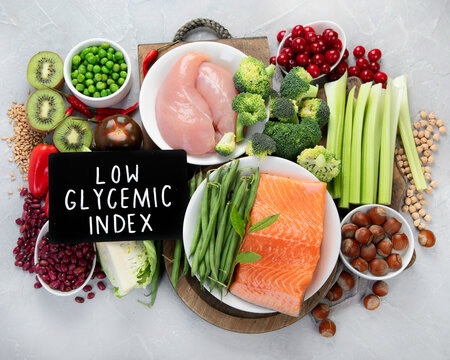
9. Apart from grains, other food items with low GI are:
• Dairy like plain, unsweetened Greek yoghurt.
• Meat, fish, poultry, eggs
• Lentils and beans
• Leafy greens, cruciferous vegetables like broccoli, cabbage.
• Avocado has healthy fats.
• Citrus fruits, berries, apples
• Nuts, seeds

10. Takeaway: Whole grains are naturally occurring grains which are least processed, so they contain the required nutrients and fibre, which are necessary for one’s health and wellbeing. Once the grains are milled, crushed, or refined, they lose the valuable nutrients which are beneficial. So, refined grains and food items may taste better but ultimately do more harm than good. Therefore, research has shown that choosing whole grains, the least processed ones, always provides the complete package of nutrients and fibre, which are essential for good health and prevent chronic lifestyle diseases which have become so ingrained in today’s time.
Thanks for reading.
Peace and love 🙏