1.Creatine is a natural chemical found in the body, specially in the skeletal muscle. It is found in the form of creatine phosphate, around 95% in muscles cells and 5% in brain and testes. It’s main fuction is to provide energy for the muscles. Creatine helps to increase the reservoir of adenosine triphosphate (ATP) which store energy in cells. Basically, creatine helps to increase muscle mass, muscle strength and helps healing due to any injury of muscles.
2.The main way that creatine works in muscles is by giving them energy, which alters how cells operate and promotes muscle growth. It promotes muscular growth throughout the long and short terms. Research has indicated that creatine can enhance muscular growth, mass, and strength in people of all ages, including athletes.
3.A number of studies have demonstrated that creatine can boost muscle growth and strength as much as three times faster than exercise training. It can also increase muscle endurance. Thus, athletes have used it extensively. Sports athletes who use creatinine to improve their performance include runners, bikers, soccer players, and swimmers.
4.In addition to muscles, creatine supports the brain’s optimal function by replenishing ATP and phosphocreatine storage. Studies reveal that taking supplements of creatinine can help individuals with injuries to the brain, and neurodegenerative conditions like Alzheimer’s disease, epilepsy, and amyotrophic lateral sclerosis.
5.There is evidence from clinical trials that creatine may help lower blood sugar, treat fatty liver disease, strengthen the heart, and lessen the risk of stroke. Confirmation requires a great deal of additional study. Among women who have passed experienced menopause, creatine can improve bone and muscular density.
6.Supplementation is often used by older persons, young adults, and athletes, as well as in certain situations under medical supervision. Creatine monohydrate supplements are the most often utilized. According to research, this is the most extensively used, reasonably priced supplement. Generally, under supervision, 20 grams per day for 5-7 days is advised based on each individual’s unique body type and needs. Lowering the dosage gradually in order to keep the ideal levels in the body intact.
7.Regarding safety, there is no proof that creatine damages the kidneys or liver or has any adverse effects on healthy people. People who use creatine supplements during really intensive workouts do report experiencing cramps and dehydration.
8.Animal-based sources of protein such as meat, poultry, and seafood are the primary natural sources of creatine. For vegetarians, milk and cheese contain very little creatine. Regarding vegans, there isn’t any specific food source for creatine.
9.Since the words “creatine” and “creatinine” sound identical, individuals sometimes confuse them. To be clear, creatine is the energy source for building and strengthening muscle, whereas creatinine is a waste product that the kidneys filter after the muscle produces it. To determine the kidneys’ ideal performance, blood creatinine levels are measured; these levels tend to rise in chronic renal failure.
10.To ensure that we consume enough creatine in our diet, it’s critical to incorporate food sources of the protein so that muscle build in the body is adequate. Creatine helps in recovery of post- trauma muscle fibres, exercise- induced injury recovery, muscle soreness and inflammation.
Today’s world is full of negativity and uncertainty where change is inevitable. Not all changes are comfortable. But faster, we accept, the sooner is the liberation and reconciliation process. Never lose the sight of hope and faith in the Supreme because it is this light which will lead us through the journey, no matter how hard it may be.
On this auspicious occasion, may the Supreme enlighten our hearts and fill our minds with happiness and positivity by strengthening the human bonds within family, friends and community.
Happy Diwali to all my dear readers with lots of love and luck. God Bless 🙌
In a normal individual, perception occurs through the five physical senses. Extrasensory perception (ESP) or sixth sense is a perception of the mind, perceived an event, circumstances, or prediction, through telepathy, clairvoyance or precognition. This is independent of the normal five sensory senses so it is regarded a paranormal ability. Through the centuries, from primeval times, many people, including sages, yogis and spiritual practitioners are believed to have mystical powers who have strong sixth sense.
But then, is this real science? As far as science is concerned, there is no evidence of such extra senses in human. Many research projects in the past have been carried out to study if some people actually possess such extra sensory power. Some psychologists and philosophise are still undergoing studies to know more about this concept of extrasensory phenomena.
3. Several researches and authors like Rosalind Heywood, H. Osmond and many more have written several books on this subject with their own understanding of the perception. It is very hard to find scientific validity and physical explanation of such phenomena of extra sensory perception such as telepathy or clairvoyance or even precognition.
4. Sometimes intuition and extra sensory perceptions (ESP) or sixth sense are referred the same meaning. It is the psychological ability to sense something independently of sight, smell, hearing, touch and taste. Maybe, it is the ability of the individual based on deep understanding of the situation, the knowledge stored in the subconscious mind and the past experience.
5. Contrastive of today’s world, the primitive men were more instinctive and tuned with nature. Their level of awareness were as par with other living creatures and animals. It is this intuitive power which is slowly fading away from us. Because, our minds are caught up in this materialistic complexity.
Keeping science aside, most of us, do at sometime or someplace, get an inner sense of knowing of some event or information even before the actual occurrence. This is perhaps the kind of intuitive feeling that we still possess.
6. Different types of ESP experiences have been studied like telepathy, precognition, clairvoyance, psychokinesis, out of the body experiences and hauntings. Parapsychologists have been studying these psychic abilities through different experimental research.
7. The exact definition of each of the term may differ according to the understanding and apprehensions of individual.
Telepathy is sending information through one’s mind to another person.
Clairvoyance is an awareness without the physical presence of what’s going on somewhere.
Precognition is like predicting or foreseeing of a future information.
Out of body experience is traveling of the mind to a greater distance without actual movement of the physical self.
8. Though the presence of sixth sense in human has no scientific validation but other living beings like animals, fishes, birds, creatures like sharks, whales, or tiny ants do have sixth sense. Some animals like elephants or even dogs do get a sense in advance before a natural calamity.
9.Perhaps, unlike our ancestors , today human civilisation is more about technological advancement, modernization, stressful lifestyle, that we have moved very far from nature or simple natural occurrences. We hardly have time to observe in nature or the environment around us. Therefore, extrasensory perceptions or inner intuitive power are all vanishing from us slowly.
10. Sixth sense is a real ability or not, is yet to be proved in the scientific world. But as an individual, we all have been gifted with some natural abilities. It’s upto us to be more aware as individual and restore the very essence of being a human being. It’s time for us to let go once a while from this routine hustle bustle and be more calm, meditative to understand our inner self.
1.The lateral hypothalamus and prefrontal cortex produce a hormone called Orexin, also known as hypocretin. It is produced in two forms like Orexin A and Orexin B. It has various functions related to Central Nervous System. It helps in regulating important functions like sleep-wake cycle, arousal state, energy homeostasis, feeding behaviour, emotions, mood and cognition.
2.Sleep: Orexin is usually released in the daytime and keeps us awake. It stimulates those neurons which in turn help in the release of neurotransmitters like serotonin, dopamine and nor- epinephrine. In case of individuals with orexin deficiency, are usually diagnosed with narcolepsy, insomnia, sleep imbalance, daytime sleepiness and cataplexy.
3.Stress regulator: Orexin is highly responsive to environmental stimuli and our mood. When in stress situations ,the orexin neurons stimulate the body’s response to increase heart rate, blood pressure and disturb the resting state.
4.Obesity: It is a result of the influence of orexin-producing neurons on energy metabolism.Orexin deficiency in the body can lead to slowing down energy metabolism, physical inactivity, and excessive weight gain, even if the calorie intake is low.
5.Mood: Orexin has an influence on mood through its impact on the hippocampus. Abnormal orexin activity has been related to mental health conditions like depression, PTSD, anxiety and addiction. Deficits in orexin influence can result in hippocampus problems such as learning disability and memory deficits, as it also promotes the development of neurons in the hippocampus.
6.Narcolepsy: Orexin helps us stay awake during the day. So, people with orexin deficiency suffer from narcolepsy. They have daytime sleepiness and sleep paralysis. Mostly, these type of individuals can also suffer from cataplexy. The person is unable to move for a short time even if he is awake or about to fall asleep. It is usually occurs in a conscious state of mind and triggered by strong emotions like being angry, or laughing.
7.Alzheimer’s Disease: Several studies show that orexin has direct connection with sleep, cognition and as a stress regular. So it does play a significant impact on Alzheimer’s disease pathology. An increase level of orexin has been found in cerebrospinal fluid of people with Alzheimer’s. So, they usually have circadian cycle disorders, daytime sleepiness and cognition problems. However, researches are still going on for further prospectives of using orexin antagonist receptors as a potential treatment alternative.
8.Heart: Lack of sleep and insomnia have a direct impact on cardiovascular health and hypertension. Studies show that increased levels of orexin stimulation can elevate blood pressure and heart rate. Both orexin A and B receptors have a direct role in the regulation of sympathetic nervous system. Therefore orexin antagonist receptors might be a therapeutic option for hypertension.
9.Orexin levels: High levels of orexin may lead to sleep disorders, stress prone and eating disorders. But lack of orexin or loss of orexin in brain injury may lead to narcolepsy or other sleep disorders. The normal level of orexin found in cerebrospinal fluid in a healthy individual is around 250 – 500 pg/ml.
10.Food: Optimal level of orexin can be provided in a healthy individual by regular intake of fermented food like pickles or sauerkraut. Having excessive sugar or carbohydrate rich food can inhibit orexing production.
Ginger is an ingredient common to our cuisine for centuries. It is widely used in most of the culinary dishes. Besides adding the zing in our taste buds, it has immense medicinal and health benefits.
Ginger contains gingerol that imparts its unique taste and flavour to cooking. This compound gingerol is a natural antioxidant and anti-inflammatory. Hence, ginger helps to cure common cold, flu, seasonal rhinitis and fungal infections.
Previous studies have shown that ginger has played an important role in controlling blood sugar levels in people with type 2 diabetes. Researches also show that regular intake of ginger helps to reduce the levels of LDL cholesterol and triglycerides, thereby reducing the risk factors of cardiovascular diseases. It is also effective in weight loss.
Ginger is highly effective against swelling, itchiness and minor skin allergies such as hives. Having ginger juice along with jaggary powder can be consumed to reduce skin allergies and itching.
Ginger is an effective pain reliever. Consuming ginger slices or ginger juice can help to reduce joint pain, body ache and earache.
Consuming ginger or raw ginger juice has helped in improving many digestive issues. Eating raw ginger slices before a meal will help to stimulate digestion and improves the appetite. A person having indigestion, belching, bloating will be relieved after having ginger juice along with lemon juice or ginger slices. Problems like nausea, vomiting, diarrhea can all be relieved after consuming ginger. So, it can be used during Morning sickness. People taking chemotherapy may use ginger to alleviate post-drug side effects.
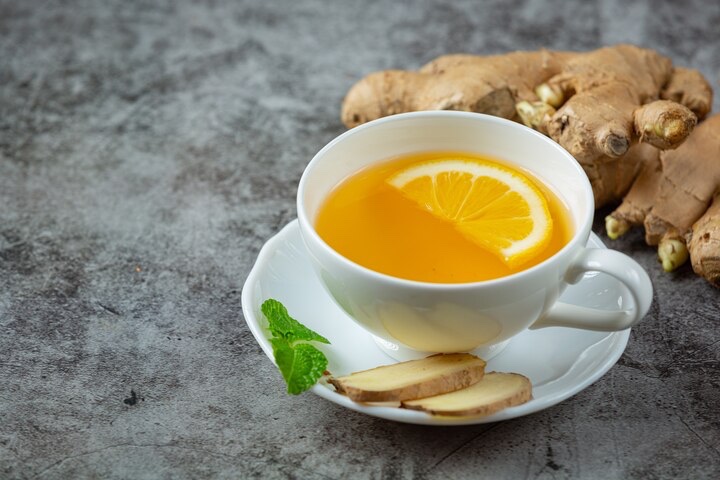
Ginger is very effective when used freshly, but also beneficial when consumed as a powder for juices or tea. A common spice used in various cuisines.
Ginger is effective against degenerative diseases like multiple sclerosis, Parkinson’s disease, Alzheimer’s disease due to the presence of compounds like 6-gingerol and 6- shogoal.
Ginger is grown especially in tropical areas. Ginger roots are mainly used for cooking and healing purpose. It can be stored in dried or powdered form for a long time. Ginger supplements are available in capsules or liquid extracts. Ginger oil as essential oil is used in beauty products.
Ginger is rich in dietary fibre and in vitamins like B3, B6 and C. It is rich in folate, magnesium, phosphorus and zinc.
Ginger is usually safe, but it must be used in moderation as part of a healthy diet. Too much consumption or concentrated higher doses may lead to heartburn, stomach upset or loose motion.
Hello everyone! Greetings 🖖 This is my first post after a year long break…
True enough, life is indeed unpredictable. It gives you the most dreadful unexpectedness when you least expect it. That’s what happened to me. Today, when I look back and remember, I still get the goosebumps, the tremble and chill. The misery I went through, will most likely follow me all throughout my life, or for a very long time. The past year was the most challenging and overwhelming for me. In those days, I used to put down my thoughts and feelings to my husband throughout his absence during the difficult times.
When we were about to go to bed, on the evening of 8th January 2021, around10.30 PM, after dinner and are routine talk, you complained of a headache. I advised you to take a pain reliever, and go to bed. But to my astonishment, you behaved a little different when you were lying on the bed. You asked me to get the tablet and water for you. When I was back from the kitchen with the glass of water, you couldn’t get up from the bed to have the medicine.The water gushed out from your mouth because you were unable to swallow. Then, all of a sudden, I could understand that something was wrong with you. You began to slur your words. Being a doctor myself, I came to know that you were having a transient ischaemic attack or maybe a stroke. I, immediately called emergency service and requested for an ambulance. I fumbled while speaking as I was very nervous. In the interim, I also called our next-door neighbour Jan, a 72 year old retired dutchman who is quite friendly and is fluent in English. When the ambulance arrived, the paramedics examined you and noticed that your left side of the body was immobile. However you were still trying to communicate and was conscious. They hurried you to the emergency room of the nearest hospital in Eindhoven where we reside. Both, Jan and I accompanied you to the hospital. In the ER, I was not allowed inside. We were both waiting outside. At around 11 o’clock, I asked Jan to go back home as he was quite tired and had recently recovered from cancer.
A little later, I was told that they gave you a Morphin injection for your headache and a CT scan was done. Although I was completely shaken, somehow I was calm, still holding on to my gut that things would be all okay. Once the CT scan report came, they confirmed to me that it’s a right brain hemorrhage, which is quite huge and with some strange findings. I was told that they had planned to shift you to a hospital in Tilburg, which is a nearby city, about 45-minute drive from Eindhoven. On top of my shock and cold shivers, I was confused and petrified by this whole chain of events. I was informed that they don’t have the expertise, so that is why you have to be referred to the Tilburg Hospital, which has a better neurological service. Moreover, I was told that your CT scan findings were quite confusing and the bleeding was huge.
Within minutes, the ambulance came and rushed us to Tilburg. Inside the ambulance, you were lying down, still in your senses, tired and awake, complaining of the headache and discomfort. I was sitting next to you and asking you to rest and reassuring you. By almost 12.30 am, we reached Elizabeth Hospital, Tilburg. They rushed you again to the ER. I was allowed to accompany you there. The neurosurgeon on duty examined you and did a scan again. She, too, told me about the right brain hemorrhage and some strange discovery that resulted in the massive bleeding. All the while, I was very worried and heartbroken from inside. I could not hold my tears, cried and felt so helpless. At that moment, I felt that I would lose you and that I had lost everything in life.
Still awake and tired, you were transferred to a medium-care unit to be kept under observation. You asked the nurse if I could stay with you in the room. I know I won’t be allowed in, so I assure you that I will keep waiting outside. During those painful hours, I called your father, back home in India, to inform him about the whole episode. He was totally shocked. I could not hold my tears and was crying on the phone. Then, I called and informed our son too. He was confused and could not believe his ears. He was terrified as well, as he knew that his dad was the fittest one in the family and had never had any kind of illness. I have no idea what went through him at that stage, as he was all alone at home. Due to COVID, he was in our apartment and not in his college hostel. I also informed my sister and my brother-in-law. By that time, it was almost 1.30 AM. I was told to go back home as you were kept under supervision and it was quite stable.
So, while boarding a taxi from Tilburg to Eindhoven, I realised that the coming days were going to be the toughest to handle.That whole night, after reaching home, I cried and cried, just loitering around the house in anguish and pain. I had the impression that I was in for a long, dark journey with no idea what lay ahead.
The following day ,on the 9th of January was even scarier. I was informed earlier that you would be taken to the Operation Theatre for brain angiography. I was in the hospital, waiting to hear about the outcome of your brain angiography. Till 6 o’clock in the evening, there was no news concerning you. I kept enquiring the OT nurse about you. She informed me that you hadn’t been taken out of the OT. My mind was beginning to crawl with fears and anxieties. I was distraught and in panic. The OT nurse then called me at around 6:30 pm and took me to a room. I could sense the worst as I was sitting alone in the room. At that moment, I was terrified and utterly shaken.
Two doctors entered the room and sat in front of the table where I was sitting. One doctor started talking to me about the procedure they had to perform on you. They said that you had an atrioventricular fistula in your right brain which had to be repaired, otherwise the bleeding was profuse. The procedure went well, but you have not yet regained your consciousness from the anesthesia. They were very uncertain about the outcome and that you might have slipped into a coma. They told me that they were expecting the worst scenario, maybe brain death. My whole world was shattered at that moment. I was almost lost and could not stop myself from crying. I was in a complete state of shock. The doctors and staff did try to console me. Jan, our elderly friend, explained to me to take things practically and control my emotions. I called our son, your brother, and my family and informed them regarding your state. I was told to return home and was assured to be informed of any further developments regarding your state. When I got home, it felt like the longest night, the darkest and scariest night of my life. That whole night, I grasped onto my mobile, waiting for any news about you.
On January 10th, I came to the hospital and was informed that you had been shifted to the ICU. The doctors told me that they had to drain a huge bulk of fluid from your brain and that your vitals were stable. I was informed that your MRI scan showed a sub-arachnoid hemorrhage, which got worse due to a congenital defect of the AV fistula. Such cases are rare.The condition was worse as you had hydrocephalus, so the fluid had to be drained to reduce the pressure.
The first time I saw you in the ICU with a ventilator and machines, drains, and drips all over, it was really hard for me. I went near you and called your name. You did respond with a little movement of your right hand. I was relieved and was happy as I could see little hope of light after these 2-3 hard days. That day was quite positive for me as the doctors were happy with you for being responsive to the treatment and procedure. But then, they still reminded me about the uncertainty of your condition. There was still a huge amount of fluid left in your brain which had to be drained continuously. You were still in a comatose state, with a low score on the neurological scale. I was told to call our immediate family members from India as your chances of survival were low. I called our son, back in India, and asked him to pack his bag to come to the Netherlands. I also informed your family and mine regarding your present state. I called your employer and informed them because they had been trying to reach you for the last 2-3 days due to your professional obligations. I also informed my project coordinator and let go of the project that I was doing.
After going through all the procedures of an emergency visa, our son arrived on January 14th. This was a life-changing event for him as well, as he had been very close to you, his father. He did go through an emotional roller coaster during those turbulent days. And, seeing you in that state, he had acted very mature and calm. He has been my biggest support through this storm. Our neighbors and friends have also been very supportive through the difficult time. Your employer has been a great support system for me and our son. We will always remain grateful to everyone who has been there for us through those difficult hours.
You stayed in the ICU for almost 2 months. Everyday, I visited twice, once in the morning and then in the evening. During my time spent with you in the ICU, your eyes remained close most of the time, but you do respond to my touch with right-hand finger movements. Some days were good and positive, while some days were scary. Our son, too, visited you in the ICU. But, he had to leave as his exams were approaching. Your neurological state improved slowly and your vitals were stable. You had gotten out of the ventilator. They decided to shift you to the rehabilitation centre after you regained consciousness.
I was initially quite optimistic and excited about your development and recuperation during your time in the rehab facility. However, because the prognosis was poor, we, also had to deal with a number of setbacks in that situation. Your severe cognitive impairment and short – term memory problems were not responding well to therapy. Your left side is completely paralysed, and there is no recovery. You still struggle with a few cognitive issues. However, you continue to make good progress in terms of your awareness, speech, memory, and physical development every day. Your speech is clear and concise at present.
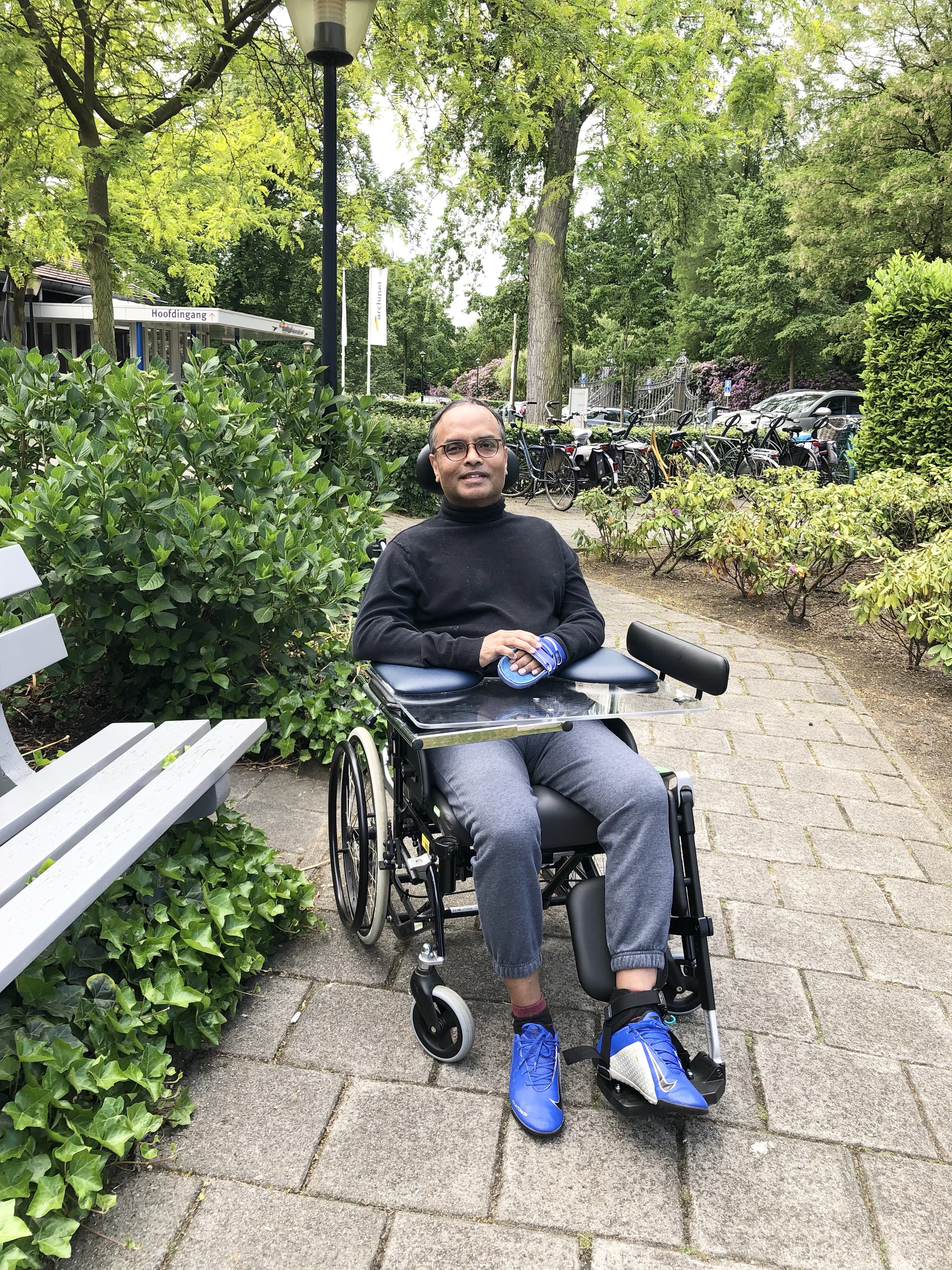
After more than a year, you are still residing in the rehabilitation facility, and your therapies are still ongoing. I see you almost every day of the week. While we converse and laugh on certain days, other days are sad when therapy doesn’t work out. As I’ve come to terms with your situation, I’ve begun to feel content. My greatest satisfaction comes from watching you smile while I am with you.The hardest lesson life has taught us today is to be cheerful in the moment we share together right now because we don’t know what the future has in store for us. When I see you now, hope is the only thing in which I will still believe and live.



























 3H:health,happiness,healing