Today’s world is full of negativity and uncertainty where change is inevitable. Not all changes are comfortable. But faster, we accept, the sooner is the liberation and reconciliation process. Never lose the sight of hope and faith in the Supreme because it is this light which will lead us through the journey, no matter how hard it may be.
On this auspicious occasion, may the Supreme enlighten our hearts and fill our minds with happiness and positivity by strengthening the human bonds within family, friends and community.
Happy Diwali to all my dear readers with lots of love and luck. God Bless 🙌
In a normal individual, perception occurs through the five physical senses. Extrasensory perception (ESP) or sixth sense is a perception of the mind, perceived an event, circumstances, or prediction, through telepathy, clairvoyance or precognition. This is independent of the normal five sensory senses so it is regarded a paranormal ability. Through the centuries, from primeval times, many people, including sages, yogis and spiritual practitioners are believed to have mystical powers who have strong sixth sense.
But then, is this real science? As far as science is concerned, there is no evidence of such extra senses in human. Many research projects in the past have been carried out to study if some people actually possess such extra sensory power. Some psychologists and philosophise are still undergoing studies to know more about this concept of extrasensory phenomena.
3. Several researches and authors like Rosalind Heywood, H. Osmond and many more have written several books on this subject with their own understanding of the perception. It is very hard to find scientific validity and physical explanation of such phenomena of extra sensory perception such as telepathy or clairvoyance or even precognition.
4. Sometimes intuition and extra sensory perceptions (ESP) or sixth sense are referred the same meaning. It is the psychological ability to sense something independently of sight, smell, hearing, touch and taste. Maybe, it is the ability of the individual based on deep understanding of the situation, the knowledge stored in the subconscious mind and the past experience.
5. Contrastive of today’s world, the primitive men were more instinctive and tuned with nature. Their level of awareness were as par with other living creatures and animals. It is this intuitive power which is slowly fading away from us. Because, our minds are caught up in this materialistic complexity.
Keeping science aside, most of us, do at sometime or someplace, get an inner sense of knowing of some event or information even before the actual occurrence. This is perhaps the kind of intuitive feeling that we still possess.
6. Different types of ESP experiences have been studied like telepathy, precognition, clairvoyance, psychokinesis, out of the body experiences and hauntings. Parapsychologists have been studying these psychic abilities through different experimental research.
7. The exact definition of each of the term may differ according to the understanding and apprehensions of individual.
Telepathy is sending information through one’s mind to another person.
Clairvoyance is an awareness without the physical presence of what’s going on somewhere.
Precognition is like predicting or foreseeing of a future information.
Out of body experience is traveling of the mind to a greater distance without actual movement of the physical self.
8. Though the presence of sixth sense in human has no scientific validation but other living beings like animals, fishes, birds, creatures like sharks, whales, or tiny ants do have sixth sense. Some animals like elephants or even dogs do get a sense in advance before a natural calamity.
9.Perhaps, unlike our ancestors , today human civilisation is more about technological advancement, modernization, stressful lifestyle, that we have moved very far from nature or simple natural occurrences. We hardly have time to observe in nature or the environment around us. Therefore, extrasensory perceptions or inner intuitive power are all vanishing from us slowly.
10. Sixth sense is a real ability or not, is yet to be proved in the scientific world. But as an individual, we all have been gifted with some natural abilities. It’s upto us to be more aware as individual and restore the very essence of being a human being. It’s time for us to let go once a while from this routine hustle bustle and be more calm, meditative to understand our inner self.
1.The lateral hypothalamus and prefrontal cortex produce a hormone called Orexin, also known as hypocretin. It is produced in two forms like Orexin A and Orexin B. It has various functions related to Central Nervous System. It helps in regulating important functions like sleep-wake cycle, arousal state, energy homeostasis, feeding behaviour, emotions, mood and cognition.
2.Sleep: Orexin is usually released in the daytime and keeps us awake. It stimulates those neurons which in turn help in the release of neurotransmitters like serotonin, dopamine and nor- epinephrine. In case of individuals with orexin deficiency, are usually diagnosed with narcolepsy, insomnia, sleep imbalance, daytime sleepiness and cataplexy.
3.Stress regulator: Orexin is highly responsive to environmental stimuli and our mood. When in stress situations ,the orexin neurons stimulate the body’s response to increase heart rate, blood pressure and disturb the resting state.
4.Obesity: It is a result of the influence of orexin-producing neurons on energy metabolism.Orexin deficiency in the body can lead to slowing down energy metabolism, physical inactivity, and excessive weight gain, even if the calorie intake is low.
5.Mood: Orexin has an influence on mood through its impact on the hippocampus. Abnormal orexin activity has been related to mental health conditions like depression, PTSD, anxiety and addiction. Deficits in orexin influence can result in hippocampus problems such as learning disability and memory deficits, as it also promotes the development of neurons in the hippocampus.
6.Narcolepsy: Orexin helps us stay awake during the day. So, people with orexin deficiency suffer from narcolepsy. They have daytime sleepiness and sleep paralysis. Mostly, these type of individuals can also suffer from cataplexy. The person is unable to move for a short time even if he is awake or about to fall asleep. It is usually occurs in a conscious state of mind and triggered by strong emotions like being angry, or laughing.
7.Alzheimer’s Disease: Several studies show that orexin has direct connection with sleep, cognition and as a stress regular. So it does play a significant impact on Alzheimer’s disease pathology. An increase level of orexin has been found in cerebrospinal fluid of people with Alzheimer’s. So, they usually have circadian cycle disorders, daytime sleepiness and cognition problems. However, researches are still going on for further prospectives of using orexin antagonist receptors as a potential treatment alternative.
8.Heart: Lack of sleep and insomnia have a direct impact on cardiovascular health and hypertension. Studies show that increased levels of orexin stimulation can elevate blood pressure and heart rate. Both orexin A and B receptors have a direct role in the regulation of sympathetic nervous system. Therefore orexin antagonist receptors might be a therapeutic option for hypertension.
9.Orexin levels: High levels of orexin may lead to sleep disorders, stress prone and eating disorders. But lack of orexin or loss of orexin in brain injury may lead to narcolepsy or other sleep disorders. The normal level of orexin found in cerebrospinal fluid in a healthy individual is around 250 – 500 pg/ml.
10.Food: Optimal level of orexin can be provided in a healthy individual by regular intake of fermented food like pickles or sauerkraut. Having excessive sugar or carbohydrate rich food can inhibit orexing production.
1. Chicory is a tuberous herbeceous root, usually grown in winter. Though it is a native herb from Europe and Asia, but nowadays it widely grown in many areas for its health benefits and as a herbal remedy.
2. Chicory roots are a good source of carbs, minerals, and phytochemicals, including flavonoids. It has been utilized as herbal medicine for generations due to its high nutritional value. Research have shown that it has anti-inflammatory, antibacterial, and antioxidant properties.
3. In modern days, many of its benefits has been scientifically proven. Chicory root is rich in inulin which is a fructose rich fiber and acts as a prebiotic. It promotes growth of healthy bacteria in the gut. Since, it is undigested in the gut when consumed, so it can act as a laxative and relieves constipation.
4. Studies have shown that chicory can contribute to lower blood sugar and helps in insulin resistance. Therefore, it can be an aid in the treatment of diabetes.
5. Other list of benefits of chicory roots are it can promote the weight loss process, improves liver health, boost kidney function by its diuretic properties and may help in treating candida and eczema.
Chicory coffee
6. Since chicory roots are naturally caffeine free, so they have widely been used as a coffee alternative to reduce the intake of caffeine. Repeated consumption of coffee may lead to excess caffeine intake which in turn can cause issues like increasing the level of cortisol and stress.
7. Extensively used method of including chicory in diet is by blending with coffee as chicory coffee, or as herbal tea. It is also integrated in cereals, protein bars and other food items.
8. Like any other food, Chicory roots also have it’s share of side effects like over consumption can lead to allergic reactions, skin rashes, GI symptoms like discomfort, diarrhoea and gall stone.It is contraindicated during pregnancy and lactation.
9. As there is no specific doses of daily consumption of chicory, generally having around 5 gram of inulin in 500ml of chicory coffee in regular diet may not lead to any adverse effects. However, a Physician’s or an expert advice is recommended.
10. Chicory roots have been in ancient cultures for ages as a herbal medicine. History says that it has been in use as a healthy beverage for many centuries for its health benefits.
Emotions are feelings or a state of mind that influences behaviour and thinking. Emotions have an impact on both of the physical and psychological well being of the person. As a whole, emotions drive the personality, cognitive behaviour, temperament, mood, happiness and motivation of the person’s day to day life. Therefore, they are essential in life to grow and thrive.Emotions can be pleasant and unpleasant, and both are equally important for us to embrace so that they give us our natural capacity to express and understand ourselves better and grow.
Happy and pleasant emotions are natural to experience and accept. The tricky part is taking unpleasant, tough emotions and difficult life situations such as in grief, loss, pain, hurt where people try to push aside the feeling. People try to escape or face difficulty in accepting hard emotions. So, regular, natural emotions are a pronounced phenomenon and should never be judged as good or bad. Any feeling whether labelled pleasant or unpleasant should be accepted entirely and experienced to keep our emotional health in order. This behaviour helps us in coping and in the process of moving on and keep us in good emotional health. Failure to do so may lead to various issues of brooding, overthinking, rumination, bottling up which do more harming than helping and interfere in our natural capacity of resilience.
Five simple strategies are : 1. Being realistic:The essential tool to maintain emotional wellbeing is keeping a practical approach to life. Life’s journey, itself is filled with highs and lows, disappointments and contentment.Taking things or any situation as real as possible instead of making it look worst than it helps us to take a correct outlook. Instead of being utterly cynical about a circumstance, or only looking at the negative side, it is vital to select the positive things and being grateful for them. Perhaps, this is the reason; optimistic people tend to live longer, heal better, faster and remain healthier for a longer time.
2.Self-compassion: Self-compassion is critical to deal with any life situations. It is a prerequisite of the power of resilience. Understanding and knowing who you are helps you to understand your power of decision making. Self-understanding and insights help you to rule out whether your behaviour and thinking are harming or helping you. Realisation helps you to take correct decisions and move on from this temporary phase of difficult times.
3. Being in the present moment:Cultivating a habit of learning to live in the present moment is a great tool. There is no use of brooding the past or worrying about the future. Living at present moments helps to build our emotional agility. So, whenever, we face difficult times, we have the proper perspective and the attitude to sail through and moving on as quickly as possible knowing it as a temporary phase.
4.Emotional courage:Building courage doesn’t mean pushing away or moving away from our emotions. It is the ability to build up courage and strength to notice and acknowledge our feelings of fear, anxiety and sadness. And creating value-aligned habits to deal with them like keeping the mind engaged in resourful or constructive ways.
5. Building relationships: Social support from family and loved ones help in coping tough emotions. Developing connection with people, friends, colleagues, more preferably face to face connections helps a lot in dealing with difficult situations. Relationships with nature, pets, initiatives of doing voluntary works, developing spirituality and hobbies help in emotional wellbeing.
” You can change your brain just by thinking differently ” Dr Joe Dispenza.
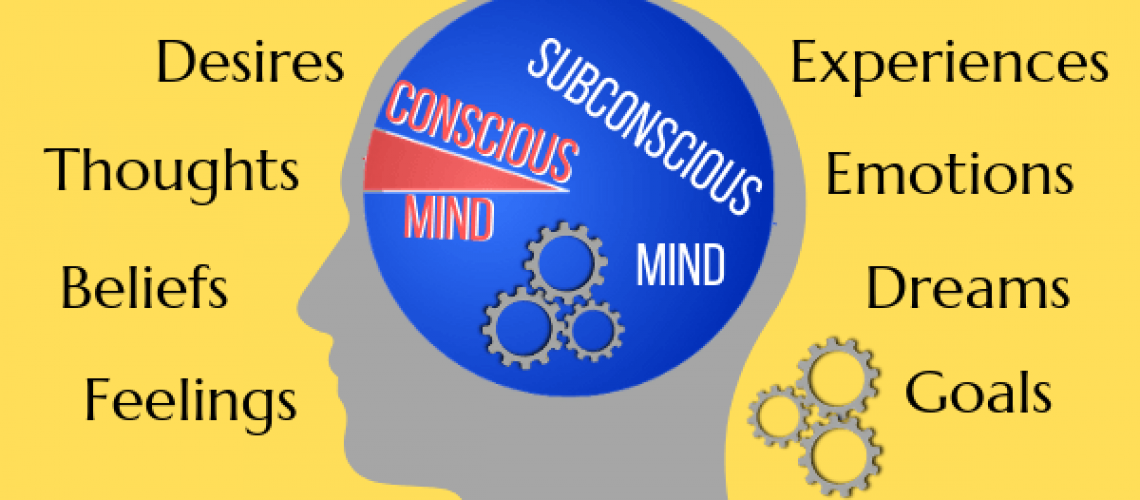
We do the daily thinking and task performing by both parts of our mind: Conscious and subconscious mind.The conscious mind is the creative part of the brain, which thinks, absorb new knowledge, new ideas, analyse things and objects. The subconscious mind is a habitual mind which functions on programmes that we have downloaded in the course of our lifetime. The subconscious mind works about 95% of our day to day time doing all the activities based on its habitual nature.
How we think and behave depends on our past memories and experiences that we had till date in our life-term. That’s is how we generate our thinking pattern and everyday thoughts and feelings. So, we experience our daily reality, the so-called perceived truth through the filter of the past, which is the result of the memories, beliefs and experiences.
That’s how, an ordinary person like us lead a routine life based on old habits, which is run by our subconscious mind programming. We get comfortable and become used to it, so any new change or trying to change a better or improved habit becomes a difficult and challenging task for us.
So, how is an experience create a memory in the brain? When we have an experience, the sensory organs collect the different data of senses from the external environment and send them to the brain. In the brain, there is an influx of neuronal charges which create a specific pattern of the neuronal pathway. The brain produces a chemical or feeling which we called emotion associated with the neuronal pathway. So, the experience related to the emotion/feeling creates a memory in each of the body cell. That is how a particular event is recorded in our brain and body cells. Therefore, each thought is always associated with a feeling or emotion. Happy or good thoughts create delighted emotions and good memories, while unpleasant or sad thoughts have an anxious mood or emotions and an unpleasant memory attached. This series of thoughts and memories appear every day and become our thinking pattern and behaviour and develop into habits. Our state of being, our wellness also depends on this pattern of thoughts and behaviour.
So, can we create a change at any age?Modern researches have shown that the human brain can change or build up new neurons and pathways at any age. This process is called Neuroplasticity.There is no age or gender limitation for this change to happen. A thought, belief or habit is difficult to change because it gets hardwired in the brain due to continuous repetition during our lifetime. So, a change is possible when we consciously shift our paradigm from these sets of limiting beliefs and behaviours. Most of the time, our thoughts and opinions get stuck in the limitations, and we fail to think beyond our conscious and analytical mind. Change is possible at every point in time. Enough researches have proved that transformation is possible in our thinking pattern, behaviour and habit at both physical and mental level in a measurable way. The person who is aware and becomes proactive to change or build a new empowering and better practice of thinking pattern and behaviour can easily taste success and happiness in this lifetime.
Because of the habitual nature of our subconscious mind, the habit of new thinking and behaviour needs a particular method to be implemented to bring about a change.Mere affirmations and positive thinking cannot alone lead to a shift in thinking or behaviour. It is valid only on those moments when we think with our conscious mind. Once we forget with our affirmations, the old thinking pattern and subconscious behaviour take over. Some studies have shown that it takes around 21 days to develop a new habit or a thinking pattern. But, this depends more on the individual and his willingness to bring about a change.
Certain methods: 1.Continuous repetition over a certain period until it gets reprogrammed in our subconscious mind. We can try this practice on our own. 2. Hypnosis: Practicing self-hypnosis of the affirmations or the change mostly during bedtime or early morning hours when the mind is less engaged is a useful tool. Practising it everyday, the subconscious mind can be reprogrammed to this new belief or thought. This method needs a therapist but can be practised on our own too. 3. Energy psychology: Different modalities exist which require the help of a trained and professional therapist like in methods such as Psych K, brain synch method, resonance repatterning.
Our mind is illusional. Whatever, we think and perceive is our own derived illusion. It’s our biggest friend and at the same time can be our biggest enemy. Therefore, a common quote says ” You may die a hundred deaths without a break in the mental turmoil “ Our mind makes up everything that happens in our life – good or bad, big or small, ugly or beauty, sad or happy, success or failure, it ‘s all within this thing, called mind. So, how do I control this thing ‘mind’ and remain focus on my goal and life purpose?
Understanding the mind, and its content is very important and fundamental. What makes our thought world? How do thoughts are generated? We build up mental impressions through the different inlets of this outer world. The inlets can be : *Five senses: sight, hear, smell, touch, taste
*Memory: That has been built up over the years of this outside world experience, right from the day we were born.
*Activity: That we perform , habituated and do throughout the day.
We create thought by an idea backed with emotion. Through different inlets, we build up thoughts as our mental content every day. We generate, perceive, analyse, process and ruminate our entire thought world. So, we keep doing the same mental activity of thinking, analysing, ruminating every day. The thinking pattern doesn’t change. So, does our behaviour and habits. It is uninterrupted, a never-ending process which we may not be even aware. According to Yoga Psychology ( Yoga Sutras), our thought world mainly depends on mental fluctuation (Vritti) and thoughts (prataya). The mental impulses (vritti) are created through the different inlets like the senses, memory, activity which inturn create mental impressions generating thoughts (prataya). This is the reason, when we are in a positive , vibrant environment, surrounded by positive people, we generate positive, beautiful, creative thoughts. But, when we surround ourselves with negativity, we generate negative thoughts of guilt, anger, pain, hurt, jealousy and so on.
Normally, what happens, when we centred our mind for a particular activity, at the office or home. There are endless distractions. Okay, we try to control the distraction or cut down to some extent, but still mental fluctuations and wondering thoughts continue to distract us. This is because the memory continues to generate unstable thoughts in an unstable mind.
Therefore to manage our mind, we need to control our mental fluctuation and thoughts. The only way to control them is through a concentrated mind. A concentrated mind can be achieved through the power of attention. The power of attention is our very own property (which arises from self) which we can achieve by practising and training our mind. It is a steady power of awareness which is created at our own will. It is the only capability that we can learn to develop for mind control. Whereas, the mental fluctuations (impression) and thoughts are greatly influenced by our outer world, the external distractions. They are not completely within our control.
The different states of mind depending on the power of attention can be defined as *Ordinary mind: When both the mental fluctuations (vritti) and thoughts (prataya) are unstable. The mind is rather restless distracted, jumping from one thought to another.
*Focused mind: When there is less mental fluctuation (stable vritti) but thoughts are still wobbly (unstable prataya). This is the learning mind.
*Concentrated mind: When both the mental fluctuation (vritti) and thoughts (prataya) are on the same line, stable enough. This is the highest level of attentive mind.
*Meditative mind: When the vritti and prataya are concentrated at the same point, on a similar goal. That is the mind is concentrated at one point say, your attention is entirely on your breath or a point of focus. That is when both mental fluctuation and thought are at the same point. This is the highest level of concentration.
The power of attention is similar to a focused beam of light where all your energies are focused. With this power of attention, you can learn, achieve, complete tasks and attain success in whichever areas of life you want to. That is the reason, we should always learn to perform an activity or task one at a time. So, we give our full power of attention. Handling multiple tasks all at a time can be like a scattered beam where all your energies are distributed. You can be able to do some while some are left undone. Your mind will keep fluctuating and your attention span will be variable and unstable.
So, how do I learn to achieve a concentrated mind with the ultimate power of attention? How do I control my mind, my inner thought world, daily? How do I focus my mind on one activity at a time? How do I take charge of myself? This is a self-learning task, an ongoing process. Two comprehensive ways:
1. To achieve the power of attention, two important things matter the most : Awareness: Being consciously aware all the time. Feeding our thought world and thought process with positive, constructive and creative thoughts.
Will: Self-training and developing a restrained impulse towards worthy goals, purposeful life.
2.Control of thoughts:
*Exposure to right kind of thoughts: Feeding the mind everyday with right kind of thoughts. Reading good books, being in a positive, good company, surrounded by positive vibrations.
*Right behaviour: Good conduct, right behaviour pattern influence thoughts and emotions. That means reframing our cognitive abilities. Correcting our behaviour patterns as on when required.
*Right lifestyle and habits: Maintaining a regulated lifestyle and habits will greatly influence our mind. You cannot have a stable mind with an unstable lifestyle. *Purposeful life: Working towards a specific goal, understanding and working towards a meaningful life. Developing a stable mind through meditation and prayers. This cannot be achieved overnight. It is an ongoing, self-learning process. You and I have to keep working on it daily.
Thanks for reading.
Blessings and much love to all 💐
References: Science of Focus by Pravrajika Divyanandaprana (Vivekavani)
Science has already proved that every day, we generate about 70, 000 thoughts. Out of which, most of the thoughts are similar to those of the previous days. Some or most are negative thoughts of fear, worry, pain, hurt, anxiety which greatly affects our daily life and wellbeing while some can be positive thoughts of joy, gratitude, confidence, hope which helps us carry our day through.
So, our wellbeing, life, health are all driven by the thoughts that are generated in our mind daily. Therefore, thought hygiene is the continuous flow of thoughts that goes inside our mind throughout the day, about self, experiences and the world around us. If the majority of the thoughts are uplifting, or at least in coordination with our life goal, purpose, then it is wonderful and promotes our wellbeing. But when it is just the opposite or the ones which don’t motivate or uplift our life, then it is time to consciously put a continuous effort to change our thought hygiene.
4 simple ways of practising thought hygiene.
1.Awareness: Make a conscious effort to observe your thoughts every day. By simply observing, is already a big step that you have taken to control your mind. When you are aware of your thoughts, what kind of thoughts preoccupy your mind most of the time in the day, why and when do the negative thoughts come? You are simply taking charge of your mind. The more you become aware of them, the negative or the unwanted thoughts cannot affect you any longer. Slowly, you can turn those negative thoughts into positive and at least make them no longer affect you.
2.Change your inner attitude: It is important to change our inner attitude or approach towards life. Take life and experiences with lots of love and humour. This also means stopping yourself to take everything very seriously. Any experiences daily with life, personal, professional, social should be accepted as they are. Overthinking and analysing makes them bad or good. In this way, at least, you can accept life with more smiles and pleasant experiences.
3.Observing your behaviour: Start observing your behaviour, your action. Your habits are not formed today. It has been practised for quite a long time to turn them into your habitual behaviour and action. So, to change them, you need a continuous effort and awareness. We always blame or complain of ourselves or others for anything that didn’t happen as it should have been. Self-analyzing and self-criticizing is somewhat a subconscious behaviour that we have with most of us. Again criticising others or blaming others for something or the other is a common behaviour. So, when we become aware and start correcting or at least make a continuous effort to change such habits, thoughts and attitude, actions are bound to change and life becomes easier.
4.Start each day with a positive thought: Postive thoughts and affirmations are very powerful. At least, when you start the day with a positive thought, then carry on throughout the day with the positive affirmation, even if the day didn’t go so well, the negativity or the unpleasantness doesn’t affect you much. You still end the day with hope and look forward to the next day. When you are already thinking negatively, you are internally negative, none of the experiences in the day can be an uplifting or happy experience.
































 3H:health,happiness,healing