β Let your hopes, not your hurts shape your futureβ Martin Luther King, Jr
Itβs time to letting go of whatever that give us pain, hurt, sadness, anger, regrets and guilt as the year comes to an end.
Grateful that another 365 days are approaching to renew ourselves with positive energy, change, optimism and peace which may uplift us in this lifeβs journey.
Wishing to all my lovely, fellow bloggers, may this New Year 2025 bring immense happiness, peace and favorableness to all of us.
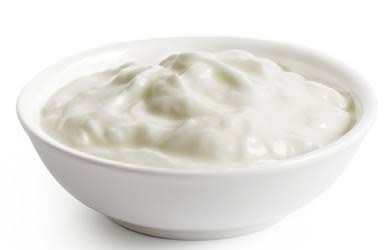
1.Though both are dairy products, widely used and might taste and look similar, but yet yoghurt and curd have clear differences. Many people even mistake curd for the Western name of yoghurt. The first basic difference is the method of preparation. Curd is prepared by milk fermentation from Lactic Acid bacteria. The lactic acid forms a reaction with the globular protein of milk and produces a thick consistency called curd. Curd can be prepared at home. Unlike, curd, yogurt cannot be made at home as it is made by milk fermentation with live strains of Lactobacillus bulgaricus and Streptococcus thermophilus. These bacterial strains react with the sugar present in the milk which produces lactic acid. The lactic acid, now reacts with milk protein, producing yoghurt.
2.As far as nutritional value is concerned, yoghurt is a rich source of protein, calcium, iron, potassium, and vitamins B5 and B6. Compared to curd, yoghurt contains less lactose so people with lactose intolerance preferred them more. On the other hand, curd contains more lactose as it is prepared from fresh milk. It is also a rich source of protein, calcium, phosphorus, iron and vitamin B6. It helps to regulate digestion.
Yoghurt
3.As far as health is concerned, both have their respective preferences. Yoghurt contains high probiotics so it helps maintain gut health for its beneficial bacteria content and is also preferred for weight loss. Since it contains high potassium, it is useful for people with high blood pressure. Curd is a storehouse of good bacteria too so it helps to maintain a strong immune system. Its nutrients are absorbed quickly in the system so it is beneficial for the digestive system and can resolve digestive issues. Because of its rich source of calcium, it is healthy for bone health and has beauty benefits for hair and skin.
4.Yoghurt is a fermented dairy product, produced by standardised bacterial live strains at a controlled temperature so available in different flavours and different textures. It cannot be made at home. Since it is commercially produced, it can be fortified with vitamins and has high probiotics. It has usually a mild tangy taste. Curd is made from fresh milk, by adding an acidic substance like lemon or vinegar or adding a spoonful of curd from the previous batch. So, it can be easily prepared at home. Homemade curd can retain more amount of lactose due to slow fermentation. Depending upon the length of fermentation, it can taste either mild soreness or may have a strong tang.
Curd
5.The debate of which is better is irrelevant as both of them are dairy products with great health benefits. The key difference between curd and yoghurt is the method of preparation. Depending upon the preferences in taste, texture and flavours, people may prefer either of them. For individuals with lactose intolerance, yoghurt is preferred as it contains less lactose. For people who prefer thicker consistency and texture, yoghurt is strained from the liquid to make it thicker after fermentation. Greek yoghurt is a thicker and creamier version as it is strained multiple times. On the other hand, curd is low in calories and preferred for people with cholesterol, obesity and hypertension.
What is Alopecia areata? About 150 million people around the globe suffer from this autoimmune disorder presently. Alopecia Areata is characterized by smaller to wider patches of hair loss in the scalp irrespective of race, gender, or age. Though the exact aetiology is unknown, it tends to be hereditary.
Research believes, most of the cases appear to have a positive family history of this disorder. Families with a positive history of vitiligo, thyroiditis, lupus or other autoimmune disorders have this disorder of alopecia. The exact cause is still not known why the bodyβs immune system starts attacking the hair follicles causing these patches of baldness. Studies initially showed that all races are equally affected. However, recent studies show that females are more affected than males and African Americans, and Hispanics are more affected than Asians.
Usually, the hair loss patches are involved in smaller areas of the scalp region. But may also include the entire scalp known as alopecia totalis. It may sometimes involve the entire body known as alopecia universalis. Sometimes, the hair loss is prominent in the bottom back of the scalp known as ophiasis alopecia areata.
4. The course of the disorder starts with the sudden loss of small patches of hair on the scalp, beard, eyebrows or any part of the body. There is sudden thinning of the hair, followed by broken hair and finally hair falls off in patches. In some cases, the hair regrows. But in most cases, the patches extend and widen affecting bigger areas. Rarely, the progression is a complete loss of hair in the body.
5.The diagnosis is usually by physical examination. However, to confirm the diagnosis, blood tests, and a biopsy of the scalp, and hair for lab analysis. The family history and medical history of autoimmune disorders are to be considered. Once diagnosed, the disorder has no cure but needs to be managed.
6.Various treatment options are available depending upon the progression and uniqueness. Oral and intravenous corticosteroids are used. Phototherapy and immunotherapy are used in more severe cases. Sometimes, platelet-rich plasma is used to replace the blood from the body to stimulate fresh hair growth. Herbal remedies should be used under expert supervision. Treatment may or may not respond depending upon the severity.
7.Whenever you have noticed such symptoms, it is important to confirm the disorder by health care provider. Though the disorder has no cure, it can be managed or in some cases reduced or controlled by various treatment options. Cosmetic techniques are available too to manage hair loss patches.
8.When you have alopecia areata, you should avoid stress as symptoms may aggravate. Sun protection is required as hair naturally protects our skin and eye guard/sunglasses should be used due to lack of eyelashes. Considerable amounts of vitamins and mineral supplements should be taken under physician supervision to minimize hair loss. A well-balanced diet is essential.
Release stress
9.All hair loss doesnβt mean that you are affected by alopecia. Emotional stress or physical stress regularly for prolonged periods leads to hair loss. Menopausal, ageing and poor diet can also lead to hair loss. In most of these cases, the hair loss is temporary.
10.When you have alopecia or hair loss, gentle hair products with no parabens, or silicons should be used. Tightly tied hair or too much hair styling should be avoided. The use of harsh chemicals, hot oil hair treatments, rollers, curlers etc should be avoided. It is also better to avoid smoking as some studies do suggest it.
First of all, I am incredibly appreciative that I get to celebrate another new year with the Supreme and all of my beautiful bloggers.
Let us hope that this new year, with its 365 fresh days, will bring us growth, positivity, action, hope, and the drive to achieve our objectives. Not to mention to make time for our loved ones and family.
Both failure and success are fleeting. The capacity to continue going forward is most important.
I’m wishing everyone a wonderful and prosperous 2024 New Year !
In a normal individual, perception occurs through the five physical senses. Extrasensory perception (ESP) or sixth sense is a perception of the mind, perceived an event, circumstances, or prediction, through telepathy, clairvoyance or precognition. This is independent of the normal five sensory senses so it is regarded a paranormal ability. Through the centuries, from primeval times, many people, including sages, yogis and spiritual practitioners are believed to have mystical powers who have strong sixth sense.
But then, is this real science? As far as science is concerned, there is no evidence of such extra senses in human. Many research projects in the past have been carried out to study if some people actually possess such extra sensory power. Some psychologists and philosophise are still undergoing studies to know more about this concept of extrasensory phenomena.
3. Several researches and authors like Rosalind Heywood, H. Osmond and many more have written several books on this subject with their own understanding of the perception. It is very hard to find scientific validity and physical explanation of such phenomena of extra sensory perception such as telepathy or clairvoyance or even precognition.
4. Sometimes intuition and extra sensory perceptions (ESP) or sixth sense are referred the same meaning. It is the psychological ability to sense something independently of sight, smell, hearing, touch and taste. Maybe, it is the ability of the individual based on deep understanding of the situation, the knowledge stored in the subconscious mind and the past experience.
5. Contrastive of todayβs world, the primitive men were more instinctive and tuned with nature. Their level of awareness were as par with other living creatures and animals. It is this intuitive power which is slowly fading away from us. Because, our minds are caught up in this materialistic complexity.
Keeping science aside, most of us, do at sometime or someplace, get an inner sense of knowing of some event or information even before the actual occurrence. This is perhaps the kind of intuitive feeling that we still possess.
6. Different types of ESP experiences have been studied like telepathy, precognition, clairvoyance, psychokinesis, out of the body experiences and hauntings. Parapsychologists have been studying these psychic abilities through different experimental research.
7. The exact definition of each of the term may differ according to the understanding and apprehensions of individual.
Telepathy is sending information through oneβs mind to another person.
Clairvoyance is an awareness without the physical presence of whatβs going on somewhere.
Precognition is like predicting or foreseeing of a future information.
Out of body experience is traveling of the mind to a greater distance without actual movement of the physical self.
8. Though the presence of sixth sense in human has no scientific validation but other living beings like animals, fishes, birds, creatures like sharks, whales, or tiny ants do have sixth sense. Some animals like elephants or even dogs do get a sense in advance before a natural calamity.
9.Perhaps, unlike our ancestors , today human civilisation is more about technological advancement, modernization, stressful lifestyle, that we have moved very far from nature or simple natural occurrences. We hardly have time to observe in nature or the environment around us. Therefore, extrasensory perceptions or inner intuitive power are all vanishing from us slowly.
10. Sixth sense is a real ability or not, is yet to be proved in the scientific world. But as an individual, we all have been gifted with some natural abilities. Itβs upto us to be more aware as individual and restore the very essence of being a human being. Itβs time for us to let go once a while from this routine hustle bustle and be more calm, meditative to understand our inner self.
1. Chicory is a tuberous herbeceous root, usually grown in winter. Though it is a native herb from Europe and Asia, but nowadays it widely grown in many areas for its health benefits and as a herbal remedy.
2. Chicory roots are a good source of carbs, minerals, and phytochemicals, including flavonoids. It has been utilized as herbal medicine for generations due to its high nutritional value. Research have shown that it has anti-inflammatory, antibacterial, and antioxidant properties.
3. In modern days, many of its benefits has been scientifically proven. Chicory root is rich in inulin which is a fructose rich fiber and acts as a prebiotic. It promotes growth of healthy bacteria in the gut. Since, it is undigested in the gut when consumed, so it can act as a laxative and relieves constipation.
4. Studies have shown that chicory can contribute to lower blood sugar and helps in insulin resistance. Therefore, it can be an aid in the treatment of diabetes.
5. Other list of benefits of chicory roots are it can promote the weight loss process, improves liver health, boost kidney function by its diuretic properties and may help in treating candida and eczema.
Chicory coffee
6. Since chicory roots are naturally caffeine free, so they have widely been used as a coffee alternative to reduce the intake of caffeine. Repeated consumption of coffee may lead to excess caffeine intake which in turn can cause issues like increasing the level of cortisol and stress.
7. Extensively used method of including chicory in diet is by blending with coffee as chicory coffee, or as herbal tea. It is also integrated in cereals, protein bars and other food items.
8. Like any other food, Chicory roots also have itβs share of side effects like over consumption can lead to allergic reactions, skin rashes, GI symptoms like discomfort, diarrhoea and gall stone.It is contraindicated during pregnancy and lactation.
9. As there is no specific doses of daily consumption of chicory, generally having around 5 gram of inulin in 500ml of chicory coffee in regular diet may not lead to any adverse effects. However, a Physicianβs or an expert advice is recommended.
10. Chicory roots have been in ancient cultures for ages as a herbal medicine. History says that it has been in use as a healthy beverage for many centuries for its health benefits.