1.The lateral hypothalamus and prefrontal cortex produce a hormone called Orexin, also known as hypocretin. It is produced in two forms like Orexin A and Orexin B. It has various functions related to Central Nervous System. It helps in regulating important functions like sleep-wake cycle, arousal state, energy homeostasis, feeding behaviour, emotions, mood and cognition.
2.Sleep: Orexin is usually released in the daytime and keeps us awake. It stimulates those neurons which in turn help in the release of neurotransmitters like serotonin, dopamine and nor- epinephrine. In case of individuals with orexin deficiency, are usually diagnosed with narcolepsy, insomnia, sleep imbalance, daytime sleepiness and cataplexy.
3.Stress regulator: Orexin is highly responsive to environmental stimuli and our mood. When in stress situations ,the orexin neurons stimulate the body’s response to increase heart rate, blood pressure and disturb the resting state.
4.Obesity: It is a result of the influence of orexin-producing neurons on energy metabolism.Orexin deficiency in the body can lead to slowing down energy metabolism, physical inactivity, and excessive weight gain, even if the calorie intake is low.
5.Mood: Orexin has an influence on mood through its impact on the hippocampus. Abnormal orexin activity has been related to mental health conditions like depression, PTSD, anxiety and addiction. Deficits in orexin influence can result in hippocampus problems such as learning disability and memory deficits, as it also promotes the development of neurons in the hippocampus.
6.Narcolepsy: Orexin helps us stay awake during the day. So, people with orexin deficiency suffer from narcolepsy. They have daytime sleepiness and sleep paralysis. Mostly, these type of individuals can also suffer from cataplexy. The person is unable to move for a short time even if he is awake or about to fall asleep. It is usually occurs in a conscious state of mind and triggered by strong emotions like being angry, or laughing.
7.Alzheimer’s Disease: Several studies show that orexin has direct connection with sleep, cognition and as a stress regular. So it does play a significant impact on Alzheimer’s disease pathology. An increase level of orexin has been found in cerebrospinal fluid of people with Alzheimer’s. So, they usually have circadian cycle disorders, daytime sleepiness and cognition problems. However, researches are still going on for further prospectives of using orexin antagonist receptors as a potential treatment alternative.
8.Heart: Lack of sleep and insomnia have a direct impact on cardiovascular health and hypertension. Studies show that increased levels of orexin stimulation can elevate blood pressure and heart rate. Both orexin A and B receptors have a direct role in the regulation of sympathetic nervous system. Therefore orexin antagonist receptors might be a therapeutic option for hypertension.
9.Orexin levels: High levels of orexin may lead to sleep disorders, stress prone and eating disorders. But lack of orexin or loss of orexin in brain injury may lead to narcolepsy or other sleep disorders. The normal level of orexin found in cerebrospinal fluid in a healthy individual is around 250 – 500 pg/ml.
10.Food: Optimal level of orexin can be provided in a healthy individual by regular intake of fermented food like pickles or sauerkraut. Having excessive sugar or carbohydrate rich food can inhibit orexing production.
1. Chicory is a tuberous herbeceous root, usually grown in winter. Though it is a native herb from Europe and Asia, but nowadays it widely grown in many areas for its health benefits and as a herbal remedy.
2. Chicory roots are a good source of carbs, minerals, and phytochemicals, including flavonoids. It has been utilized as herbal medicine for generations due to its high nutritional value. Research have shown that it has anti-inflammatory, antibacterial, and antioxidant properties.
3. In modern days, many of its benefits has been scientifically proven. Chicory root is rich in inulin which is a fructose rich fiber and acts as a prebiotic. It promotes growth of healthy bacteria in the gut. Since, it is undigested in the gut when consumed, so it can act as a laxative and relieves constipation.
4. Studies have shown that chicory can contribute to lower blood sugar and helps in insulin resistance. Therefore, it can be an aid in the treatment of diabetes.
5. Other list of benefits of chicory roots are it can promote the weight loss process, improves liver health, boost kidney function by its diuretic properties and may help in treating candida and eczema.
Chicory coffee
6. Since chicory roots are naturally caffeine free, so they have widely been used as a coffee alternative to reduce the intake of caffeine. Repeated consumption of coffee may lead to excess caffeine intake which in turn can cause issues like increasing the level of cortisol and stress.
7. Extensively used method of including chicory in diet is by blending with coffee as chicory coffee, or as herbal tea. It is also integrated in cereals, protein bars and other food items.
8. Like any other food, Chicory roots also have it’s share of side effects like over consumption can lead to allergic reactions, skin rashes, GI symptoms like discomfort, diarrhoea and gall stone.It is contraindicated during pregnancy and lactation.
9. As there is no specific doses of daily consumption of chicory, generally having around 5 gram of inulin in 500ml of chicory coffee in regular diet may not lead to any adverse effects. However, a Physician’s or an expert advice is recommended.
10. Chicory roots have been in ancient cultures for ages as a herbal medicine. History says that it has been in use as a healthy beverage for many centuries for its health benefits.
Melatonin, commonly known as the sleep hormone is responsible for our cicardian rythm. But, it has some fascinating facts to be known.
1. The pineal gland, located at the base of the brain, is known to produce 5% of the total quantity of melatonin. Surprisingly, in all of the cells throughout the entire body, the mitochondria generate the remaining 95% of melatonin.
2. Our body cells’ mitochondria typically serve as the energy-generating organelles. They absorb glucose and oxygen to create water and ATP, which serve as the body’s power source. Free radicals are created during this procedure. However, the free radicals can be neutralised by our body’s defence systems. Melatonin acts as the potent anti-oxidant which causes free radical damage.
3. The melatonin which is produced in the body cells due to the sunlight, especially the infra red rays trigger the release of glutathione and other potent anti-oxidants. Melatonin also has anti -inflammatory properties and anti cancer properties too.
4. Since, melatonin is an effective anti-oxidant, it helps to prevent eye and ear damage. Research shows that it is effective in prevention of age related macular degeneration and retinopathy.
5. Melatonin protects the brain. Melatonin serves to promote the growth of new brain cells and improves memory, according to studies. Melatonin levels were discovered to be low in those with Alzeihmers disease. Thus, it is possible to prevent Parkinson’s and Alzheimer’s disease from becoming severely disabling by increasing melatonin levels.
6. Research shows that melatonin stimulate growth hormone production. Evidences showed that oral administration of melatonin increased the level of growth hormone, two fold times.
7.Melatonin production declines noticeably as we get older. Therefore, in order to maintain melatonin levels in our everyday lives, we must get enough sun exposure during the day and turn off lights at night so that darkness can help to stimulate melatonin production.
8. Sub-cellular melatonin which is produced in the body naturally is more effective than taking melatonin pills. Melatonin pills do work on short term basis and should be taken only if clinically recommended.
9. Aside from the infrared radiation that comes from sunlight, which is typically present in the early morning, other sources of infrared radiation that contribute to a sufficient amount of melatonin production include candlelight and being in front of a fire.
10. Incadescent light bulbs, spending time in greenery parks, outdoors all help to boost melatonin production.
1. The human body in which each of us lives is made up of around 37 trillion cells, to be precise. And every day, about 1-2 percent of the cells are renewing. So, exactly after 90–100 days, a new “me” appears. We remain so busy with our routine lives that we hardly acknowledge this fact, and many of us are not even aware of it. So, ‘change’ is the constant tune, not just within the universe but also within us.
2. Now that we understand that our bodies undergo transformation on a daily basis, So, the question is: how does this self-renewal occur? Let’s go back to our past a little bit. The human body develops from the human embryo, which is fertilized by an oocyte and a sperm cell. This embryo is made up of stem cells. The stem cells are the basic cells (undifferenciated cells) of the human body, which, through the process of mutation and transformation grow into different cells like nerve cells, bone cells, muscle cells, blood cells and so on. Throughout our lifespan, these stem cells undergo cell division and keep replicating; that’s how self-renewal happens.
3. Under normal physiological self-renewal processes, different cells in the body have differing rates of cell division. So, the replication process of various tissues, organs, and blood cells in the body has a different time frame, like the skin epidermal cells, which can take around 10–30 days, whereas a bone cell takes 3 months, or a hair grows about 1 cm in one month, and so on.
4. Though our body is constantly changing due to the continuous self-renewal process through different cell cycles like shedding the old skin cells, renewal of intestinal cell lining, and growing hair or nails on a routine basis, this isn’t a simpler process. The human body is still very complicated and has exceptions. Some cells, such as those in the brain (cerebral cortex), eyes (such as lenses), and heart, do not change from birth to death.
5. But then, why is self-renewal important and must be maintained? Under normal physiological conditions, stem cells have two functions: proliferation and differentiation. Though stem cells have a natural proliferative capacity throughout our lives, disease conditions can affect their physiological self-renewal ability and behavior due to factors such as damage or an unhealthy lifestyle (obesity, lack of physical activity, smoking, or a poor diet).
6. A lack of an appropriate environment within the body or poor maintenance of the human body might eventually lead to the exhaustion of the capacity of stem cell proliferation, which causes premature aging or tissue atrophy. With aging, stem cell activity, tissue regenerative and haemeostasis is significantly declined.
7. Sometime, due to the unhealthy environment within the body, mutations lead to aggressive stem cell division without going through the natural cell differentiation process. This can lead to abnormal tissue growth or cancer in the body. Therefore, the physiological process of stem cell division and the natural stem cell behavior can be affected by four disease conditions, like degenerative, metabolic, cardiovascular, and inflammatory conditions.
8. Regenerative medicine and therapies have arisen as a result of the discovery that defective self-renewal mechanisms in the body are the root cause of malignancies and abnormal cell proliferation. Many disorders are being treated with regenerative medicines based on stem cells. Recent years have seen a significant increase in the use of stem cell treatment to treat a variety of diseases like cancer and disorders including type 1 diabetes, heart disease, stroke, Parkinson’s, burns, osteoarthritis, by regenerating cells, repairing tissues, and transplanting organs.
9. The fact about regenerative medicine is that, though it has helped many patients around the world, the cost of treatment is quite high as the procedure is complicated and the failure rate is high. Human stem cell treatment requires culturing human stem cells in a laboratory setting for a longer period of time, which is quite difficult.
10. The market is flooded with products that promote cell regeneration, anti-aging, and longevity. The lofty claims made by these items are still quite dubious. But it is true that some supplements do work to improve health, lower inflammation, and increase immunity. But in the end, having a healthy diet, getting enough sleep, a calm mind, and exercising regularly is all that’s necessary for good health.
Hello everyone! Greetings 🖖 This is my first post after a year long break…
True enough, life is indeed unpredictable. It gives you the most dreadful unexpectedness when you least expect it. That’s what happened to me. Today, when I look back and remember, I still get the goosebumps, the tremble and chill. The misery I went through, will most likely follow me all throughout my life, or for a very long time. The past year was the most challenging and overwhelming for me. In those days, I used to put down my thoughts and feelings to my husband throughout his absence during the difficult times.
When we were about to go to bed, on the evening of 8th January 2021, around10.30 PM, after dinner and are routine talk, you complained of a headache. I advised you to take a pain reliever, and go to bed. But to my astonishment, you behaved a little different when you were lying on the bed. You asked me to get the tablet and water for you. When I was back from the kitchen with the glass of water, you couldn’t get up from the bed to have the medicine.The water gushed out from your mouth because you were unable to swallow. Then, all of a sudden, I could understand that something was wrong with you. You began to slur your words. Being a doctor myself, I came to know that you were having a transient ischaemic attack or maybe a stroke. I, immediately called emergency service and requested for an ambulance. I fumbled while speaking as I was very nervous. In the interim, I also called our next-door neighbour Jan, a 72 year old retired dutchman who is quite friendly and is fluent in English. When the ambulance arrived, the paramedics examined you and noticed that your left side of the body was immobile. However you were still trying to communicate and was conscious. They hurried you to the emergency room of the nearest hospital in Eindhoven where we reside. Both, Jan and I accompanied you to the hospital. In the ER, I was not allowed inside. We were both waiting outside. At around 11 o’clock, I asked Jan to go back home as he was quite tired and had recently recovered from cancer.
A little later, I was told that they gave you a Morphin injection for your headache and a CT scan was done. Although I was completely shaken, somehow I was calm, still holding on to my gut that things would be all okay. Once the CT scan report came, they confirmed to me that it’s a right brain hemorrhage, which is quite huge and with some strange findings. I was told that they had planned to shift you to a hospital in Tilburg, which is a nearby city, about 45-minute drive from Eindhoven. On top of my shock and cold shivers, I was confused and petrified by this whole chain of events. I was informed that they don’t have the expertise, so that is why you have to be referred to the Tilburg Hospital, which has a better neurological service. Moreover, I was told that your CT scan findings were quite confusing and the bleeding was huge.
Within minutes, the ambulance came and rushed us to Tilburg. Inside the ambulance, you were lying down, still in your senses, tired and awake, complaining of the headache and discomfort. I was sitting next to you and asking you to rest and reassuring you. By almost 12.30 am, we reached Elizabeth Hospital, Tilburg. They rushed you again to the ER. I was allowed to accompany you there. The neurosurgeon on duty examined you and did a scan again. She, too, told me about the right brain hemorrhage and some strange discovery that resulted in the massive bleeding. All the while, I was very worried and heartbroken from inside. I could not hold my tears, cried and felt so helpless. At that moment, I felt that I would lose you and that I had lost everything in life.
Still awake and tired, you were transferred to a medium-care unit to be kept under observation. You asked the nurse if I could stay with you in the room. I know I won’t be allowed in, so I assure you that I will keep waiting outside. During those painful hours, I called your father, back home in India, to inform him about the whole episode. He was totally shocked. I could not hold my tears and was crying on the phone. Then, I called and informed our son too. He was confused and could not believe his ears. He was terrified as well, as he knew that his dad was the fittest one in the family and had never had any kind of illness. I have no idea what went through him at that stage, as he was all alone at home. Due to COVID, he was in our apartment and not in his college hostel. I also informed my sister and my brother-in-law. By that time, it was almost 1.30 AM. I was told to go back home as you were kept under supervision and it was quite stable.
So, while boarding a taxi from Tilburg to Eindhoven, I realised that the coming days were going to be the toughest to handle.That whole night, after reaching home, I cried and cried, just loitering around the house in anguish and pain. I had the impression that I was in for a long, dark journey with no idea what lay ahead.
The following day ,on the 9th of January was even scarier. I was informed earlier that you would be taken to the Operation Theatre for brain angiography. I was in the hospital, waiting to hear about the outcome of your brain angiography. Till 6 o’clock in the evening, there was no news concerning you. I kept enquiring the OT nurse about you. She informed me that you hadn’t been taken out of the OT. My mind was beginning to crawl with fears and anxieties. I was distraught and in panic. The OT nurse then called me at around 6:30 pm and took me to a room. I could sense the worst as I was sitting alone in the room. At that moment, I was terrified and utterly shaken.
Two doctors entered the room and sat in front of the table where I was sitting. One doctor started talking to me about the procedure they had to perform on you. They said that you had an atrioventricular fistula in your right brain which had to be repaired, otherwise the bleeding was profuse. The procedure went well, but you have not yet regained your consciousness from the anesthesia. They were very uncertain about the outcome and that you might have slipped into a coma. They told me that they were expecting the worst scenario, maybe brain death. My whole world was shattered at that moment. I was almost lost and could not stop myself from crying. I was in a complete state of shock. The doctors and staff did try to console me. Jan, our elderly friend, explained to me to take things practically and control my emotions. I called our son, your brother, and my family and informed them regarding your state. I was told to return home and was assured to be informed of any further developments regarding your state. When I got home, it felt like the longest night, the darkest and scariest night of my life. That whole night, I grasped onto my mobile, waiting for any news about you.
On January 10th, I came to the hospital and was informed that you had been shifted to the ICU. The doctors told me that they had to drain a huge bulk of fluid from your brain and that your vitals were stable. I was informed that your MRI scan showed a sub-arachnoid hemorrhage, which got worse due to a congenital defect of the AV fistula. Such cases are rare.The condition was worse as you had hydrocephalus, so the fluid had to be drained to reduce the pressure.
The first time I saw you in the ICU with a ventilator and machines, drains, and drips all over, it was really hard for me. I went near you and called your name. You did respond with a little movement of your right hand. I was relieved and was happy as I could see little hope of light after these 2-3 hard days. That day was quite positive for me as the doctors were happy with you for being responsive to the treatment and procedure. But then, they still reminded me about the uncertainty of your condition. There was still a huge amount of fluid left in your brain which had to be drained continuously. You were still in a comatose state, with a low score on the neurological scale. I was told to call our immediate family members from India as your chances of survival were low. I called our son, back in India, and asked him to pack his bag to come to the Netherlands. I also informed your family and mine regarding your present state. I called your employer and informed them because they had been trying to reach you for the last 2-3 days due to your professional obligations. I also informed my project coordinator and let go of the project that I was doing.
After going through all the procedures of an emergency visa, our son arrived on January 14th. This was a life-changing event for him as well, as he had been very close to you, his father. He did go through an emotional roller coaster during those turbulent days. And, seeing you in that state, he had acted very mature and calm. He has been my biggest support through this storm. Our neighbors and friends have also been very supportive through the difficult time. Your employer has been a great support system for me and our son. We will always remain grateful to everyone who has been there for us through those difficult hours.
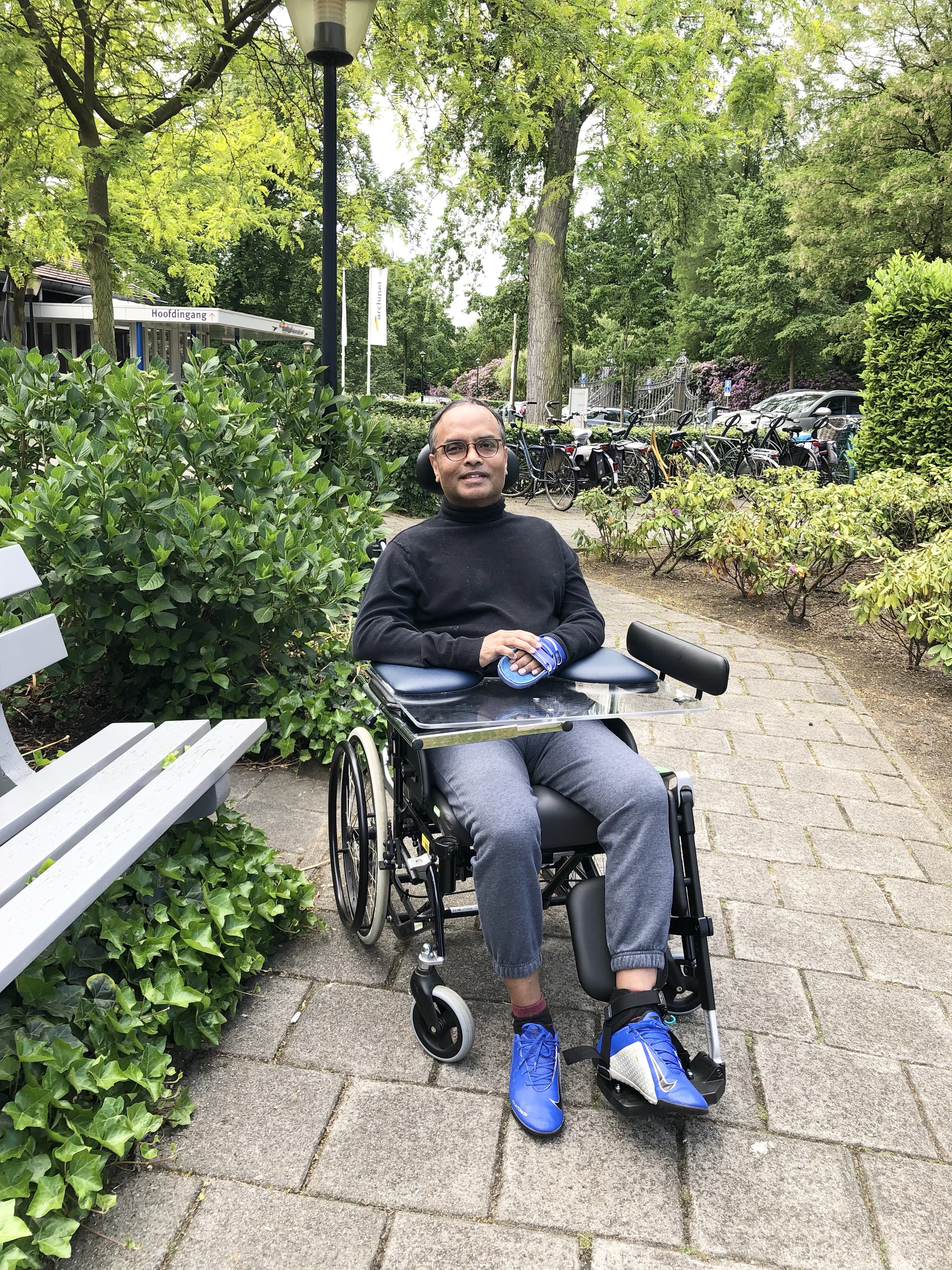
You stayed in the ICU for almost 2 months. Everyday, I visited twice, once in the morning and then in the evening. During my time spent with you in the ICU, your eyes remained close most of the time, but you do respond to my touch with right-hand finger movements. Some days were good and positive, while some days were scary. Our son, too, visited you in the ICU. But, he had to leave as his exams were approaching. Your neurological state improved slowly and your vitals were stable. You had gotten out of the ventilator. They decided to shift you to the rehabilitation centre after you regained consciousness.
I was initially quite optimistic and excited about your development and recuperation during your time in the rehab facility. However, because the prognosis was poor, we, also had to deal with a number of setbacks in that situation. Your severe cognitive impairment and short – term memory problems were not responding well to therapy. Your left side is completely paralysed, and there is no recovery. You still struggle with a few cognitive issues. However, you continue to make good progress in terms of your awareness, speech, memory, and physical development every day. Your speech is clear and concise at present.
After more than a year, you are still residing in the rehabilitation facility, and your therapies are still ongoing. I see you almost every day of the week. While we converse and laugh on certain days, other days are sad when therapy doesn’t work out. As I’ve come to terms with your situation, I’ve begun to feel content. My greatest satisfaction comes from watching you smile while I am with you.The hardest lesson life has taught us today is to be cheerful in the moment we share together right now because we don’t know what the future has in store for us. When I see you now, hope is the only thing in which I will still believe and live.
Being one of them or maybe, we must have come across people who are overwhelmed with trivial things, or sensory subtleties like a crowded place, loud noises, a strong odour. Or people who get easily stressed out, quickly get hurt or being overly emotional. This happens because such people are born with a particular personality trait and a susceptible nervous system so considered as High Sensitive People.
6 points to understand a high sensitive person:
1. People born with this personality trait is not abnormal, nor this isn’t a disorder. They have this personality because their brain is wired differently. There are scientific reasons for this kind of behaviour. Anatomically, their brain has a prominent insula which is responsible for their heightened state of emotional and sensory sensitivities. Their brain is wired to have a lower threshold for emotional and sensory reactivity. Genetically, they are associated withthe 5HTLPR gene, which is related to mental issues like depression and anxiety. This personality trait is also known as sensory processing sensitivity (SPS).
2.High sensitive person does not necessarily are introverts. A few percentages of people with this trait can behave like an extrovert. Introverts are people who like or enjoy being alone. In contrast, HSP can have deep human connections and can be comfortable with a few set of people. They are sensitive to physical, mental, emotional and sensitive subtleties.
3.High sensitive People are deep thinkers, highly emotional and intense. They are sensitive to the external sensory sensitivities like a crowded place, parties, loud noises, strong smell or any physical sensations. Such personality is gifted with highly creative talents like art, painting, music, writing or in any such creative fields.
4.People with this trait can overthink easily. Overthinking can lead to repeating the same trail of thoughts, which can quickly turn to negative thinking. Repeating the same spiralling thought pattern can also lead to anxiety, depression and stress disorder.
5.High Sensitive peopleare not comfortable with multi-tasking or highly competitive environment. Too many tasks at a time can make them overwhelmed and stressful. So, choosing a profession or a job, which they can enjoy doing is quite crucial.
6.If you are born with this trait, self-acceptance is crucial. Self-criticism doesn’t hold any purpose. Though it is quite challenging to go through the everyday stress of life, living with emotional and sensory subtleties, but they have the capabilities to overcome them. They can thrive and become very successful too. Adjusting the environment according to their convenience and keeping a few trusted friends and family for emotional support is hugely beneficial. As far as physical and emotional strain is concerned, adopting a healthy lifestyle, enjoying a hobby, a daily exercise routine, sleep, mindfulness, meditation can help to lead a balanced life.
Ashwagandha: This is a herb, initially grown in India, also in the Middle East and some parts of Africa. As the name signifies, ‘Ashwa’ meaning ‘horse’ and ‘gandha’ means ‘smell’. So the herb smells like horse and doesn’t taste good either. But, this herb is well known for its exceptional medicinal properties. It is used in Ayurvedic Medicine from an ancient time. Its botanical name is “Withania Somnifera”. Since it has some fantastic health benefits, various researches have been carried out across the world to prove it’s efficacy. Well yes, this herb has been considered safe and now widely been used as a supplement for various health issues and overall good health.
Scientifically, this herb is an adaptogen, meaning that it adapts the requirement of the body. It balances the body’s homeostasis depending upon the emotional and physiological stresses by strengthening the nervous, endocrine and immune system. The main medicinal compound found in this herb is called ‘Withanolides’. It is found beneficial for both men and women’s health and can be used in case of children too.
The top benefits of Ashwagandha:
1.Ashwagandha helps to boost the overall health, enhances the immune system, increases muscle growth and power. It increases stamina and endurance power. 2. Reduces stress and anxiety: Ashwagandha reduces the level of cortisol and empowers the adrenal health. It can improve the mood by acting as a natural antidepressant. It improves sleep quality by reducing stress and anxiety and calming the mind. 3.Aswagandha benefits the thyroid health. It helps to keep a balance of the different thyroid hormones. As it is anadaptogen, it can benefit in overall balance of thyroid hormones so it helpful in thyroid issues. But studies shows that it is more effective in hypothyroidism than hyperthyroidism. 3. It is highly beneficial for brain health. It can reduce inflammation in the brain, improves neuronal health and memory. It is used successfully to improve conditions like Parkinsonism, Alzheimer’s disease. It can help to improve focus and concentration, so it is used in cases of ADHD too. 4. It can be beneficial in both males and females by improving the reproductive health and endocrine system. So, it has been used successfully in case of males to improve the level of testosterone. 5. Studies suggest that it has anti-cancer properties and prevent the growth of new cancer cells. More shreds of evidence are required in this regard. 6. It can lower the blood sugar level as it improves the insulin secretion and increases insulin sensitivity. It can also lower cholesterol level and so is heart-friendly.
Since it is a natural herb from a green shrub, its root, leaves and different parts of the plant are used in Ayurvedic medicine. But the most widely used is the root powder extract. It is available in capsules and powder form. The ideal dose as a supplement is 500mg once or twice daily depending upon the individual body types and body weight. The best way to take the dose is at a convenient timing after a meal. A healthy diet is advisable along with the herb to get the best possible result. Since it has a robust medicinal compound, it has to be always used under Expert advice.
Though considered safe, like all herbs, overdosing can lead to toxicity. Some of the side effects are important to note before using this herb.
1.Drug interaction: People using medicines for thyroid, blood pressure, diabetes, autoimmune diseases should never carelessly use this herb. Because, using this herb, can interfere with the efficacy of the other medicines used. So, this herb should be used only before advice by the treating Physician. 2.Large doses of Ashwagandha can cause gastrointestinal irritations like vomiting, stomach upset and diarrhoea. People should not use it if one suffers from a stomach ulcer. 3.Pregnancy and breastfeeding women should avoid using this herb as it can cause a harmful effect. 4.It can cause sedation when taken in excess or along with antidepressant pills. 5. It is better to avoid using this herb in individual who are opting for surgery as it can slows down the central nervous system.























 3H:health,happiness,healing