10 important facts about tocotrienols 🙌

Tocotrienol complex

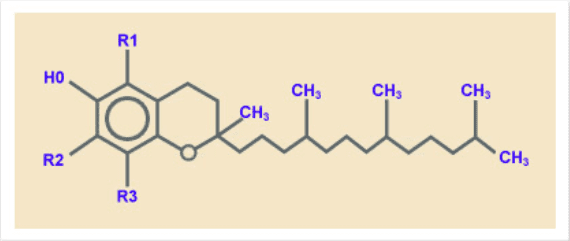
1. Vitamin E is actually a complex of 8 different compounds, which include 4 tocopherols and 4 tocotrienols , each of which can be further divided into alpha, beta, gamma, and delta forms. While tocopherols have been the focus of most research, tocotrienols have not received as much attention. Consequently, many vitamin E supplements available in the market predominantly feature tocopherols, leaving the full potential benefits of tocotrienols yet to be explored.
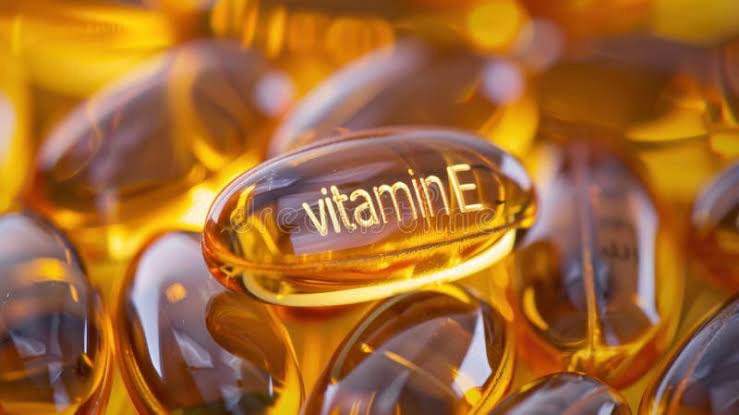
2.Many Vitamin E supplements on the market primarily contain tocopherol as their main ingredient, which means that their full benefits for the body are not realized. Recent research has shown that tocotrienols are powerful antioxidants with various health benefits. They possess neuroprotective properties, help reduce cholesterol levels, promote skin and hair growth, protect the liver, prevent strokes, and may even help prevent sterility. Additionally, tocotrienols are known to combat inflammation.

3.Actually, tocotrienols help significantly in the body to lower inflammation. Studies have shown that tocotrienols are five times more potent than tocopherols in reducing inflammation. Research has shown that tocotrienols are available in different forms: Delta tocotrienols and gamma tocotrienols, of which delta tocotrienols have five times more potency than tocopherols to fight inflammation in the body. In fact, tocotrienols are far more potent than tocopherols in the prevention of oxidative stress.

4. The widespread benefits of tocotrienols can be summed up as :

• Powerful antioxidant.

• Powerful antimicrobial

• Neuro-protective.

• Anti-cholesterol effect.

• Anti-tumour, anti-cancer,

• Prevents stroke

• Anti-inflammatory, prevents autoimmune diseases.

• Protective to the cardiovascular system, hepato-protective, and promotes hair growth.

• Promotes bone health, especially for menopausal women.

Palm fruits

5. Extensive studies have been carried out on the neuroprotective role of tocotrienols, which have shown very positive results on people with stroke, nerve disorders and neurodegenerative diseases. Studies have revealed that astrocytes play an important role in restoring neuronal cells and protect neurons against oxidative stress. Tocotrienols help in preventing glutamate-induced injury and prevent the death of astrocytes. Therefore, tocotrienols are crucial in minimizing neurodegenerative diseases and stroke.

Annatto

6. There are several studies and clinical trials showing evidence of anti-inflammatory effects of tocotrienols by controlling the inflammatory mediators. Research suggested that tocotrienols block the activation of nuclear factor kappa-light-chain-enhancer of activated B cells (NF-kB), one of the main regulators of inflammatory response. Supplementation of tocotrienols is found to reduce tumour necrosis factor alpha (TNF-alpha), interleukin-1 and phorbol ester. It is a potential agent with significant anti-inflammatory effects in atherosclerosis, thyroid diseases, and autoimmune diseases.

7. Research shows that tocotrienols are usually safe for healthy individuals at a minimum dosage. But they do have anti-coagulant properties, so people with blood disorders should avoid taking them. Some contraindications:

• Individuals allergic to any compound of Vitamin E should strictly avoid it.

• As mentioned already, people with bleeding disorders, or anyone who will undergo surgery, should avoid it as it may slow blood clotting.

• Tocotrienols may interact with medicines like anticoagulants and antiplatelets and increase the risk of bleeding.

• Overdosing should be avoided as it may cause physical symptoms like headache, fatigue and GI symptoms.

•High doses of tocopherol can interfere with the efficacy and absorption of tocotrienols.

8.Tocotrienols are generally safe when taken by mouth. There is no standard medical recommendation for dosage. However, under medical supervision, the typical dose of tocotrienols in adults is 100mg – 200mg per day. Dosage can vary depending on the specific health requirement. Supplements are mainly derived from palm and annatto derivatives. They are fat- soluble and best absorbed along with a meal.

Edible oils

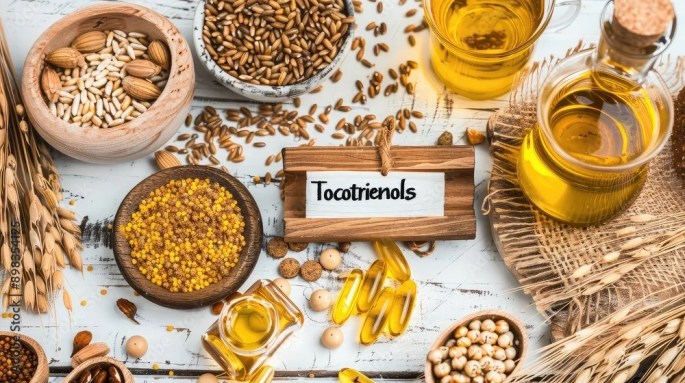
9. Food sources: Generally, tocotrienols are rarely found in nature. Even if some food sources are available, they are available in very low quantities. Palm oil has the most concentrated and natural source of tocotrienols, but at a very low level, which is not sufficient for potential health benefits. Other food sources are annatto ,edible oils like rice bran oil, grape seed oil, castor oil, coconut oil, peanut oil, linseed oil, cod liver oil, hazelnuts, oats, olive oil, maize, wheat germ, nuts and barley. Fish like salmon, trout, fruit like avocado, mango, vegetables like red pepper, greens, turnip, and squash are rich in vitamin E and its compounds.
10. Takeaway is that tocotrienols are the least known compound of the Vitamin E family, yet they are the most potent antioxidant and have strong evidence of widespread health benefits. Newest studies show that this compound has senolytic properties, a strong immune response, and apoptosis. They can slow down the process of ageing, reduce oxidative stress, and lower malignant potential. Though in small quantities, regular intake of natural sources of tocotrienols is sufficient for a healthy individual. Supplementation is required when medically prescribed.

Thanks for reading.

Peace and love 🙏

Glycemic index: 6 facts to know 🙌

Hello everyone! Have a wonderful and safe day 🙋🏻

Why do we need to know about the glycemic index of food? The answer is simple. Whatever food we eat, we should know how fast the food is digested and absorbed in our body and raises our blood sugar level. Knowing this, we can arrange our daily meal plan and maintain good health. It will help us to lose weight if necessary, and avoid lifestyle diseases like diabetes, heart diseases.

Six facts to know:

1. Glycemic index refers to how fast a type of carbohydrate consumed is digested and absorbed in the body and raises the blood sugar level. Insulin then helps the sugar molecules to be absorbed by the cells of our body for energy. To be precise, the Glycemic index is referred to the measurement scale of 0 – 100 of the rate at which the carbohydrate is digested and absorbed in the body.

2. Note that the Glycemic index is influenced by other food content also like protein and fat content, as we usually do not consume carbohydrates in isolation during a meal.

3. On the Glycemic index scale :
Low GI – Less than 55
Medium GI – 55-69
High GI – 70 or more
Low GI index means that the particular food has a slower rise of blood sugar levels but has a sustained release of energy.
High GI index means that the particular food indicates a rapid rise in blood sugar and release energy quickly for a shorter period.

4. It is relatively healthy and safe to prefer food with a low GI index as:
It reduces hunger as the energy is slowly reduced.
Helps to lose weight.
Improve cholesterol level.
It helps to lower the risk of heart disease and type 2 diabetes.

This doesn’t mean that all food with higher GI index like potatoes, rice, watermelon, dates, raisins should be avoided entirely, but can be consumed in moderation. But, we should avoid high GI foods like processed, refined, sugary food altogether for better health and wellbeing.

5. Glycemic load: This is a term which is used commonly along with Glycemic index, often as well. It refers to both the quality and quantity of carbohydrate that is eaten during the meal. It indicates how food choices in the feed would affect the blood glucose level in the body.
The equation is Glycemic load = Glycemic index, multiplied by how much quantity of carbohydrate is eaten.

6. Some practical tips:
a. Fibrous vegetables are best in the sense as they are dense and rich in fibres. They are digested by the gut microbes, which in turn provide food for the microbes and in exchange causes a slow and steady absorption. Subsequently, blood sugar is released slowly.

b. Some food like eggs, lean meat, fishes, pulses, full-fat dairy, cheese are not considered in the GI index. So, these foods have little effect on blood sugar level directly. We should consume these foods regularly.

c. Enjoy daily a considerable portion of vegetables and fruits, preferably with a low GI index along with a limited quantity of carbohydrate to regulate the blood sugar efficiently.

d. Acid content in food can slow down the digestion of food so lemon, vinegar, should be added to the meal.

Thanks for reading.

Blessings and much love to all 💐

Pic courtesy :Pinterest

15 Alkaline Foods 🙌

Hello everyone ! Have a wonderful and safe day 🙋🏻

The body requires and functions at an optimal level when in an alkaline ph environment. But unfortunately, due to eating unhealthy foods like junk foods, fried food, processed foods and foods with high sugar content, the body turns acidic and disturb the ph balance. This state of imbalance can lead to several diseased conditions like heart diseases, cancers, skin disorders, autoimmune conditions, allergies, and the list can go on and on. The simple solution to this problem is avoiding the unhealthy food items and daily intake of alkaline food in our diet, which can correct the imbalance and maintain an alkaline environment.

15 foods that can be included in our daily diet to maintain an alkaline ph :

1.Bananas: High in potassium content and helps to maintain an alkaline ph.
2.Cucumber: They can neutralize acids and facilitate digestion. It is loaded with vitamins and minerals and is anti-inflammatory. It is also high in water content and keeps our body hydrated.


3.Lemon: Lemon contains citric acid, which is usually acidic. But when metabolized, helps to alkalinize the ph in the body. They are high in calcium, irons, minerals, vitamins mainly B complex. It is antibacterial, antiviral, immune boosters and good for skin health.


4. Watermelon: It is packed with nutrients which can be extraordinarily alkaline and improves the overall health.


5. Blueberries: Berries are high in antioxidants, high alkaline foods and are proven to have health benefits for heart, brain, and anti-ageing.


6.Kale: Among the green leafy veggies, kale is one of the healthiest options. They are highly alkaline, rich in flavonoids which have anti-inflammatory and anti-cancer properties.
7.Garlic: Allicin, the compound in garlic is an antibacterial, antifungal, antiviral, antioxidant. Also loaded with vitamins and minerals, garlic acts as a detoxifying agent by increasing the glutathione that helps to filter toxins. It also helps to maintain an alkaline ph in the body.


8.Avocado: Rich in healthy fats, dietary fibres, minerals, vitamins, they flush out the acidic toxins and waste and maintain an alkaline environment.


9.Almond: Most nuts are healthy, but almonds are the most nutritious option which has high calcium and iron content. It is an excellent alkalizer.


10. Apricots: Both raw and dried apricots are high alkaline food and nutrient-dense.
11. Cayenne Pepper and Jalapeno: They are high in alkaline content which is anti-inflammatory, and antioxidant properties which help to fight toxins. Thye also increases endorphins in the body.
12. Tofu: They are rich in proteins and isoflavonoids and helps to maintain an alkaline balance.
13.Sea vegetables: All varieties have a different range of benefits, but all are excellent alkaline foods. They are also rich in iodine.
14. Beet greens: They are one of the richest alkaline food. Beets greens can be added to salads and smoothies.


15. Green beans are considered alkaline food besides their high nutritional value.

Thanks for reading.

Blessings and much love to all 💐

Phosphorus: 6 important facts 🙌

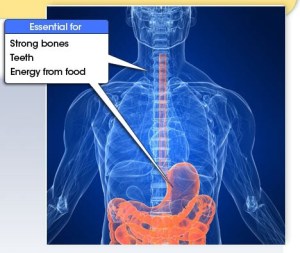
1. Phosphorus is an abundant mineral present in the body. It is found mostly intracellular and in bones and teeth. We get ample amount of Phosphorus from dietary sources. The kidneys remove the excess Phosphorus. Though mostly ignored, this mineral is essential for many vital functions in the body.


2. Functions are primarily :
– Strengthen bones along with Calcium
– Detoxifies the body by helping the kidneys to eliminate the wastes.
– Maintain the ph balance
– Improves digestion
– Assists in the production of energy molecules ATP and releases the energy by breaking the phosphate bonds
– RNA and DNA synthesis
– Needed for growth and development (especially children)
– For Cognitive health
– For dental health

3. Phosphorus level is essential in the body with a standard range of 2.5 to 4.5 mg/dl. Usually, excess Phosphorus gets eliminated by the kidneys. But when the kidneys are weak like in chronic kidney diseases, the extra level in the body can cause damage to organs. High level of Phosphorus can pull the Calcium from the bones, making them weaker and brittle. High level of Calcium and Phosphorus can cause calcium deposits in the heart, blood vessels, eyes and lungs. Such an individual has a higher risk of stroke and heart attack.

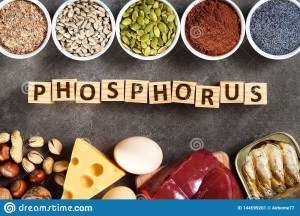
4. Sources: Plant sources are mainly in the form of phytates. Other sources are dairy, cereals, meat and fishes.
Familiar sources available: Lentils, cheese, yoghurt, almonds, halibut, turkey, chicken and beef.
A healthy adult requires about 700mg/day.
Growing children, pregnant and breastfeeding women require more of Phosphorus for proper growth and development.

5. Hypophosphatemia: When the serum level is below 2.5mg/dl.
Causes: Usually, the deficiency is rare as enough of Phosphorus is available from food sources.
Certain Conditions where Hypophosphatemia occurs:
Reduced intake in the diet,
Alcoholism,
Vitamin D deficiency, alkalosis,
Diabetic ketoacidosis,
Hyperparathyroidism
People who have renal insufficiency (acute tubular necrosis)
People on renal therapies.
People on parenteral nutrition
Hypomagnesemia/ Hypokalemia
Anabolic steroids
Diuretics
The symptoms are Fragile bones, bone pain, stiff joints, irregular breathing (arrhythmia), anxiety, fatigue, loss of appetite, irritability, tingling and numbness.
Usually, dietary sources are advised for deficiency. If severe, clinically treated with parenteral supplementation.

6. Hyperphosphatemia: When the serum level is more than 4.5mg/dl.
The causes are:
Excess oral sources,
Renal insufficiency like in Chronic kidney diseases
Cellular necrosis,
Excess use of laxatives,
Diabetic ketoacidosis
Hypoparathyroidism
Cell lysis like in tumour lysis syndrome,
The symptoms are Anorexia, neuromuscular cramps, tingling, calcification of soft tissues, joints, cornea, blood vessels (like in ESRD end-stage renal disease), Arterioslecrosis,
It is usually recommended by Physician to limit the dietary sources, use of phosphate binders, renal replacement therapies like Haemodialysis depending on the actual cause.
This post gives general information about understanding the importance of Phosphorus in our body. It’s not for clinical purpose or recommendation.

Thanks for reading.

Blessings and much love to all 💐


Post : Supplements: An aid or just hype. 4 points of understanding 👐

Hello Everyone! Have a great weekend 🙋🏻

Whenever we visit a grocery store. There is always a separate counter for vitamins and minerals supplements. It feels like why do we have to take the pain of looking for fresh fruits and vegetables, instead take some of the supplements home which will fulfil our daily requirements of vitamins and minerals. But, it is not so. Right from evolution, humans are born to live and survive on food. So, it is always the food first.

It is the healthy diet which is the key to provide you with the best sources of vitamins and minerals to the body for growth and maintenance. If you are eating the best healthy form of diet and nutrient-dense food, then supplements are not necessary at all. But, sometimes, even if you are having a healthy diet, there are some deficit for which you are showing some signs and symptoms. Then, there is a requirement for supplements. So, vitamins and minerals pills are a supplement to your diet to recover the deficit but not replacement.

4points of understanding

1.Balanced diet: Moreover, a healthy balanced diet is not only a source of vitamins and minerals but also a good source of dietary fibres, protein, carbohydrate and fat which are essential for the body. Supplements do not contain any kind of dietary fibres so they are not wholesome as in a healthy diet. Again vitamins and mineral supplements do not get fully absorbed sometimes in the body like for instance, fat-soluble vitamins do not get absorbed if taken in empty stomach. Therefore, there is no substitute for a healthy nutritious diet. So, never rely on supplements for your daily requirement. Before, taking supplements, it is important to consult your Physician.

2.Heart diseases: People with risk of heart disease are usually advised to take Omega 3 fatty acids which are found in fishes like salmon, herring, tuna, at least twice a week (American Heart Association). So, omega 3 fatty acid supplements (EPA +DHA) are recommended for such people. It is always wise to discuss the diet plan with the Physician before consuming such supplements.


3.Antioxidant vitamin supplements (A, C and E): There is yet to be proved clinically that antioxidant supplements provide overall benefits. So, it is not to rely on these supplements for the daily dietary sources of antioxidants. Therefore, antioxidant food sources like veggies, fruits and whole grains are the best.

4.Harmful: Too much of any supplements which are not required for the body, taken in large quantity can be potentially damaging. Too much of iron can have the risk of chronic diseases, or too much vitamin A can cause to have birth defects. Again, the interaction of dietary supplements, along with prescription drugs, can sometimes be potentially toxic.

Thanks for reading.

Blessings and much love to all 💐