


10 facts: Why is self-awareness an ultimate goal?

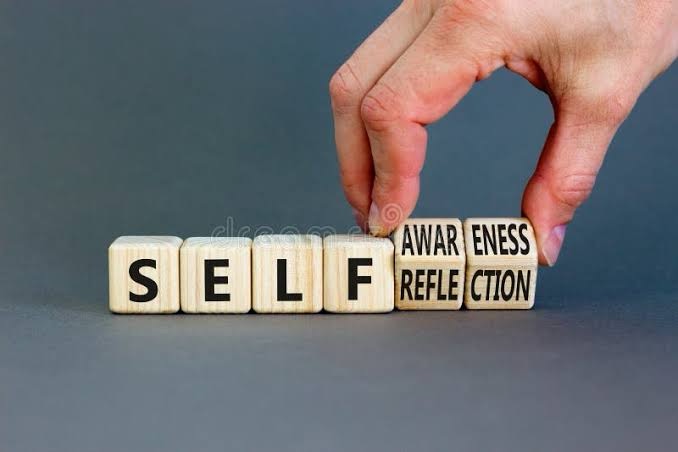
1. Self-awareness is quite a commonly used term for mental health and well-being. While it has been discussed frequently, many people lack its actual understanding. Our everyday life is often caught up in autopilot mode, so our quality of awareness is very low. Our thoughts, emotions, reactions, habits, routines and impulses of day-to-day life are all on autopilot, so that instead of being aware of them, they keep us in control every day. So, it is important to understand Self- awareness and learn this ability of self-observation to improve our quality of awareness.

2. Many times in real life, we have gone through similar experiences, similar kinds of failures, attract similar people, have similar reactions, similar impulses, similar emotional meltdowns; the reason is not the outside world, but it is our inability to understand ourselves and our unwillingness to change. Most of the time, we are not self-aware of our emotional state, lack understanding of our strengths and weaknesses, so we end up in similar situations and experiences. As an individual, it is important to learn self-assessment, introspection and the ability to recognise our thoughts, feelings, emotions and actions.
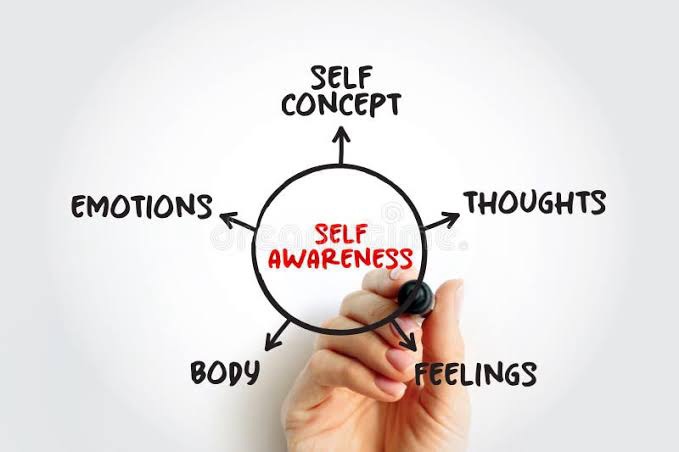
3. Self-awareness is a psychological skill of knowledge and understanding about one’s own emotional state. It’s about self-observation, self-assessment of one’s emotions, thoughts, feelings, reactions and actions. It’s a capability of recognising one’s own reactions, actions, and behaviour in interacting with the outside environment and other people. Self-awareness helps in identifying tendencies, understanding emotional states, strengths, weaknesses, limitations and personal goals. It’s a lifelong learning ability to develop confidence and optimism in this dynamic world.
4. Self-awareness can be beneficial in several ways:

• Helps in building self-esteem, self-control, creativity, and skills

• Benefits include self-acceptance, emotional growth, and self-development.

• Aids in decision-making.

• Understanding strengths, weaknesses, and limitations.

• Accurate self-reports.

5. For several decades, thousands of research studies have been carried out to understand the interconnectedness between self-awareness and important key attitudes of human behaviour like habits, feelings, emotions, happiness, stress parameters, empathy and job satisfaction. Broadly, two types of self-awareness studies are recorded as :

• Internal self-awareness: It’s the ability to observe and monitor our inner world, while some label it as a state of self-consciousness temporarily. It is found to be associated more with relationships and job satisfaction as we try to fit ourselves with our personal control and social control.

• External self-awareness: Some state it as the difference between how we see ourselves and how others perceive us. Studies show that people who understand how others see them can be more empathetic and understanding of others’ perspectives.
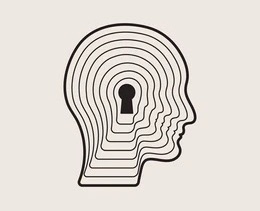
6. Extensive research has identified five layers of self-awareness:

• Physical: Awareness of your physical body as shape, size, gender, race, ethnicity and five senses.

• Energetic: The breath and energy levels, which include the life forces that help you to move, think, create and take action.

• Mental: The thoughts, feelings, emotions that help you to react and take actions for yourself, others and life.

• The Witness: When you learn to become your witness and become aware of the different layers of self-awareness without being judgmental. This is an essential part of the path of learning self- awareness because you can bring about changes, a better understanding of your flaws, unhelpful patterns of beliefs, and habits that need to change.

• Bliss: Deep connection with a Higher Self, the Truth. A spiritual interconnectedness with the Divine.

7. The skill of knowing yourself is the biggest deal. If we actively start employing this art of self- awareness, we see ourselves as in a mirror, no hidden veil, just inside out, the reality as it is. Then,we start to find acceptance within ourselves, develop resilience if changes are not possible, and consciously bring about changes in our reactions, habits, behaviour and actions in our day-to-day life whenever required. This makes our everyday life approach easier, better handling relationships with people around, self -efficacy in controlling our mind, emotions, impulses, feelings, reactions, dealing with the external environment, people and the world around as it is.

8. Being in a path of self-awareness asks us to understand:

• Clear knowledge of our basic nature, character, impulses, flaws and desires.

• Observe our own habits and behaviour in dealing with our inner world and external world.

• In alignment with our energy levels and breath, and how they are affected by our choices and lifestyle.

• Keep an eye on our thoughts, feelings, emotions, impulses and learn to respond rather than react to whatever life throws us.

• Being a witness to self (intuitive wisdom) so that self-acceptance is easier without being judgmental.

• Searching for our connectedness to something bigger than ourselves.

9. Practising and learning to seek self-awareness is far from being an easy task; it is a lifelong process. Our day-to-day life is so much attuned to working, earning money, parenting, paying the mortgage, bills, and routine hustles that we hardly get time for ourselves. Besides, many obstacles cause hindrance in this path :

• Fear – Knowing and understanding our vulnerability, uncomfortable emotions, and weaknesses.

• Attachment – attachment to people, desires, things can often lead to internal conflicts.

• Aversions – Conscious understanding and resurfacing of situations, people, we usually avoid, internal conflicts, unresolved emotions and discomforts.

• Ego- Instead of being the centre of the world around us, knowing that ego is that tool to distinguish us “I” from the outside world, learning to balance it with wisdom rather than controlling us.

• Ignorance – Learning and understanding about the larger picture of life, rather than being happy when life goes well and disliking it whenever life throws challenges.

10. Developing and seeking self-awareness is an ongoing process, a lifelong learning. In this process, as an individual, there is tremendous personal growth, control over emotions, decision- making and self-acceptance with limitations. Some of the basic strategies are:

• Daily practising mindfulness, calmness, and reflections upon thoughts without judgement.

• Journaling your thoughts, feelings, emotions, impulses on experiences and situations.

• Getting honest feedback from trusted friends, family members, siblings, and partners.

• Self-analysing the situations that can trigger strong emotional responses like anger, panic- attacks, pain, and fear.

• Self- assessment of limitations, weaknesses, strengths, and levels of resilience.

• Routinely reviewing the day-to-day reactions, actions, decisions and interactions.

Thanks for reading.

Peace and love 🙏

10 facts behind this human behaviour: Why act of cleaning is deeply satisfying?

1. Organizing or cleaning your space, room, or home isn’t about tidiness, but being in control of a world that feels otherwise uncontrollable. It’s about a mental state with clarity, being organized and being at peace with oneself. Psychologically, the environment we live in reflects our mental state. In a world full of everyday stress, chaos, and overwhelming uncertainties, cleaning becomes a tool, a therapy to make ourselves feel organised, meaningful and at peace. Clearly, this act can help reduce stress hormones and release endorphins, which can lift the mood.

2. Many people, even after a stressful day, have a habit of cleaning and tidying their stuff after reaching home or their living space. Psychologically, when emotions are overwhelming and stressful, our brain tries to do things which are tangible, grounding, and clarifying, which makes us feel more in control. These actions give the brain a sense of relief and stability, an escape in an otherwise uncontrollable world.

3. In the brain, activities like reorganising the bookshelf, arranging the office table, cleaning and tidying the home, folding clothes in the closets, cleaning the kitchen, washing the dishes, vacuuming the floor stimulate the parasympathetic nervous system, the reward system, releasing dopamine, the happy hormone. These small acts instantly feel rewarding, light and happy. A tidy living space, home, or office gives the subconscious mind a feeling of security, stability, and organization.

4. Psychologically, on the flip side, a disorganised, messed-up space gives the mind a sense of cluttered thoughts, incoherence, ambiguity, confusion and anxiety. In an already stressful, loud world, you feel more overwhelmed, stressed, where things and people are unpredictable, uncertain and reactive. So, for a change, cleaning, organising, and rearranging makes people feel instantly happy, stable, predictable and certain.

5. Research shows that a cluttered, anxious, stressful mind raises the cortisol hormone. On the other hand, the environment we live in reflects our mental state. So, a messy, cluttered space clearly affects our mental state. The subconscious mind feels confused, lacks clarity, and is incoherent in a disorganised space. So, rearranging the room, furniture, things, clothes, books gives an instant emotional high, certainty and sense of control. The truth is, cleaning isn’t about habit, it’s about emotional regulation, choosing to change the emotional responses of stress, anxiety, chaos to stability, calmness and clarity.

6. Emotional regulation, by definition, is the ability to regulate our emotional responses from a state of uncontrolled, overwhelming situation by making behavioural changes with a healthy coping mechanism to a state of emotional grounding, stability and a sense of control. Examples of emotional regulation are deep breathing, going for a walk, journaling, light exercise and doing tasks like rearranging the books, furniture, cleaning the kitchen, doing the dishes and so on. It’s the ability to change a negative situation’s impact to a more productive and fulfilling one.

7. The strategies of emotional regulation can be summed up as :

• Recognise: Identifying the emotions like anger, anxiety, ambiguity and incoherence.

• Respond: instead of reacting negatively, changing the situation’s impact to a more productive, controlled and tangible behaviour like going for a short walk, rearranging the books on the shelf, cleaning the mess, folding clothes in the closet, cleaning or mopping the floor or any similar activity.

• Reappraisal, like changing the emotional response to more rewarding outcomes like stability, calmness, sense of control and certainty.

• Reflecting on the change of behaviour and situation gives deep satisfaction and happiness.

8. Activities like cleaning a room, realigning a corner, rearranging books, furniture, cleaning a countertop or mopping the floor are not just tidying or organising acts or behaviour but something more deeper as emotional relief or emotional satisfaction. It’s about reconnecting oneself, bringing a sense of control, stability in a world of external chaos, a stressful day or an overwhelming situation. So, for many people, organising and cleaning their home or their living space becomes a daily emotional ritual and therapeutic.

9. People who keep doing such activities, while they keep performing the acts, they also process their emotions, release the stressful thoughts, anxiety, ease the confusion, bringing more clarity and stability. In fact, by doing such activities, as the visual clutter slowly fades away by physical actions, internally, the mental clutter slowly subsides, emotions and thoughts become more under control, and thinking becomes clearer and regulated.

10. To sum it up, in a world full of uncertainties and unpredictability, organising, rearranging, and cleaning gives an instant outcome which the brain interprets as safety or being under control. When a book or a thing is placed exactly where it belongs, refolding a dress and placing it back in the closet, cleaning the otherwise dirty countertop, it’s like reconnecting with oneself, which gives the subconscious mind that instant boost or reward of comfort, safety and stability in an external world of chaos or an uncontrolled environment.

Thanks for reading.

Peace and love 🙏

Dealing with emotional thoughts: A perspective 🙌

Emotions are subjective yet universal among all humans. They significantly influence our daily lives, decision-making, behavior, relationships, psychological states, and physical health.

Our emotional thoughts arise from emotional reasoning in response to situations, people around us, events, and past experiences. Emotional responses trigger our thoughts, feelings, actions and behaviors in reaction to external events, situations, or circumstances. Thus, emotions play a crucial role in our everyday lives and the decisions, we make.

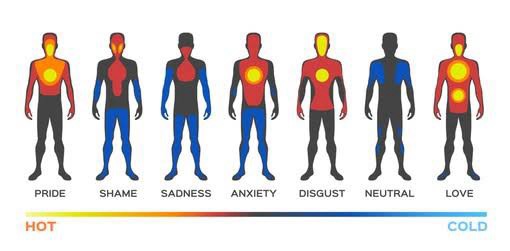
Research states that all things in the Universe are made of energy which has a vibrational frequency. Emotions too, have amplitude and frequencies. Positive emotions like peace, love, and joy are found to have higher frequencies as compared to negative emotions like anger, fear, guilt, and sadness. According to the frequency chart, emotions like guilt, and shame have as low a frequency of 30-20 Hz to emotions like love, peace have as high as 500-600 Hz. Studies often link low frequency to disease state, depression and stress. Negative thoughts and feelings can often create a low vibrational frequency state which can create anxiety, and stress and affect our physical health.

Studies have consistently shown that negative emotional thoughts and feelings can significantly affect our physical health and overall well-being. The importance of the mind-body connection and the gut-brain connection highlights how our physical body responds to our thoughts, feelings, and mental state.

While unwanted changes, negative experiences, and challenging situations are a part of life, learning to manage our emotional state and well-being is a significant challenge—but it is certainly not impossible. Events such as:

Death of a loved one

Suffering from an illness

Getting laid off from a job

Divorced

Getting married, having a baby

Financial issues

Dealing with a pandemic or war-like situations

Cheating partners

Domestic violence

Physical health often suffers when emotional health is struggling. During times of emotional crisis, many individuals may seek an escape through unhealthy coping mechanisms such as alcohol abuse, drug abuse, or binge eating, attempting to suppress their emotional turmoil. Unfortunately, this approach does not lead to healing and can result in disastrous consequences. The list of physical impacts and symptoms experienced in a state of emotional stress is extensive.

Physical symtoms frequently seen as:

Palpitation

Chest pain

Back pain, neck stiffness

Fatigue , tiredness

Poor sleep, insomnia

High blood pressure

weight loss / obesity

Stomach upset like bloating, acidity

Physical signs of our mental state can often be quite apparent. Additionally, there are mental symptoms that we or those around us may observe, even if we attempt to deny them. Here are several such signs:

*Resisting to acknowledge the thoughts instead of accepting

*Not self-realising and accepting the present situation

*Trying to control the situation or the people around

*Suppressing emotional thoughts and feelings instead of expressing

*Living in blame

*Focussing on lacks

*Forgetting gratitude

Dealing with emotional thoughts is not easy. It’s important to remember that while I cannot control external events or situations, I can influence my own mental state to cope and adapt positively. Here are five simple tools that can help bring about a positive shift in the mental state:

1.Self-Responsibility: Recognizing and taking responsibility for our mental state is crucial. Often, we create more pain and hurt from emotional thoughts and feelings by overthinking and getting caught in repetitive loops, rather than addressing the actual situation. It’s important to remember that 95 to 98 percent of our worries are self-created rather than based on reality. Only about 2 to 3 percent of our concerns are truly justified. Therefore, it’s essential to become aware of and take responsibility for our mental state, as this is the first step towards creating positive change.

2. Let go of control: We have to understand that we cannot control everything that happens in our lives. We have to let go and trust the Divine and timings of life. Letting go is important to heal and restore balance.

3.Journaling and practicing gratitude: Daily journaling can release deep thoughts that might otherwise feel heavy and hurtful. Practicing gratitude and maintaining a thankful mindset can elevate our vibrational frequency and promote healing.

4. Healing the Sacral Plexus Chakra: According to Yogic science, the sacral chakra is responsible for maintaining emotional balance, creativity, and a sense of vitality. To heal this chakra, engaging in yoga and physical activities such as dancing, swimming, and savoring life’s simple pleasures— like playing with a child, listening to birds chirping, or enjoying the sound of flowing water—can help release blockages.

5. Daily Affirmations: Choosing words and phrases that align with your life goals, such as mantras or sacred verses, can significantly enhance your positivity and resilience. Reciting these affirmations each morning can set a positive tone for the day. Some powerful examples include: “I trust the Universe,” “I am strong and powerful,” and “I let go” “My food nourishes my body and mind”.

Every day, we experience a wide range of emotions based on external events, past memories, current situations, and various circumstances. It is essential for us to recognize our emotional limitations and boundaries in order to protect our mental well-being. One of the most important things we can do is to let go and trust the Supreme, the Divine, as not everything is within our control.

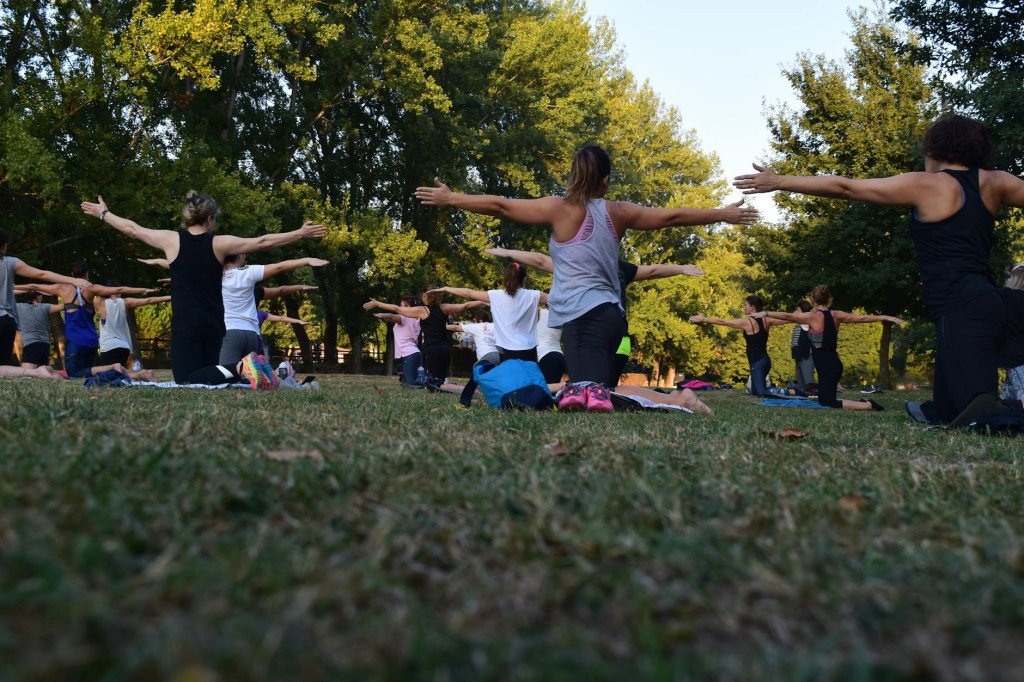
Self-reflection is crucial for restoring our emotional balance. Engaging in daily activities such as meditation, yoga, chanting, and appreciating the small joys in life holds great significance in achieving mental equilibrium. Finally, staying grateful and expressing our thankfulness for this journey of life is truly fulfilling.

Thanks for reading.

Peace and love 🙏

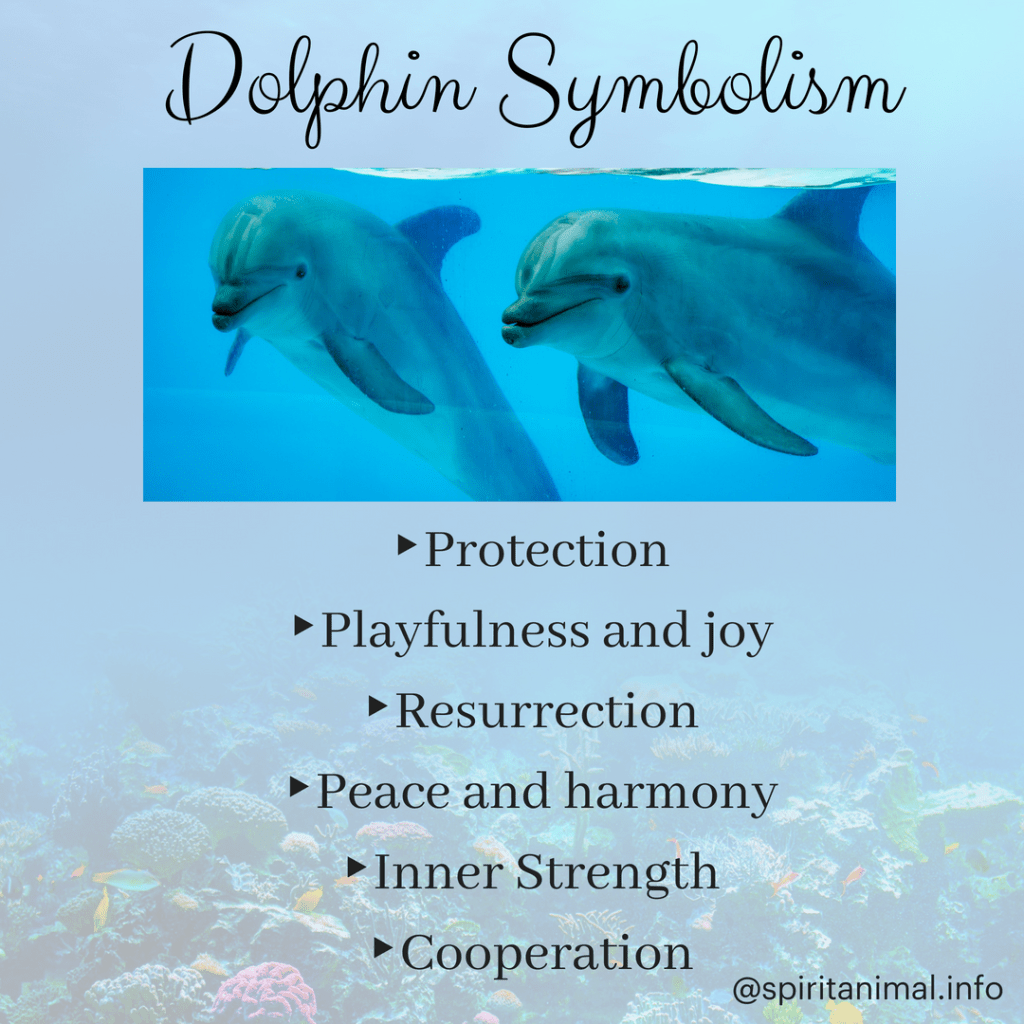
Dolphins ❤️ : Inspirational !

Hello everyone! Have a wonderful and safe day 🙋🏻‍♀️

Thanks for reading.

Blessings and much love to all 💐