


10 facts: The effect of Humming Bee sounds on health 🙌

1. A humming bee sound made by a person is defined as a low-frequency sound made with the mouth closed and the throat open. This sound causes the air to be forced through the vocal cords, vibrating the chest and the head. This sound is usually a voluntary noise which can be made by the person while exhaling. If it is not a voluntary noise made by a person, it can be linked to low-frequency tinnitus, which can cause significant distress. Otherwise, this humming sound voluntarily made causes some amazing benefits to human health, both physically and psychologically.

2. Humming is a low-pitched sound made by an individual voluntarily with the mouth closed. Such a sound is usually made by monks and yogis as a routine meditation practice. This sound has the capability of impacting both emotional and mental health. Studies have shown that humming can promote a state of calmness, peace, and stability. Humming as a mindful practise can significantly impact emotional stress, sleep and physiological health. It can improve focus and attention.

Stressful

3. The power of simple humming can have a significant impact on psychological health. The benefits are many, as such :

• Stress is significantly lowered with humming by stimulating the parasympathetic nervous system.

• Routine practice of humming can increase the HRV, heart rate variability by reducing the heart rate and help in cardiovascular health.

• Humming increases focus and attention by improving cognitive ability.

• Promote respiratory health by increasing lung capacity.

• Humming can signal the autonomic nervous system to promote sleep and relaxation.

4. Humming as a quick tool for stress relief: It can be done anywhere without any equipment.

•Sitting or lying down in a comfortable posture.

• Closing eyes, taking 2-3 deep breaths, inhaling through the nose and exhaling through the mouth.

• Making a “mmmm” by inhaling deeply through the nose with the mouth closed, as you exhale, the low-pitched sound is produced, and the vibration can be felt on the chest, throat and head.

• Notice the vibrations as they travel through the body, which helps to release the stress.

• Continue for 5-10 minutes, and you will suddenly feel lighter and more relaxed.

5. Chronic stress response can increase anxiety, inflammation and sleep problems. Regular practice of humming can help to combat stress by lowering cortisol, the stress hormone.

Producing the humming sound will create vibration in the throat and chest, which in turn stimulates the vagus nerve. By stimulating the vagus nerve, the parasympathetic nervous system is activated and lowers cortisol, which creates the “fight or flight “ response.
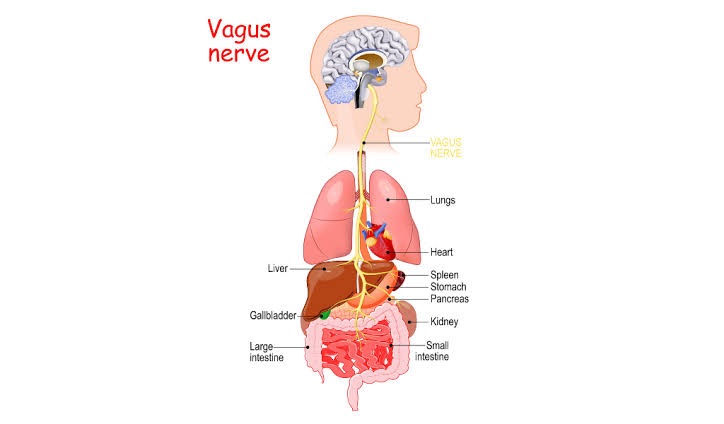
6. Humming and Vagus Nerve: The Vagus Nerve runs through the larynx (sound box) and throat (pharynx) before reaching different organs of the body, like lungs, heart, liver, stomach and intestines. So, when the humming sound is made in the throat, there are mechanical vibrations that reach the throat and chest. These vocal vibrations stimulate the parasympathetic nervous system, which quickly shifts the body from a “rest and digest” response to a “fight or flight”mode. The parasympathetic nervous system activation also helps to lower the heart rate, lower the cortisol level and reduce the overall tension and stress in the body.

7. Humming and nitric oxide (NO): Nitric oxide is naturally produced in the body during exhalation, which acts as a natural defence mechanism to clear the airways from pathogens. It also acts as a vasodilator and supports cardiovascular health. Humming naturally increases the level of NO (Nitric Oxide) in the nasal passage. The humming sound causes the mechanical vibration in the throat and chest, which in turn oscillates the airflow through the sinuses, where the concentration of NO levels is maximum. Therefore, the simple practise of humming can increase the level of NO manifold times than a normal rhythm of exhalation.

8. Humming, a tool to cope with overthinking: Overthinking is an issue commonly suffered by the majority in today’s time of uncertainty. The mind is filled with repetitive thoughts, negative thoughts, and racing thoughts. Humming can be an effective tool to combat overthinking. Focusing on the humming sound can divert the awareness to let go of repetitive thoughts, allowing one to regain control of the mind and give peace. Regular practise of humming can lower anxiety, mental tensions and restlessness.

9. Humming, a tool for meditation and Yoga: In Yogic tradition, for thousands of years, Humming Bee breath is a kind of Pranayama ( breathing technique) known as “Bhramari”, which is regarded as a powerful breathing technique to calm the mind and create inner peace. In many Ancient Indian texts, it was considered that this humming bee breath creates a resounding echo to enhance mental clarity, reduce stress and bring mental peace and well-being.

10. Takeaway: Humming is indeed a powerful breathing technique which can instantly quiet the mind, help to break the loop of negative, unnecessary thought patterns by helping the mind to focus your awareness on the echo of the humming sound. Neuroscience research has shown that the practise of the humming bee technique can help to bring mental clarity, let go of unnecessary thoughts, calm the nervous system and enhance emotional wellbeing. The deep vibration of the throat and the chest created by the humming sound stimulates the Vagus nerve, helps to reset the mind, and lowers stress and blood pressure.

Thanks for reading.

Peace and love 🙏

Dealing with emotional thoughts: A perspective 🙌

Emotions are subjective yet universal among all humans. They significantly influence our daily lives, decision-making, behavior, relationships, psychological states, and physical health.

Our emotional thoughts arise from emotional reasoning in response to situations, people around us, events, and past experiences. Emotional responses trigger our thoughts, feelings, actions and behaviors in reaction to external events, situations, or circumstances. Thus, emotions play a crucial role in our everyday lives and the decisions, we make.

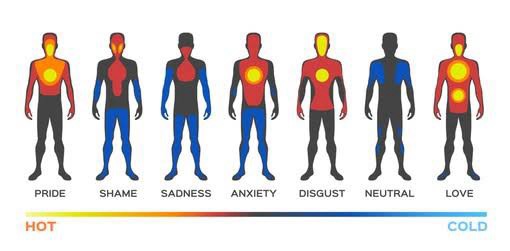
Research states that all things in the Universe are made of energy which has a vibrational frequency. Emotions too, have amplitude and frequencies. Positive emotions like peace, love, and joy are found to have higher frequencies as compared to negative emotions like anger, fear, guilt, and sadness. According to the frequency chart, emotions like guilt, and shame have as low a frequency of 30-20 Hz to emotions like love, peace have as high as 500-600 Hz. Studies often link low frequency to disease state, depression and stress. Negative thoughts and feelings can often create a low vibrational frequency state which can create anxiety, and stress and affect our physical health.

Studies have consistently shown that negative emotional thoughts and feelings can significantly affect our physical health and overall well-being. The importance of the mind-body connection and the gut-brain connection highlights how our physical body responds to our thoughts, feelings, and mental state.

While unwanted changes, negative experiences, and challenging situations are a part of life, learning to manage our emotional state and well-being is a significant challenge—but it is certainly not impossible. Events such as:

Death of a loved one

Suffering from an illness

Getting laid off from a job

Divorced

Getting married, having a baby

Financial issues

Dealing with a pandemic or war-like situations

Cheating partners

Domestic violence

Physical health often suffers when emotional health is struggling. During times of emotional crisis, many individuals may seek an escape through unhealthy coping mechanisms such as alcohol abuse, drug abuse, or binge eating, attempting to suppress their emotional turmoil. Unfortunately, this approach does not lead to healing and can result in disastrous consequences. The list of physical impacts and symptoms experienced in a state of emotional stress is extensive.

Physical symtoms frequently seen as:

Palpitation

Chest pain

Back pain, neck stiffness

Fatigue , tiredness

Poor sleep, insomnia

High blood pressure

weight loss / obesity

Stomach upset like bloating, acidity

Physical signs of our mental state can often be quite apparent. Additionally, there are mental symptoms that we or those around us may observe, even if we attempt to deny them. Here are several such signs:

*Resisting to acknowledge the thoughts instead of accepting

*Not self-realising and accepting the present situation

*Trying to control the situation or the people around

*Suppressing emotional thoughts and feelings instead of expressing

*Living in blame

*Focussing on lacks

*Forgetting gratitude

Dealing with emotional thoughts is not easy. It’s important to remember that while I cannot control external events or situations, I can influence my own mental state to cope and adapt positively. Here are five simple tools that can help bring about a positive shift in the mental state:

1.Self-Responsibility: Recognizing and taking responsibility for our mental state is crucial. Often, we create more pain and hurt from emotional thoughts and feelings by overthinking and getting caught in repetitive loops, rather than addressing the actual situation. It’s important to remember that 95 to 98 percent of our worries are self-created rather than based on reality. Only about 2 to 3 percent of our concerns are truly justified. Therefore, it’s essential to become aware of and take responsibility for our mental state, as this is the first step towards creating positive change.

2. Let go of control: We have to understand that we cannot control everything that happens in our lives. We have to let go and trust the Divine and timings of life. Letting go is important to heal and restore balance.

3.Journaling and practicing gratitude: Daily journaling can release deep thoughts that might otherwise feel heavy and hurtful. Practicing gratitude and maintaining a thankful mindset can elevate our vibrational frequency and promote healing.

4. Healing the Sacral Plexus Chakra: According to Yogic science, the sacral chakra is responsible for maintaining emotional balance, creativity, and a sense of vitality. To heal this chakra, engaging in yoga and physical activities such as dancing, swimming, and savoring life’s simple pleasures— like playing with a child, listening to birds chirping, or enjoying the sound of flowing water—can help release blockages.

5. Daily Affirmations: Choosing words and phrases that align with your life goals, such as mantras or sacred verses, can significantly enhance your positivity and resilience. Reciting these affirmations each morning can set a positive tone for the day. Some powerful examples include: “I trust the Universe,” “I am strong and powerful,” and “I let go” “My food nourishes my body and mind”.

Every day, we experience a wide range of emotions based on external events, past memories, current situations, and various circumstances. It is essential for us to recognize our emotional limitations and boundaries in order to protect our mental well-being. One of the most important things we can do is to let go and trust the Supreme, the Divine, as not everything is within our control.

Self-reflection is crucial for restoring our emotional balance. Engaging in daily activities such as meditation, yoga, chanting, and appreciating the small joys in life holds great significance in achieving mental equilibrium. Finally, staying grateful and expressing our thankfulness for this journey of life is truly fulfilling.

Thanks for reading.

Peace and love 🙏

Taming the monkey mind….5 facts 🙌

‘Monkey mind’, yes, that’s what the Buddhists called our wondering mind. The more you try to control, the more it wanders. This is the nature of the human mind. It can never remain still. During the day, whenever, we try to be still, the mind races ahead to the future or returns to the past in some old memories. Our mind is always thinking of something or another. Distractions like tasks, jobs, people around, day-to-day stress, entertainment, and social media, all add up to the flickering nature of the mind. Therefore, let’s explore why our mind behaves this way and how we can try to control it, if at all, it’s possible:


1.A wandering mind is quite a normal behaviour and characteristic in nature. The attention shift of the mind from one thought to another is involuntary before even we notice it. In a monotonous daily activity of a boring nature, like studying, in the classroom in case of a student, or doing daily chores, it can happen voluntarily.

2.Studies show that the mind wonders mainly for two reasons: Either the work or activity, we have been doing is not engaging and monotonous and another reason can be that facing obstacles or hard task causes worry and anxiousness.
Sometimes, Scientists, link the wandering nature to creativity, explorative and intuitive mind. However, this becomes problematic. In those times, when we are supposed to be working, we lose focus and attention or think in bed when we are supposed to sleep. Oftentimes, the mind is either daydreaming, imagining things, anxious thoughts worrying about the future or replaying some old memories, stuck in some emotional thoughts.

3.What can be the possible causes of a wondering mind?
*Anxiousness and worrying mind.
*Boring and repetitive activities.
*External distractions like our mobile phones and other gadgets, people around, noises, social media.
*Internal distractions like stress, anger, hurt, sadness. Physical discomfort like fatigue, pain, hunger.
*People with attention deficit disorder have a hyperactive mind.

4.Self-awareness: How can I realise that I have a wondering mind?
Firstly, being aware of your own mental state. Most of the time, if you find yourself, overthinking, worrying, and ruminating thoughts.

Your mind is often, exhausted, being engaged in unproductive thoughts, unable to find solutions to problems or losing your spontaneous problem-solving ability.

Being self-aware, in such a state of mind, can help us to bring about change in our mental state.


5.Taming a wondering mind can be a very difficult task. But, with practice and consistency, everything is possible.

a)Meditation is an effective tool. Again, meditation is’nt easy. Perhaps, sitting still in a quiet place, trying to focus the mind is a hardest task. Focusing on breathing is a commonest method. Other methods can be, focusing or imagining an object like sun, moon, or the ocean. Using a guided mediation or listening to nature sounds, chanting of mantras can be effective.


b)Journaling is a powerful tool to clear the mind. Noting down daily thoughts, thoughts related to job, loved ones, family, future goals, holiday plans, emotional pain, feelings of old memories can be very useful to clear the mind clutter. Writing down can self-help to acknowledge the bothering thoughts and refocus the mind to concentrate on the task at hand.


c)Physical activity like going for a walk, physical movement of the body, legs and hands, watering your balcony plants, spending time in nature, light exercises can be very helpful to reset the mind. Playing an instrument, or listening to a music piece can be rejuvenating to refocus the mind too.

d)Sleep and adequate rest are necessary to clear the mind clutter. Getting a proper goodnight sleep and following a daily sleep routine is mandatory. Making a conscious effort to keep away from our mobile phones, social media distractions, caffeine free, emotional disturbing thoughts, 2-3 hours prior going to bed, can give an adequate sleep.

Thanks for reading.

Peace and love 🙏