Is ego negative? 4 simple points of understanding.

By ego, it means simply, our identity of “self “. It is neither negative nor positive. As a human being to live and survive, we need a strong sense of identity to develop relationships, to thrive, to make a living, to succeed. So, there is nothing wrong with it. Chasing your dream, wanting to own a big house, an expensive car, to earn money, going for adventure is not at all bad.

But, when ego turns into pride, we become over conscious of our identity. When “self” rules life and when fear craves to overprotect our self-identity, then, ego can be disastrous to both us and the people around with whom we live. We become completely blinded of our true identity (soul identity) in order to protect our fake self or ego. We fail to understand, acknowledge and hold no room for other’s opinions and feelings as we think we are always right.

Fake self identity

So, religious practices like Buddhism preaches to conquer the ego and lead a life of our true self. Because, the ego is often identified as our false self, materialistic state, social status, the success which can never lead to happiness and peace within.
So, how do we control our ego? Monks and yogis practised meditation for years to get into their true self and tarnished their ego. But, neither you and I have that much time or patience in our everyday life to practise to let go of our ego.


1.So, the easy way to control our ego is being aware of our existence, the limited time we live in this world. And to remember that death is inevitable and inescapable.

2. Staying grounded, and being in company of people that keep you grounded.

3.Realising the present moment, being grateful for it. To understand that living every moment is a blessing and gift.

4. Being aware and avoiding our egotistical pattern of thinking and reactions. (e.g. I am superior, I am better than others, No one can compete with me ….. so on). Reminding myself, that this world has been created by perception, not reality and everything here is transient, not permanent. Our real self and true nature is our relationship with the Universe and the Divine.

All these steps help us to be close to our true self and remind us that our ego is simply, a self-identity tool, just a survival trait in this competitive world and nothing else. We know when to draw the line and not losing our true self and peace.

Courtesy: Motivation blog

Thanks for reading.

Peace and love πŸ™

Post : Are genes linked to stress ? 4 points of clarifications.

Some 50 – 80 years ago, people rarely used the word “stress”. Maybe the word was just another word in the dictionary whose meaning had the least relevance in their lives. But, today, it is the most common widely used word in every individual’s life.

Today, everywhere, you go, stress can follow you. At home, at the office, stuck in traffic, getting late and the list goes on. Therefore, the most common causes of stress in people’s lives nowadays.

Relationship stress.
Financial stress.
Workplace stress.
Health concerns.
Daily chorus stress.

4 points of clarifications as to how genes are linked to stress.

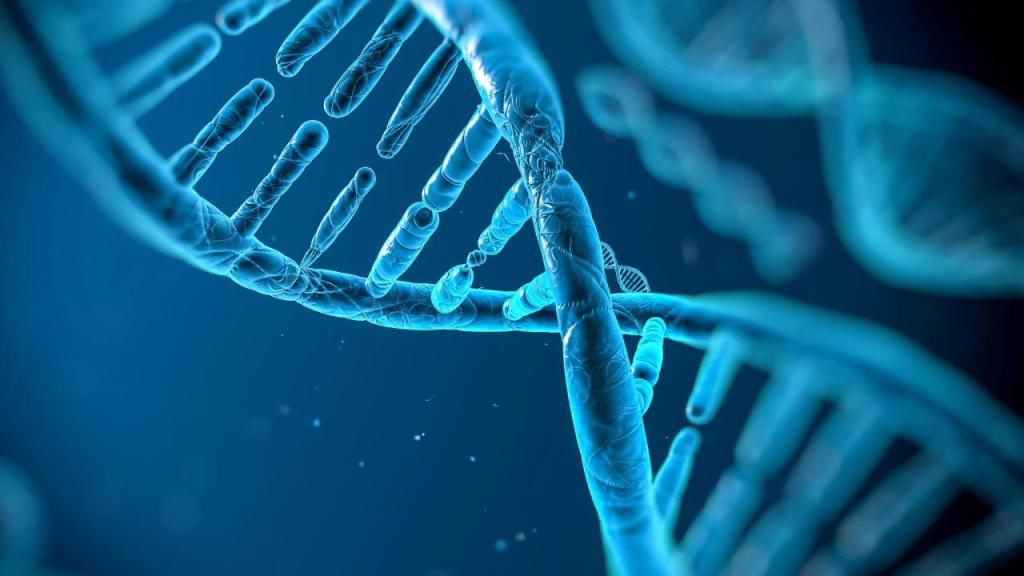
1.Genetical predisposition: Often seen, some people tend to battle more with day to day stress than some other people. So, how are genes related to our body’s psychological response? Genes produce proteins which influences our body’s reactions to different psychological responses and, stress being one of them. Single nucleotide polymorphism (SNP), are tiny differences in the genes which affect the release of hormones and proteins in the body and determine the psychological responses. This is a reason, different people react differently and have a different level of stress for the same particular situation.

2.COMT gene: Catechol – Omethyltransferase is an enzyme which causes the body to break the stress hormones like epinephrine, norepinephrine and dopamine. Epinephrine and epinephrine are hormones produces during extreme stress, under fight and flight response whereas dopamine is feel good (reward) hormone which also function as a neurotransmitter. So depending on which version of the COMT gene you have, your genotype can be a :

Warrior gene: Those who perform well under stress or under pressure.

Strategic gene: Those whose performance suffers during stress but performs well in calm situations.
Combination of both: Those who are quite in between.

3.BDNF ( brain-derived neurotrophic factor): BDNF normally function as protecting and creating new neurons, strengthening the signals between neurons. As far as stress is concerned, this protein acts as a resilience factor. This helps you to tolerate and resist the stressful situation and can still act and make you perform without affecting your health and wellbeing.

4.Managing stress level: This is the most important part of this topic. So how do we manage stress level? Depending upon, genetic predisposition, you may be the either high or low level of stress resilience. So, easy steps to handle routine stress are:
Breathing/relaxation: Deep breathing is a simple step that can be effective to control stress. Because, when you breathe deep, this makes the brain to relax and calm down.
Exercise: When you exercise, your body releases endorphins, your body enters the feel-good phase. 2 types of endorphins: Anandamide and serotonin.

Exercise increases your level of anandamide which helps the body to produce BDNF which in turn helps to regulate stress.
Serotonin is a feel-good chemical which makes you happy, motivated which can be boosted by exercise, walking, running or any physical activity which you enjoy doing. When serotonin is level is maintained, stress is less likely to occur.

Post: What the heart πŸ’“ feels

Post: Crying is therapeutic ! 7 wonderful benefits of crying.

Scientifically, crying is a flow of tears from the lacrimal gland which lies between the eyelids and eyeball for a strong emotional response. Then, you might like to know how emotion stimulate crying?


The external situation, event, response, experience, or a stimulating event send 2 messages in the brain simultaneously, one to the cortex, other to the hypothalamus. In the cortex, the emotional response is created, like hurt, pain, sadness, sorrow, stress, depression, anxiety, or fear. The hypothalamus is connected to the autonomic nervous system carries the stimulus of emotion via acetylcholine which stimulates the lacrimal glands, and tears start flowing.

Some 7 wonderful physical, mental benefits of crying:

1.Emotional equilibrium: Researches say that crying is an important way to restore emotional balance. Crying doesn’t always happen when someone is sad, hurt, pained, scared, stressed but also when extremely happy. So, this is a way for the body to respond and recover from strong emotion.

2.Detoxification: Negative emotions like stress, anxiety, sorrow build-up of many toxic chemicals inside our body. So, letting out emotional tears releases stress hormones and toxins from the body.
Besides, emotional tears, reflex tears help out to release smoke and dust from the eyes and continuous tears help to lacrimate the eyes and give protection against infections. Therefore, tears are detoxifying.

3.Soothing: After shedding tears for sometime, the parasympathetic (PNS) nervous system is stimulated. The PNS helps you to relaxed and is comforting. The body also releases the oxytocin and endorphins (feel-good chemicals) which slowly help you to feel calm and soothing. It also helps you to numb the pain. So, next time, you have a broken leg, don’t stop your tears.

4.Mood lifting: When you allow yourself to cry, you are numbing your negative emotions of sadness, pain, stress. So, the other emotions of joy and happiness will start to prop up slowly. While crying, you take quick short breaths, this also helps the brain to cool down and you will feel relaxed. Your mood slowly lightens up.

5.Cleansing: It is the tears that clean up the eyes and keeps them moist preventing you from eyesight problems. While crying, you also clear up your nasal passage from dirt and foreign bodies.

6.Interpersonal: It helps you develop bonding with your closed ones. You always cry in front of someone you trust which is typical human behaviour. So, you ought to cry in front of family members or close friends. Therefore, your bonding with them is strengthened.

7.Healthy: When you are at stress, your body is vulnerable to sickness. So, when you cry, you release cortisol, releasing the stress level. Therefore, you are doing a favour to your immune system of lowering the stress level and helping yourself to stay fit. You also tend to sleep better. Therefore, you stay healthy.

Post: Why is the pineal gland (the third eye) considered so powerful ? 6 wonderful scientific facts.

Anatomically, the pineal gland is a pea-sized endocrine gland which is located in the epithalamus, near the centre of the brain. Functionally, it is a part of the endocrine gland as it secretes the hormone melatonin, which is synthesized from serotonin, which maintains our day-night cycle, circadian rhythm, our natural biological clock.

Some mains functions of the pineal gland are :
Sleep cycle (circadian rhythm)
Reproductive functions and fertility
Bone growth
Body temperature
Water balance
Blood pressure
Immune system
Longevity and anti-ageing.

Scientific researches have proved that, besides maintaining the sleep cycle, the pineal gland has many important roles to play, hence it is quite a crucial organ.

Some 6 wonderful facts about this tiny gland;

1.Master Gland : Considered as a master regulator with the hypothalamus of the endocrine system, it controls hormone signals to all organs of the body. It has a dual neuroendocrine role, much bigger role than only maintaining the melatonin, sleep cycle. Besides, melatonin, serotonin, it also secretes biogenic amines like Catecholamines (Noradrenaline). Now, researches show that pineal gland is responsible for the release of pituitary hormones and so it is the master conductor of the endocrine system. Therefore, all the body’s vital functions are controlled by this organ.

2. Sixth sense :Since it has a rich adrenergic nerve supply, it is found to be very sensitive to our energy field, both magnetic and electric fields (vibrations) which we are normally not aware. Normally, we are aware of what our five senses feel. So, this gland is responsible for the “sixth sense.”, the bioelectromagnetic field (vibrations). This is what is called an Expanded consciousness. Animals have normally a bigger pineal gland so have a larger bioelectric field. They respond to vibrations while communicating which humans don’t use as we, humans have languages.

3. Third eye: Since the ancient time, it is regarded as the “third eye” (in many ancient mythologies like Egypt, Greek, Chinese and Hindu). Now science-based studies proved that it indeed contains rod-like cells (pinealocytes) that are similar to those of eye. There are both dark and light pinealocytes. The gland is connected to the eyes to detect light and dark stimuli and stimulate the release of melatonin.

4. Anti ageing :Melatonin which is released by the pineal gland is found to be a powerful anti-oxidant. It has about 200% more oxidative power than vitamin E and also vitamin C. Therefore, it is a strong hormone against oxidative stress, so very important in anti-ageing.

5. DMT :Pineal gland mediates the release of serotonin and dopamine. Both are considered as happy hormones. Therefore disruption in circadian rhythm can affect the release of melatonin which is synthesized from serotonin in Pineal gland. Another mystery fact is increased scientific evidence have shown pinoline and DMT( dimethyltryptamine) have been naturally producing in the pineal gland, help in mood, perception, consciousness, dream state and cognition. DMT is produced naturally during deep sleep in the unconscious state. It can be produced in deep meditation at a conscious level by experienced meditators like monks and yogis. DMT has a psychedelic effect, an elevated state because it gives the visionary experience, a state of transcendence, body and spirit connection.

6. Awakening : Since it is the most powerful organ, pineal gland activation can help you give more clarity about the world, and perform at your most optimal potential. It can help you perform brilliantly in any task.
Many practices like deep meditation, Kundalini yoga, Chi Kung (Chinese) like deep breathing, tapping, focussing (at the centre of forehead), laughing (being happy), light music and being in darkness can awaken the pineal gland. Pineal gland activation also helps to balance the body’s 7 chakras or 7 healing energy sources. Neuroscience has proved that activation of this gland can give profound spiritual experiences, out of the body experiences. Practising deep meditation and concentration daily can slowly help to activate the pineal gland.

Post : How strange are we ? 6 facts about “human behaviour” πŸ€—

Post : 5 situations when you should walk away for your good.

In life, there are many situations and circumstances where you can find yourself deprived and helpless. This is just because you are surrounded by people, obligations, emotions and feelings. As a person, you are always involved with people and situations within your family, home, office, society, community or wherever you go. This isn’t an easy task daily for you to remain stress-free and maintain calm and sanity.

Therefore, in every situation or discussion, whether it is an argument, disagreement, dispute, you have with your loved one or anyone in your life, you always have a choice. You have the right to choose whether you should remain to be involved or walk away, no matter wherever you are.

Scientific reserchesΒ have already shown that unwanted stress play a toxic role in harming our health, immunity (defence system against diseases) and overall wellbeing. The less , the better for us. Toxic reactions like anger, tensions, fear, hurt, anxiety, worry in daily life not only gives you unnecessary stress but affect your mental peace and greatly affect your physical health too. So what’s best for you and serve your purpose of wellbeing, should be an ideal choice. Atleast, you will have your peace and sanity maintained.

5 situations, when walking away seems to be a better choice.

1.Walk away from anger: Any arguments, disagreements with whoever you are that end up in anger and tensions, walking away is a better choice. In the process of trying to put forward your point, you may end up getting angry. Give time and space and wait for a more convenient time and opportunity. Things do work out in a relaxed atmosphere.

2.Walk away from your ego: A little ego always helps you to boost your belief and confidence in yourself. It does help you to grow in your career and work. But when your ego makes you feel better or superior to others is not at all a good thing. Then, your ego becomes pride. Holding onto it, everywhere, you go, becomes toxic. So, walking away from your ego when it doesn’t hold any purpose is a better choice.

3.Walk away from people who put you down, judges you and never acknowledges your opinion. Trying to please such people will only harm you more than doing good. So, hold on to your respect and walk away from people who don’t see your worth. Remember, not everyone will like you. So, trying to please everyone isn’t necessary.

4.Walk away from your fear: Each one of us has some fear or worry within us, The fear may be imaginary or may be related to past experiences. Overthinking and ruminating makes the fear worst. It becomes a hindrance to your progress in life and your goal. So, walking away from fear and worry which are baseless is a better choice.

5. Walk away from the past: The past which no longer exists can be full of both good and bad memories. While the good ones can be cherished but the bad ones keep you haunting. Then, you learn from your past but it sometimes stops you from experiencing life in the present times. So, it is better to walk away from the past which doesn’t exist anymore.

Post:Who is your life partner ? πŸ€”

Sunday Inspiration

Hello everyone, I am sharing a beautiful message that I came across about who your real life partner is. This is a beautiful message given by Shri Shri Ravi Shanker, a renowned spiritual guru from India.

I found it interesting and beautiful. Hope you will like it too.

Thanks for reading.

Much loveπŸ’

Post : When life puts you down? 5 ways to self help your emotional healing process.

Rumi says: ” What hurts you blesses you. Darkness is your candle “

When life crashes you down, you are deep down in emotional pain which only you can understand and experience. The pain is very personal. Life can put you down in many ways and many times like unhappy relationships, physical appearance like weight issues, heartbreaks, divorce, death of a loved one, sickness, disease, injury.

When you suffer such setbacks, you have a natural tendency of denial and trying to move on as fast as you can. But in the process, the recovery remains incomplete or even worse. I have been a very sensitive person myself in my entire life. So, I have always tried to look out and read for various ways by which a person can recover from any emotional healing. According to psychotherapy, it is important to experience the pain and slowly let the healing process in. It is necessary to feel the pain to let it heal. There are people around you who may have genuine concern about you, will advise you to move on as quick as possible. But in reality, the healing process does takes time to fill up the wound completely.

5 ways by which you can support your healing journey.

1.Acknowledge the pain: Respect and honour your pain for which you have suffered so much. Be it an emotional trauma or a physical illness, acknowledge the pain and experiencing it are important. When you let your emotional pain in, when you are emotionally drained, then only you can let the healing process to begin. Emotional pain can only heal when you let the healing process in. No amount of time or people, psychotherapist’s guidelines can heal your pain unless you acknowledge your pain and let the healing process in.

2.Overcome your mental barrier: When we suffer some kind of pain, we think we are bad human beings, we have been punished for our bad deeds. This mindset needs to change. Everyone goes through some pain and struggle through life. Pain and struggle are a part and parcel about life ‘s journey. Then again, self-doubt starts making us think if we deserve to heal. Yes, we are all very deserving to experience and enjoy life. Certain issues like being overweight, not a conventional good look, can even make you suffer emotionally. It is important to remember, that life is way beyond the superficial things. Accept the fact that external appearance isn’t so important in developing connections. Learn to stop judging yourself.

3.Dig out the source: Try to understand the source where your emotional pain appeared. Maybe the heartbreak, maybe the physical illness, maybe an emotional trauma during childhood or pain due to death of a loved one. Because when you dig in the source, then can you initiate the healing. Knowing the root, and working on it slowly helps you start healing.

4.Letting go: Let go of your fear and anxieties: Overthinking and worrying don’t let you heal. You have to let go of your anxieties, stress and fear which in turn will harm you more than doing any good for you. Even in case of physical illness, when you let go of your stress, there is a balance of the hormonal, nervous and immune systems which are all very much part of the healing process. Emotional healing starts to happen when you let go of stress completely.

5.Learn from the scar: Whether it’s an emotional scar or a physical scar, revisiting and rumination aren’t healthy at all. Ruminating the experience again and again, not only becomes toxic but even make it more difficult to heal and move on from the pain. Remember, everything around you changes, even your body’s cells undergo continuous transformation and regeneration, so leaving behind the pain and the past does help you heal faster and start refresh.

Post: Why “me” πŸ’– time is essential? 4 small endearing steps towards self-care.

Self-care is a priority and not selfish. The simple reason is if I don’t care about me, how can I care for my loved ones? If I don’t cater to my emotional and physical needs, then how will I cater to other’s needs?

But, then, in reality, you are driven by your responsibilities, to push yourself more and more. There are personal, professional, family, societal pressures and commitments which makes you push yourself to the extreme limits to fulfil all the demands and responsibilities. In the process, you forget yourself and do not even realise that you have your share of emotional and physical needs to be taken care of for your overall wellbeing.

Realisations come very late when we are knocked down by chronic stress, complete burnout or end up in a diseased state. Therefore, self-care daily is very important for both physical and mental wellbeing.

Scientifically speaking, there are several areas and dimensions of self-care.

Here, I have tried giving 4 small different steps towards self-care.

1.Spend some β€˜me’ time alone: Everyday, give yourself a few couples of minutes to cut off from the routine grind and the hustle-bustle. This is your β€˜me’ time entirely. Do whatever you enjoy doing, go for a short walk in nature, practise a hobby or listen to a piece of music. Meditate and observe your emotional feelings and acknowledge them. Understanding and acknowledging your both positive and negative thoughts are important so that you can let go of unwanted thoughts. Remember, thoughts are always associated with your feelings and experiences. Always, love and praise yourself for what you are and how far you have come in this journey. In self-care, self-love is important.

2. Control your stress level: Understand that when stress persists, your cortisol level shoots up. This adrenal gland hormone not only increases your blood sugar level but also elevates inflammation in the body which is responsible for various diseases like heart diseases, diabetes, obesity, cancers. So, when you feel you are at stress in the day, take a break. Practise relaxation like breathing exercises, stretches so that cortisol comes back to balance. Another simple way of letting stress go is to practice mindful moments, being present at the present moment. Sit quietly and notice your breath for some time. Feel the wind, air, smell around. Engage yourself in imagery exercise like walking down a beautiful forest, walking down a sandy beach, hearing the sounds of waves.

3.Practice gratitude: In the daytime, practice gratitude several times, being thankful for your existence, for your loved ones around, and for a beautiful life you have. These moments are important because whenever you feel gratitude and joy, there is a release of endorphins and serotonin which are happy hormones and which are necessary for your physical and mental health wellbeing.

4.Physical health: Lastly, as we all know, self-care remain incomplete if we do not care for our body. Eating healthy, routine exercise, sleeping well are essential steps towards physical wellbeing. For the normal wear tear of the body, giving enough rest helps in the healing and repairing process.