Thymus: Forgotten yet most crucial 🙌

Hello everyone ! Have a wonderful and safe day 🙋🏻

solei-himmelvid-1618523-unsplash

This Coronavirus Pandemic has created havoc within us in these couple of weeks. Thousands of people are affected and already killed by the virus. In today’s world, it has created an atmosphere of panic, fearfulness which has greatly affected our mental health. We were never prepared for such Pandemic. It’s also true, that we can never avoid such naturally acquired disaster. But, we can at least armed our bodies better by start building up a strong, powerful immune system.

img_0748
Therefore, to take proper care for our body, we need to be more aware and more informative about how our body’s natural defence system function. Concerning our immunity and the immune system, Thymus is an important gland that plays a vital role. This lymphoid gland seems to be an underrated gland that is hardly discussed. People know or give very little importance about this gland. But this gland plays the most significant role in building immunity in our body by supporting the immune system. This is a small gland which lies behind the sternum (the chest bone). It usually atrophies as ageing progresses. But its function remains intact lifelong. Its main function is that it supplies the defence cells of the White blood cells army of Immune system which are responsible to fight against viruses and cancers cells.
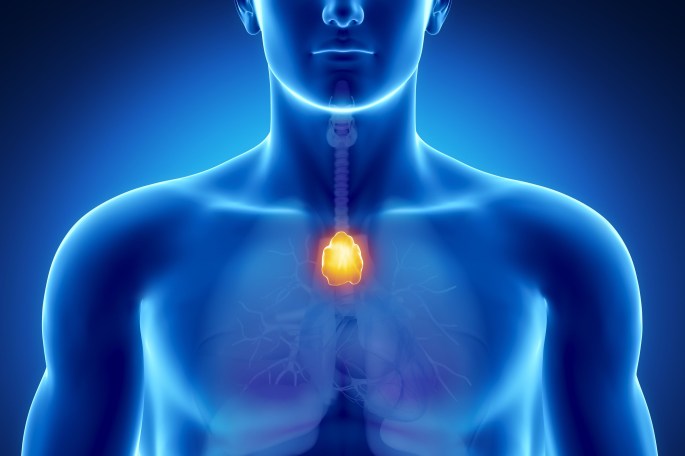
img_0746Certain type of precursor cells originate from the stem cells in the bone marrow of bones and go through the bloodstream to the thymus gland where they mature and are trained to perform their specific functions of defence. Thymus secretes hormones like Thymosine which helps in the development and maturation of these cells. Not all cells produced mature and make through a very specific selection and training process. Many of them die within the thymus. Only 1-2 % of the cells become ready to perform their function of defending against harmful pathogens and cancer cells. Therefore, these matured and trained cells are released in the lymphatic system to perform their specific functions. The different cells released from the thymus are categorised as T (thymus) cells and B (bone marrow) cells. The T-cells mainly fight against antigens and cancer cells.

T-cell types :
#Natural killer T-cells fight against viral infections. They release certain chemicals like Cytokines which can kill the viruses or other pathogens along with the affected cells.
#Helper T-cells not necessarily kill the viruses but tagged them as ‘harmful’ so that the natural killer cells can eliminate these antigens. So, the helper T- cells help in coordinating the immune system.
#Regulatory T- cells mainly control and regulate the immune system. it naturally keeps the balance. If this is not done, then T-cells will attack the body’s own tissues leading to autoimmune conditions. The body may suffer from different autoimmune conditions like various inflammations and allergies. So, the function of this regulatory cell is very important to balance the immune defence system.

B-cells mainly produced antibodies. There are a variety of antibodies. The antibodies do not kill the pathogens but instead, they tag and segregate them as harmful viruses, bacteria, fungi or parasites. So, the natural killer cells can destroy them. Our body can produce as many as millions of antibodies which can identify different specific pathogens and tagged them accordingly.

Fortunately, it is amazing to know that our body has been naturally equipped with such a powerful strong immune system with Thymus playing an important role. We are gifted with a very sophisticated defence immune system. But, as we age, the thymus gland slowly atrophied, become smaller and smaller in size. So the release of matured and trained T-cells and B-cells from the Thymus is slowly reduced too. Therefore, our immune system gets weaker and weaker and we become susceptible to diseases and infections.

So, how do we maintain and keep our immune system function intact and powerful? To support the thymus gland and the immune system from functioning at their optimal potential, we need to adopt a healthy lifestyle: Healthy eating, low-stress level and meditation, exercise.


img_0747

img_0744

1 Vitamin D: This particular vitamin is anti-inflammatory and is very useful in the development and maturation of Helper and Regulatory T cells which are integral in the immunity defence army of cells. Dietary sources are best and supplements only given under clinical recommendation. Not to forget, sunlight is an important source of vitamin D. So, being in the sun for at least 15 mins a day can be very beneficial.

img_0743

2. Iodine is important because it helps in the process and maturation of Natural Killer cells.

3. Zinc: Another important mineral which greatly supports the immune system and defends us from the invasion of pathogens. Food chart is given in my previous post on Zinc: https://wordpress.com/post/healthhappinesshealing.org/3137
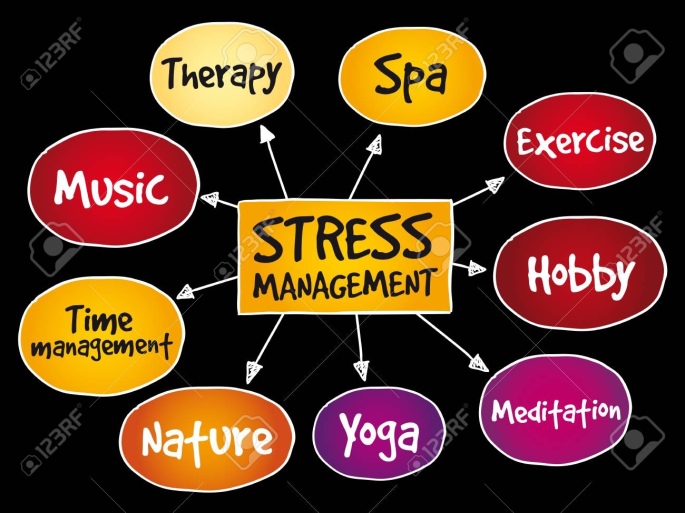
Stress Management mind map
Stress Management mind map, business concept background

4. Stress: Enough has been talked and written about stress which may harm our body and the immune system. Therefore, we need to control our stress level every day by adopting different stress-relieving tips and keep ourselves calm.

Thanks for reading.

Blessings and much love to all 💐
Vagus Nerve: The wellbeing stimulator 🙌

Hello everyone! Have a wonderful day and stay safe 🙋🏻

img_0679

Vagus Nerve, is the body’s unique nerve which is by far the most important nerve to be stimulated in today’s time of crisis, threat, anxiety, innumerable stress, pain, tensions. Especially in times of crisis like this Coronavirus Pandemic where people are continuously under the anxiety and fear of falling sick, hospitalization, death.

img_0678

Anatomically, this is the 10th cranial nerve which starts in the brain and runs entirely throughout the body till the reproductive organs. Therefore the name ‘Vagus’ comes which means a wanderer which wander through every organ of the body. It is also the longest and most complex nerve. Just to simplify, it runs from the brain and branch as dorsal and ventral branches with numerous sub-branches running through both front and back of our body touching almost every organ.
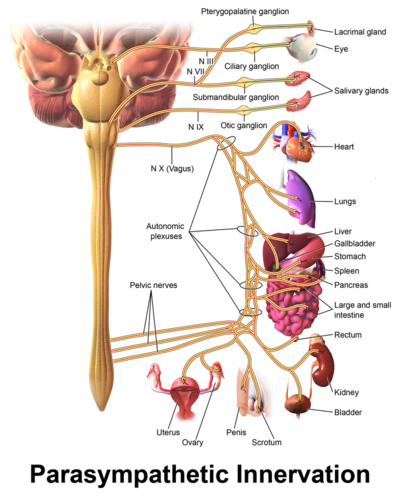
But, why is this nerve so important when it comes to wellbeing ? The reason is that this particular nerve is the cynosure of Parasympathetic Nervous system, the ‘rest and digest’ stimulation or the relaxation of the body. It is this nerve which helps the body to self regulate and maintain the homeostasis. It is this nerve which maintains the brain-gut communication. The immune system is rejuvenated and work efficiently. There are the body’s recovery and healing.

img_0676

The Autonomic nervous system has 2 main areas:
Sympathetic Nervous system: This system is mainly responsible for mobilization, high energy state, vigilant state. So, the heart rate, blood pressure, alertness, breathing rate are increased. In such state, there is no energy left for growth, repair and regeneration.

Parasympathetic Nervous system: The vagus nerve is mainly responsible for this system. This is the ‘rest and digest’ state where the metabolism is optimized, heart rate lowers, breathing slows down, blood pressure lowers and the body is relaxed. There is a restoration of growth. repair and the immune system is regulated to it’s highest potential. The body is in recovery and the healing state from any damage that it went through.

Ideally, there is a balance of harmony between the sympathetic and parasympathetic nervous system. Whenever, there is an alert state, a threat, there is an automatic switch-on of the sympathetic system. Once, the threat is gone, there is a switch-off of the sympathetic and parasympathetic system takes the centre-stage. But in today’s time, we, people are so caught up with the day to day stress, anxiety, fear, that throughout the day, the sympathetic system remains in action. There is hardly the switch off. As a result, there is less potential for growth, repair, regeneration, rejuvenation of the body. The immune system is compromised and we become susceptible to disease. Most of the time, or even during an entire lifetime, we remain stuck in the high tone state which is not good for the body at all. We, end up, suffering from various chronic conditions and diseases. Therefore, it’s high time that we realise this default habit in our system and start taking measures to activate the Vagus Nerve (parasympathetic) tone daily for our overall wellbeing.

There are various ways by which the Vagus Nerve get stimulated to maintain the calm relaxed state:

img_0683

1.Social connection: The ventral vagus branch is mainly stimulated by social connection and engagement. By keeping ourselves connected to loved ones, people around with positive emotions like love, gratitude, joy, empathy and compassion, there is the self-regulation of the body-mind connection and the homeostasis is maintained.

img_0680
2.Deep breathing: Baroreceptors present in the heart and upper body around the neck get stimulated by slow deep breathing. Therefore, regulating the breath with slow deep cycles of breaths can instantly stimulate the vagus and lowers the heart rate and blood pressure bringing the vitals to a relaxed state. There are different breathing exercises like the Pranayama in yoga, Win Hoff method and other helpful breathing techniques.If you want to learn more about diaphargmatic breathing, you can listen and understand from audio CD of Dr Andrew Weil

3.Meditation: Meditation and deep relaxation can naturally put our body in the parasympathetic tone. Chanting or humming words, mantras can directly stimulate the Vagus nerve. The singing and chanting in the chorus (like the choir in Church), can increase the heart variability rate and naturally causes relaxation waves in the body. Prayers are highly effective in increasing heart variability rate and maintaining calmness.

beverage-blur-caffeine-coffee-374860
4. Cold exposure: Exposing the body to cold like cold water shower, splashing cold water in the face, drinking ice cold water, sudden cold exposure can naturally stimulate the Vagus Nerve.
5.Message: Having messages like a foot, hand, neck messages along the carotid arteries can naturally stimulate the Vagus Nerve. It also lowers heart and blood pressure.
6.Gargling: This is a simple technique where the muscles of the pallet are stimulated by gargling which inturn stimulates Vagus nerve instantly.

form-523785-unsplash

7.Exercises: Usually mild low-intensity exercises like stretching, Yoga, Tai Chi stimulate and improves the brain-gut axis and helps in relaxation. High intense training should always be done in short intervals followed by relaxation so that the body learns to fluctuate from sympathetic to parasympathetic tone in a quick recovery state.

img_0684
8. Food rich in omega 3 fatty acids and probiotics, fermented food can naturally stimulate the gut which in turn stimulate the gut-brain axis.

woman-wearing-black-sleeveless-dress-holding-white-headphone-1001850
9. Music: Relaxation and listening to the music of your choice can naturally increase the heart variability rate, gives your pleasure, joy which enhances immunity and stimulate the Vagus Nerve.
10. Intermittent Fasting: Intermittent fasting provide the much-needed break, the rest to the digestive process. The metabolism slows down and improves the vagus nerve activity.

Thanks for reading.

Blessings and much love to all 💐

Post : Do I use my whole brain ?🙇🏻‍♀️

Hello everyone! Have a great week ahead 🙋🏻

BBD74394-A8DC-4DA7-A555-BD5BC51B77A3

The human brain is unique and is marvelling. It has unlimited potential and can solve incredible mysteries and puzzles when used properly. It has around 100 billion neurons which can hold hundreds of information. It can perform way better than the supercomputers or can learn an endless number of languages. It’s simply fascinating. But the problem is that most of us are unaware of this immense potential. From childhood to adulthood, we do whatever we are told to do. We, actually don’t think or question. We study from school to college to university, get the qualifications, do a job, earn our living, raise a family, get older and die soon. There is nothing new in life. There is a complete waste of our creative potential. We don’t even utilize the actual credibility of our brain. We are not even aware that it can perform way better than we use it.

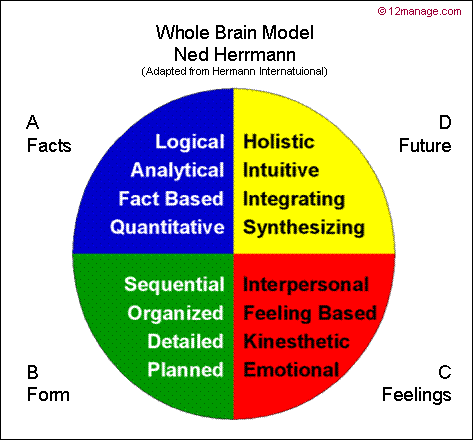
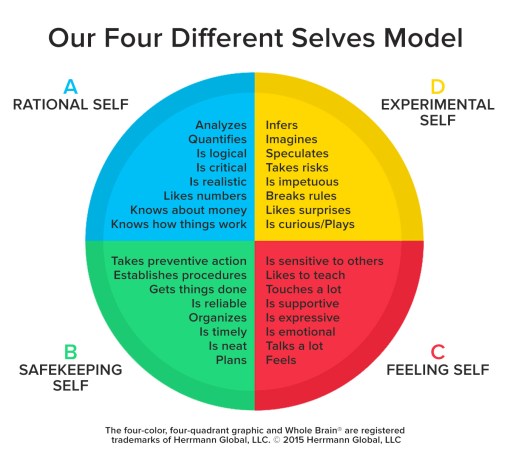
Our human brain is divided into right and left quadrant. Each of them functions completely different from one another. Both sides are connected through Copus Collasum, a thick band of nerve fibres. The left side is very organized, logical, fact-based and controls the right side of the body whereas the right side seems to be instinctive, intuitive, creative, chaotic, emotional and control the left side of the body. To understand better, let’s take the whole brain model of Ned Hermann :
So, each of the 4 quadrants has it’s own specific purpose.

947B06A8-7A43-4D69-BE4A-0782591234ED

Rarely, people utilize the whole brain state in their whole lifetime. According to genetical inclination and also the social upbringing, a person is habituated to use whichever half, he is inclined to use more. Most of us end up using one part of the brain more often than the other. This can be indicated from the progress or the outcomes we get from the decisions, we make in life. As a result, some people end up being a left-brain bias while some as right-brain bias. Depending on the right and left brain qualities scale, each of us can be measured how bias we are, in using which half of the brain we prefer or habituated more to use. Researches show the majority of the people fall in the left brain dominance than the right brain. As the person grows older and older, in the half he uses more, the neuronal pathways become stronger and stronger, and the other half remain untapped and wasted. We start living in patterns and specific patterned thinking which we have adopted over the years. We are unaware of our default thinking pattern. We fail to realise and understand that using the two halves together or rather the whole brain, makes us wiser, help us to make better decisions, perform better, more productive and lead a happier life. The benefits are immense. Our awareness comes very late when we face difficulties, failures, make wrong decisions or end up being unsuccessful in many aspects of life. So, my curiosity is can I rebalance my brain and change my thinking pattern? How do I try to balance both the halves and perform better in life? How do I learn my brain synchronization?

BBD1634D-6CA7-4224-9CDB-4EA53ECA9A40

Yes, we can rebalance our brain. But, then it’s not possible overnight. Just as a habit takes time to develop so also it takes time to change too. But let’s understand what whole-brain thinking is all about. You have access to all the two halves or the four quadrants of the brain equally at the same time. Instead of your usual thinking preferences, being able to adapt to learn thinking from different aspects (from different quadrants) and come to a better decision which would improve your performance and outcome of a particular task in hand. This means capable of leveraging the different thinking aspects available for that particular task and come to a better decision which may yield a better outcome.
Therefore, different mental processes, courses, exercises are programmed and developed to improve our whole-brain thinking. Some of the easiest ways are :

Seated young man with crossed arms gesture

1. Crossed Position: Normally, the left half of the brain controls the right side of the body and so is the right half controls the left side of the body. Depending upon the thinking brain biases, we shift from left side thinking to the right side thinking throughout the day. We fail to keep the brain in sync during thinking because of the patterned thinking behaviour that we have adopted over the years. When you stand or sit cross-legged and arms crossed, the control and co-ordination of either side cross the midline of the brain therefore both the halves of the brain is accessible at the same moment, that is the brain is synchronized. When the brain is in sync, we can access this super learning and thinking capabilities. There are various exercises and movements where either side crosses the midline and help brain synchronization like mind squat, cross crawl.

C24F3301-1EAC-485D-B901-FAFA389EAE90
2. Meditations and Binaural beats: Deep meditation has a powerful effect on brain synchronization. Using binaural beats introduces 2 frequencies of different tone at the same time which helps the brain goes into a meditative state and brain synchronization. However, these are practices which need to be done regularly to yield results.
3. Alternate Nostril Breathing.
4. Learning a musical instrument.
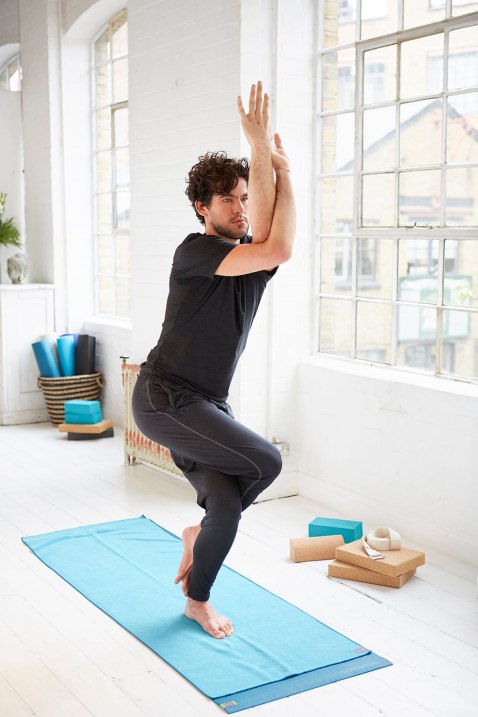
5. Yoga: Postures like Vrikrasana (tree pose), Garudasana (Eagle pose)

FE8A1A58-E049-40D4-B7AB-7B6C1C5E76E9

FA88BDE0-1DC5-4AAE-83A4-02201F621DF0

Thanks for reading.

Blessings and much love to all 💐
Post: Mental Rehearsal: Does visualization work? 🙌

Hello everyone! Have a great Sunday 🙋🏻
D258CB07-CD4F-4281-8613-E198DE528CA4

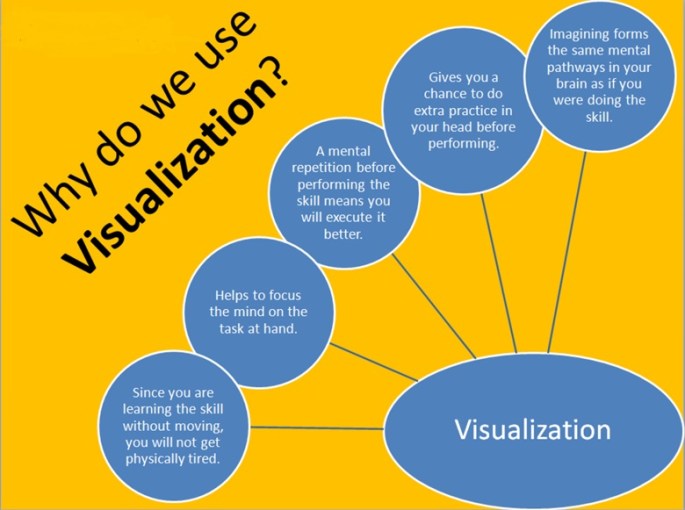
What is this concept of mental rehearsal? It is an active visualisation technique through the individual’s mind to demonstrate the performance of a particular task just as the way he wants it to be. By doing it repeatedly, there can be subjective learning and actual performance improvement. Researches in performance psychology have been using visualization techniques through mental rehearsal methods to improve the performance in case of athletes and other areas of sports.
Well, it has proved successful in case of sports but also been tried for other areas of psychotherapy to treat mental illness. Can this technique be used in a normal person like us? Can you tap the huge potential of this technique of mental rehearsal and bring improvement in some areas of your life where you lack? Say, any tasks like performing on stage, appearing an exam, public speaking, or trying long-distance running, staying fitter, healthier, overcoming fear so on. The answer is absolute yes. The more we visualize ourselves, the more we perform for success.
E7D0C974-BA06-4DCA-BD59-3FBE34F749D0
Interestingly, neuroscience researchers have shown that by the mental rehearsal of a particular activity, the thought alone (not performing the task physically ) and having it repeatedly can build up new circuitry in the brain. This can bring about objective changes in that particular area of a person’s life. This happens because when the person perform the particular task with focused attention in mental rehearsal (just the thought of performing) and do it repeatedly, the brain understands it as a true physical performance and start building neural pathways of the new learning. The brain cannot differentiate between a real and imaginary and takes this imaginary performance as a truly physical experience. Therefore, as the person changes his mind, the brain physically changes too and vice versa. So it becomes cyclical. The frontal area of the brain covers the larger part of the brain. It carries out all the major activities of thinking, analyzing, planning, decision making. It is in this area where, we learn, remember new things, explore new things. So, when you focus on a particular area with full attention (the thought alone), cut down all external distraction, the frontal area of the brain lowers the awareness from all external stimuli of the outside environment and the body. When the brain is so focused on that particular thought at the present moment, that’s when actual physical changes happen, new neural pathways start forming. The brain and the body believes that as an actual physical experience.
45EF6AA3-D0FB-447E-88F7-23AD10C7EE07

The question is how can we apply this in our everyday life? Every person or individual wants to be his/her best version. Every person loves to be successful in some area or the other. Every person wants to be happy in life. If you sit down today and start analysing your life and find out which areas in life, you lack. How can you bring about changes in those areas to improve your quality of life? You start to focus on one particular area of life at a time. Start doing a mental rehearsal of performing better in that area, or visualising a success scenario, or intentionally changing that aspect of life. Performing this mental rehearsal every day with full attention (closed eyes), least distraction from the external stimuli and environment. Doing repeatedly for days with some focused attention. Then, slowly the mind changes, the brain start to change too, new neural circuitry forms. When this mental rehearsal of the particular thought is done repeatedly for days, the new neural connections become stronger and stronger. That’s when the person’s behaviour starts changing, or the objective intentional changes start appearing in that area of his life. Whatever the area could be, like performing better in academics, in office, at work or a particular task. Or changing his/her approach or behaviour towards his health, fitness, other people, any relationship or in any areas, the person strives for.
0B1D79C3-9FA6-4A17-A029-97531E932994
But bringing out this change isn’t easy as it is said. But then, it is also very feasible too. The problem is that our mind is too crowded with stress, thoughts, burden and everyday events. It’s really difficult to remain focus on a particular thought or activity even for a single minute before the mind slips. To bring a change in any aspect of life, you need to have a strong intention, a strong will to make it real. Therefore, mental rehearsal of any kind needs to have a very concentrated focused mind. For, this you need to prepare your mind. This is a daily practice. Most of the time, certain practises as Yoga, meditation, mindfulness helps greatly to create a stable and a focused mind. You cannot learn it overnight. It is a practise which keeps getting better with time.
62E96447-D2F8-4438-863F-C066419B08B8
Some simple tips of mental practices are like
1. Sitting or lying in a comfortable position, keeping your spine straight.
2. Closing eyes is necessary to reduce the external distraction.
3. Breathing evenly and regularly. It is slow deep breathing.(Parasympathetic breathing)
4.Visualization, being detailed and specific of exactly what kind of change and in which area of life you want. And doing it repeatedly every day.
5. Doing mental rehearsal is only effective by being in the present moment. To learn, being in the present moment, try focusing your breath at several moments of the day. When you are at the present moment, there is no fear or stress of any sort.
6. Letting go of fear, everyday stress as much as possible. Don’t overthink.
7. While doing mental rehearsal, stay focus as much as possible.
The focus of mind can be learned by trying to stare an object for some time. The longer you learn to focus on a particular thing, the more is your mind under control and attentive. This is like muscle training. The more you practice, the more you get better with time.

I, myself believe in this practise of mental rehearsal. It did help me improve in some areas of life. Each individual has an inner world of wisdom. Each of us deserves to lead a successful, happy life or deserve to get whatever we want from life. The more we explore this untapped potential, brilliance and can implement in our daily life, the better we can be successful or at least can be the better version of ourselves in life.

Thanks for reading.
Blessings and much love to all 💐

Post : Mind control : How do I get that ?😇🤔

Hello everyone ! Have a great day 🙋🏻

Our mind is illusional. Whatever, we think and perceive is our own derived illusion. It’s our biggest friend and at the same time can be our biggest enemy. Therefore, a common quote says ” You may die a hundred deaths without a break in the mental turmoil “ Our mind makes up everything that happens in our life – good or bad, big or small, ugly or beauty, sad or happy, success or failure, it ‘s all within this thing, called mind. So, how do I control this thing ‘mind’ and remain focus on my goal and life purpose?

Understanding the mind, and its content is very important and fundamental. What makes our thought world? How do thoughts are generated? We build up mental impressions through the different inlets of this outer world. The inlets can be :
*Five senses: sight, hear, smell, touch, taste
*Memory: That has been built up over the years of this outside world experience, right from the day we were born.
*Activity: That we perform , habituated and do throughout the day.

We create thought by an idea backed with emotion. Through different inlets, we build up thoughts as our mental content every day. We generate, perceive, analyse, process and ruminate our entire thought world. So, we keep doing the same mental activity of thinking, analysing, ruminating every day. The thinking pattern doesn’t change. So, does our behaviour and habits. It is uninterrupted, a never-ending process which we may not be even aware.
According to Yoga Psychology ( Yoga Sutras), our thought world mainly depends on mental fluctuation (Vritti) and thoughts (prataya). The mental impulses (vritti) are created through the different inlets like the senses, memory, activity which inturn create mental impressions generating thoughts (prataya). This is the reason, when we are in a positive , vibrant environment, surrounded by positive people, we generate positive, beautiful, creative thoughts. But, when we surround ourselves with negativity, we generate negative thoughts of guilt, anger, pain, hurt, jealousy and so on.

Normally, what happens, when we centred our mind for a particular activity, at the office or home. There are endless distractions. Okay, we try to control the distraction or cut down to some extent, but still mental fluctuations and wondering thoughts continue to distract us. This is because the memory continues to generate unstable thoughts in an unstable mind.
Therefore to manage our mind, we need to control our mental fluctuation and thoughts. The only way to control them is through a concentrated mind. A concentrated mind can be achieved through the power of attention. The power of attention is our very own property (which arises from self) which we can achieve by practising and training our mind. It is a steady power of awareness which is created at our own will. It is the only capability that we can learn to develop for mind control. Whereas, the mental fluctuations (impression) and thoughts are greatly influenced by our outer world, the external distractions. They are not completely within our control.

The different states of mind depending on the power of attention can be defined as
*Ordinary mind: When both the mental fluctuations (vritti) and thoughts (prataya) are unstable. The mind is rather restless distracted, jumping from one thought to another.

*Focused mind: When there is less mental fluctuation (stable vritti) but thoughts are still wobbly (unstable prataya). This is the learning mind.

*Concentrated mind: When both the mental fluctuation (vritti) and thoughts (prataya) are on the same line, stable enough. This is the highest level of attentive mind.

*Meditative mind: When the vritti and prataya are concentrated at the same point, on a similar goal. That is the mind is concentrated at one point say, your attention is entirely on your breath or a point of focus. That is when both mental fluctuation and thought are at the same point. This is the highest level of concentration.

The power of attention is similar to a focused beam of light where all your energies are focused. With this power of attention, you can learn, achieve, complete tasks and attain success in whichever areas of life you want to. That is the reason, we should always learn to perform an activity or task one at a time. So, we give our full power of attention. Handling multiple tasks all at a time can be like a scattered beam where all your energies are distributed. You can be able to do some while some are left undone. Your mind will keep fluctuating and your attention span will be variable and unstable.

So, how do I learn to achieve a concentrated mind with the ultimate power of attention? How do I control my mind, my inner thought world, daily? How do I focus my mind on one activity at a time? How do I take charge of myself? This is a self-learning task, an ongoing process. Two comprehensive ways:

1. To achieve the power of attention, two important things matter the most :
Awareness: Being consciously aware all the time. Feeding our thought world and thought process with positive, constructive and creative thoughts.
Will: Self-training and developing a restrained impulse towards worthy goals, purposeful life.

2.Control of thoughts:
*Exposure to right kind of thoughts: Feeding the mind everyday with right kind of thoughts. Reading good books, being in a positive, good company, surrounded by positive vibrations.
*Right behaviour: Good conduct, right behaviour pattern influence thoughts and emotions. That means reframing our cognitive abilities. Correcting our behaviour patterns as on when required.
*Right lifestyle and habits: Maintaining a regulated lifestyle and habits will greatly influence our mind. You cannot have a stable mind with an unstable lifestyle.
*Purposeful life: Working towards a specific goal, understanding and working towards a meaningful life. Developing a stable mind through meditation and prayers. This cannot be achieved overnight. It is an ongoing, self-learning process. You and I have to keep working on it daily.

Thanks for reading.

Blessings and much love to all 💐

References: Science of Focus by Pravrajika Divyanandaprana (Vivekavani)


Post: How about a smart healthy brain 😇😍, anytime, any age? : 5 ways to facilitate the process.

Hello everyone ! Have a wonderful weekend🙋🏻

Neuroplasticity and Neurogenesis, two terms commonly used when it comes to brain health. We, just don’t need to dive so much into Neuroscience to learn what they mean and how we can help ourselves to keep our brain healthy. Brain health is important because as long as our brain is healthy, we keep learning new things and our memory is intact. As ageing progresses, we can prevent ourselves from certain chronic conditions like dementia, Alzheimers and Parkinson’s disease by maintaining good brain health.

Neuroplasticity, meaning that our brain is continuously changing through our entire lifetime depending upon our experiences, the environment, habits, behaviour. Neural pathways keep rewiring and dewiring depending upon what is necessary and what is no longer useful. Therefore, being in a positive environment, thinking and feeling positive is all very important.

Neurogenesis meaning formation of new neurons, that is our ability to learn new things and retain in our memory. Previously, it was believed that neurogenesis stopped once we reach our adulthood, that is around the age of 20. Now, researches have shown, that neurogenesis occurs throughout our lifetime. So, we can learn until the day we die. In our brain, the neurons are formed from the neural stem cells and progenitor cells which are in the Hippocampus mainly and also in other regions of the brain. Though every day, new neurons are formed, before, they could get matured, many of them get pruned. A special protein BDNF (brain-derived neurotrophic factor) has been identified which is responsible for promoting the maturation, survival and maintenance of the neurons.

So, how do we facilitate this process of neurogenesis and maintain the level of BDNF? 5 simple ways

1. Exercise: Any exercise which can increase the heart rate mainly aerobic exercise, running, brisk walking.


2.Food: Rich in omega 3 fatty acids like fishes (salmon, tuna, sardines), avocados, chia, hemp seeds and nuts. Other sources which help are turmeric, blueberries, goji berries, lotus roots, algae, green tea, coffee. However, too much caffeine is detrimental to neurogenesis.

3.Emotions: Experiencing positive emotions like joy, excitement, love and feeling good, stimulate Neurogenesis. Such emotional experience can appear by being creative, learning a new skill, going out in Nature, proper sleep, listening to Nature sounds, good music and sex. A positive relationship with partners, peers, relatives is helpful. Being in chronic stress, anger, anxiety are detrimental to neurogenesis.

4.Mind stimulation: Cognitive abilities like reading, learning, memorizing, discussing new ideas, taking up music lessons, problem-solving, all stimulate neurogenesis. Cognitive reserve (resilience against brain damage) can be built up by engaging mind stimulating activities or intellectual work.

5.Meditation: Prayers and meditation can stimulate neurogenesis. Practising mindfulness, compassion, being in silence, stillness all facilitate neurogenesis.

Some lifestyle factors which can decrease neurogenesis are a high intake of carbohydrate, sugar, fried foods, inflammatory foods, chronic caffeine intake, smoking, alcohol, obesity, chronic stress, lack of sleep, negative emotions like sadness, depression, lack of engagement, boring life. Direct trauma to the head can be very detrimental to neurogenesis. Nowadays, even environmental pollution is quite hazardous to brain health.

If you are intending to learn more about lifestyle changes that you can do to improve your brain health, I recommend the book: Neurogenesis diet and lifestyle by Dr Brant Cortright

Thanks for reading. Take care.

Blessings and Much love to all 💐

Post: Fivesome – The effective medicine 🙌

Hello everyone ! Have a great Monday 🙋🏻

Chronic diseases contribute to huge healthcare expenses. Regular doctor’s visits, buying the prescription drugs, undergoing procedures, hospital treatments and stay, all of them incur huge expenses.

We know by now that inflammation is the key to all chronic diseases in the body. Chronic diseases like diabetes, heart diseases, lung diseases like COPD and asthma, Crohn disease, arthritis, HIV, Cancers and the list goes on. Not only these, even brain diseases like Alzheimers, dementia, and Parkinson are also related to inflammation in the brain.

The only solutions to this huge health issues are prevention and controlling the chronic conditions. So, how do we do that? Researches have already proved that most chronic conditions are caused by food and unhealthy lifestyle. So, the easiest and efficient way to reach our goal to prevent and control chronic conditions is by switching on to a healthy diet and making lifestyle changes. 80% of our immunity comes from good gut health. So, eating right, removing stress, active physical life, all contribute to a healthy gut. Therefore , the five some ….

1.Food:The problem is that too much information on food flooding the internet, conflicting information, different diet regimens like keto, paleo, vegan, Meditteranean and the list is long. Too many lists of superfood come out daily. So, how do we know what is right for us?

I think following any diet, there is always pros and cons because you eat some and skip something else. Depending on your goal, whether to lose weight or maybe for some chronic conditions like diabetes, your diet is scheduled and designed. Though following a particularly strict diet, do benefit like losing weight in case of a Keto diet. Sometimes, it can lead to unhealthy outcomes. And, following a particular diet seems to be like, you are doing for a temporary phase. But, to have a goal of a healthy life, the food and lifestyle changes has to be permanent and adopt it as a way of life. It has to be a mentality shift.
Again, not every type of grain, vegetables, fruits available in every part of the world. Different regions grow different crops according to their climatic conditions. So, the best food is preferably,organic (devoid of pesticides) and locally produce grain, vegetables and fruits so that they are fresh. And locally produce grains, veggies, fruits are usually affordable.
Your daily consumption should be a majority, about 70% of plant-based food like greens, veggies, fruits, nuts. About 30% should be whole grain fibres, low fat and protein like eggs, chicken and fish. This is how simple a daily healthy diet plan can be.

2. Exercise: Right from evolution, we, humans are meant to be active. So, being active is essential. Follow your daily routine exercise of at least an hour. Do whatever you like, running, walking, swimming, cycling, gymming., dancing. The workout you enjoy doing. There is no hard and fast rule.

3.Meditation/ Mindfulness: I have already written posts on meditation and it’s benefits. it is important to empty our mind daily, at least for some time.Spend a few minutes in silence every day. If you can, be mindful (being aware ) as much as you can. Being mindful means, paying attention to your thoughts, emotions without being judgemental. Staying mindful, by following your natural breaths, simply just being aware of, at least 20 mins or more is very beneficial. It reduces your stress level.

4. Support: Have always a support system. Loneliness is a major factor in many health issues. People with a good support system can better control chronic conditions. Rely on your spouse, partner, friends or a social support group where you can open up.

5.Sleep: Though ideally recommended in adult as 7-8 hours of sleep. But the fact is, the quality of sleep is more important than the quantity.
When you follow sleep hygiene of going to bed and getting up from bed at a routine timing, whatever hours of good sleep, you get is enough.

All these 5 steps can guarantee you for a healthy life for the longest time. Even, if you suffer from a chronic condition, it can be maintained better with a disciplined lifestyle.

Thanks for reading. Take care

Blessings and much love to all 💐

Post : Placebo effect and Nocebo effect 🤗

Hello everyone ! Have a wonderful Friday 🙋🏻

I am sharing with you today, a beautiful talk by Dr Lissa Rankin MD, which gives you the idea how powerful is our mind, which has the ability and the enormous capacity to heal the body from any disease and illness.

Hope, you like watching it as much as I do.

Blessings and much love to all 💐

Post : Stillness 👤

Hello Everyone ! Happy Friday 🌼 and have a great weekend ahead 🙋🏻

Every day, in this hustle-bustle of life, there is too much noise to ever be in silence. The cacophony of sounds distract us all the time and our mind is filled with too many overcrowded thoughts. By the end of the day, you are too exhausted physically and mentally with this craziness. But then, can this drama of the outer world ever pause? The answer is yes, unless, we allow ourselves to be paused and listen to the silence.

Yes, the essence of being silent in stillness even for a short time can be a source of great strength, highly rejuvenating not just mentally but physically too. It gives you the much-needed fuel before you step into a new day. We feel stillness is difficult behind all the distractions. Everything gets in our way. It’s only when we become aware and learn to listen to the stillness, we get time to truly rest.

The best day to practise stillness is right from today. Each morning or evening or summer or winter has its kind of stillness. Sitting or lying down, after breathing deeply with eyes closed, away from noises and trying to follow up your natural breaths for some time will let your life simply, drawn into this darkness where there is no limitations or constraints. Though it may sound simple, it isn’t that easy. But then, this is a practice. Initially, you are so caught up with thoughts that the mind slips for tomorrow’s meeting, the emails that you have to check, you have to meet up a friend, your next meal to be prepared come all your way. I know my friends, this is a little difficult, as you are trying to focus on nothing and there isn’t any goal to reach.

You start forming a habit when you are doing every day for a couple of minutes. Some days are difficult with too much clutter of thoughts while some days are easy to focus. That’s all ok, my dear friends. As the days pass by, you will learn to enjoy this silence, the peace. The darkness within this stillness has much more to say than anything else. I have tried myself and am still learning and enjoying the process. You will experience inner peace and wisdom, your spiritual growth. This is what people call as meditation or the sacred stillness is all about.

I have already talked about the science point of view ( in some of my previous posts) what meditation, stillness bring about changes in the brain and also in the physical wellbeing (reduces inflammation).
Practising stillness also helps in a better quality of sleep. So, the benefits are plenty. I am not exactly using the term “meditation” as there are several methods of guided thought meditations. Here, I am simply talking about the stillness, listening to the silence which helps to nourish us both physically and mentally. It gives us a deeper sense of connectedness, perhaps with the Divine.

Whether or not, to practise stillness or meditation is entirely our choice to make. We can start listening to silence and practise stillness or continue to hide from it.

Thanks for reading.

Blessings and much love to all 💐

Post : Emotions affects physical health 🙇🏻‍♀️ 4 ways to better handle your emotional wellbeing.

Hello Everyone ! Have a great day 🙋🏻

Your body is not a single entity. It is a community of 50 trillion cells which behaves the way you think, feel and act. When you are in good emotional health, your healthy mental state influence every cell of your body to grow, function healthily and die in normal cyclical order. Again, new cells born and the cycle goes on. But, then this is an ideal situation.

Today, life is full of stressful and unwanted changes. Some of these events like a job change, job stress, death of loved one, divorced or any such situations create a stronger sense of anxiety, sadness, pain which can completely disrupt your emotional health. With emotions running high, your physical health gets affected causing you to develop high blood pressure, hormonal imbalances, stomach ulcers, weight issues etc. Not only this, your immune system gets affected greatly. You are more prone to disease and illness. So, how do we deal with this?

Controlling our external environment, or the circumstances and events in life is not within our control. There is nothing we can do about it. The only thing we have control is on our emotions, thoughts which do influence our physical health.

4 ways to handle better your emotional state:

1.Resilience: Always keep having a positive view of self. Love yourself and understand your self-worth. This helps in creating a security blanket around yourself. Having strong social support, being close to your loved ones, friends do matter. Learning to accept change in the environment, and keeping everything in proper perspective is important. Not everything in life will happen as per your will. All these mindsets help in building resilience to deal with any situations healthily.

2.A balanced life: Always count on your Blessings and gratefulness. Focus on things in your life for which you are grateful. Try not to get obsessed with anything like job pressure, relationship issues, problems at work or at home. Because things do change with time. Let go of the things which are stressful to your life and make time for things which you can enjoy. Create a balance in your life which helps you, in your both, emotional and physical health.

3.Calm your mind: There is a strong mind-body connection. The more your mind is calmer, the more you are stressfree and enjoy a healthier body. Always, make time to engage yourself in mind activity like meditation, listening to calm music, deep breathing, stretching or Yoga.

4.Self-care: To take care of emotional health, try taking care of your physical health by following a healthy routine of eating healthy, sleep, exercise. Releasing pent up emotions by sharing with loved ones and friends is important too. Exercising also helps in letting out pent up emotions.

Thanks for reading.

Much love to all 💐