Change for the better 🙌

Hello everyone ! Have a wonderful and safe day 🙋🏻
” You can change your brain just by thinking differently ” Dr Joe Dispenza.

img_1301


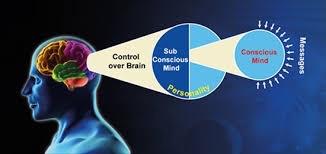
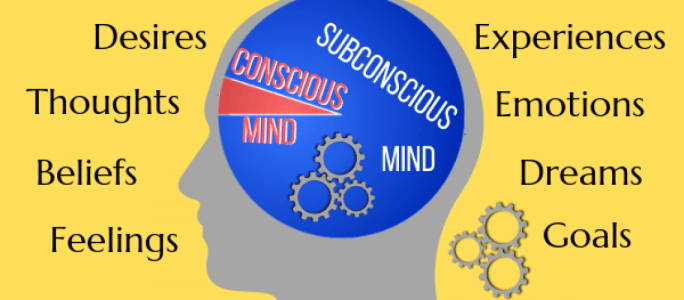
We do the daily thinking and task performing by both parts of our mind: Conscious and subconscious mind.The conscious mind is the creative part of the brain, which thinks, absorb new knowledge, new ideas, analyse things and objects. The subconscious mind is a habitual mind which functions on programmes that we have downloaded in the course of our lifetime. The subconscious mind works about 95% of our day to day time doing all the activities based on its habitual nature. 


img_1298

How we think and behave depends on our past memories and experiences that we had till date in our life-term. That’s is how we generate our thinking pattern and everyday thoughts and feelings. So, we experience our daily reality, the so-called perceived truth through the filter of the past, which is the result of the memories, beliefs and experiences.

img_1299

That’s how, an ordinary person like us lead a routine life based on old habits, which is run by our subconscious mind programming. We get comfortable and become used to it, so any new change or trying to change a better or improved habit becomes a difficult and challenging task for us.

img_1303

So, how is an experience create a memory in the brain? When we have an experience, the sensory organs collect the different data of senses from the external environment and send them to the brain. In the brain, there is an influx of neuronal charges which create a specific pattern of the neuronal pathway. The brain produces a chemical or feeling which we called emotion associated with the neuronal pathway. So, the experience related to the emotion/feeling creates a memory in each of the body cell. That is how a particular event is recorded in our brain and body cells. Therefore, each thought is always associated with a feeling or emotion. Happy or good thoughts create delighted emotions and good memories, while unpleasant or sad thoughts have an anxious mood or emotions and an unpleasant memory attached. This series of thoughts and memories appear every day and become our thinking pattern and behaviour and develop into habits. Our state of being, our wellness also depends on this pattern of thoughts and behaviour.

img_1300

So, can we create a change at any age? Modern researches have shown that the human brain can change or build up new neurons and pathways at any age. This process is called Neuroplasticity. There is no age or gender limitation for this change to happen. A thought, belief or habit is difficult to change because it gets hardwired in the brain due to continuous repetition during our lifetime. So, a change is possible when we consciously shift our paradigm from these sets of limiting beliefs and behaviours. Most of the time, our thoughts and opinions get stuck in the limitations, and we fail to think beyond our conscious and analytical mind. Change is possible at every point in time. Enough researches have proved that transformation is possible in our thinking pattern, behaviour and habit at both physical and mental level in a measurable way. The person who is aware and becomes proactive to change or build a new empowering and better practice of thinking pattern and behaviour can easily taste success and happiness in this lifetime.

img_1302

Because of the habitual nature of our subconscious mind, the habit of new thinking and behaviour needs a particular method to be implemented to bring about a change. Mere affirmations and positive thinking cannot alone lead to a shift in thinking or behaviour. It is valid only on those moments when we think with our conscious mind. Once we forget with our affirmations, the old thinking pattern and subconscious behaviour take over. Some studies have shown that it takes around 21 days to develop a new habit or a thinking pattern. But, this depends more on the individual and his willingness to bring about a change.

img_1304

Certain methods:
1.Continuous repetition over a certain period until it gets reprogrammed in our subconscious mind. We can try this practice on our own.
2. Hypnosis: Practicing self-hypnosis of the affirmations or the change mostly during bedtime or early morning hours when the mind is less engaged is a useful tool. Practising it everyday, the subconscious mind can be reprogrammed to this new belief or thought. This method needs a therapist but can be practised on our own too.
3. Energy psychology: Different modalities exist which require the help of a trained and professional therapist like in methods such as Psych K, brain synch method, resonance repatterning.

More information:  www.brucelipton.com

Thanks for reading.

Blessings and much love to all 💐

https://9713bwro7r5r4w1bnlp3reun3c.hop.clickbank.net/?tid=140519

Anxiety: Understanding the fact 🙌

Hello everyone ! Have a wonderful and safe day 🙋🏻

img_1159

“The best use of imagination is creativity, the worst use of imagination is anxiety”. Deepak Chopra.

Humans are the only species since evolution, who have the most evolved mind. They can undoubtedly imagine both constructively and destructively. So, it’s our thoughts alone which can make or break us.
Being anxious is having an uninvited guest into your house, which you are trying to avoid, but still, he refuses to leave.

img_1165
Anxiety is a state of mind, not a disease. Every day, we generate about 70,000 thoughts, out of which majority of them are negative and repetitive thoughts which do not serve any purpose. Thoughts are the main stimulator of our state of wellbeing. Whether you are physically healthy or not, thoughts are only instrumental which determines our state of wellbeing. It’s the day to day thoughts that creates our perceptual reality which we believe our real world. Hence, this is the hard truth that needs to be acknowledged by us.
It’s essential to educate ourselves that thoughts typically creates our reality. So, if we modify our thinking pattern or start creating empowering thoughts and beliefs, we can easily change the world around us.
Therefore, thoughts are so powerful that they can push you to the peak of physical and mental wellbeing or dumped you in the pit of depression and anxiety.

hand presses the button on white background

So, how does anxiety builds up?
Out of 60,000 to 70,000 thoughts generated, every day, about 90% of them are just repetitive and negative thoughts. There is overthinking and rumination of the same type of thoughts. As the cycle continues, there is an alteration in the chemical makeup of the brain. Dopamine and serotonin, the mood regulators get depleted in the brain. The production of BDNF (brain-derived neurotrophic factor) gets consumed, and slowly there is shrinkage in the size of the brain. When the cycle becomes vicious, and anxiety state becomes chronic. It started to interfere with daily activities. Such a state is regarded as an Anxiety disorder. As chronic stress get elevated and reaches the threshold, there are significant changes taking place in the brain.

Dr Joseph LeDoux New York University neuroscience.16ef.indd
Some noticeable changes are :
1. The more the brain is engaged in anxious thoughts, the more the ‘anxious neural pathways’ are strengthened.
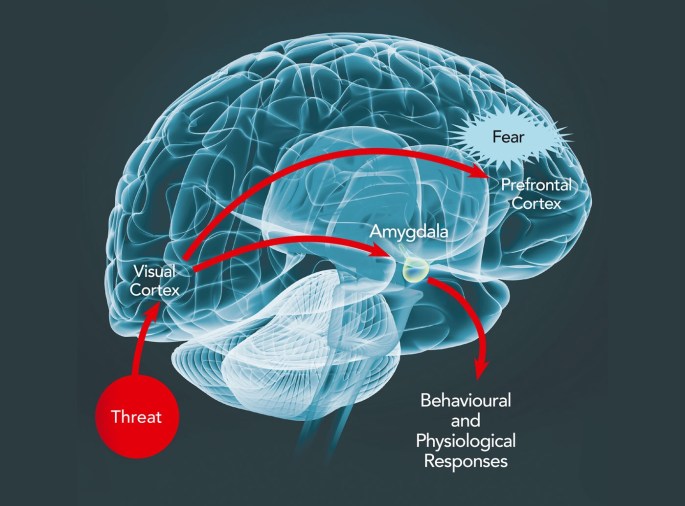
2. The brain is stuck in the state of ‘high alert’, becomes more reactive to the stress receptors for possible threats which are mostly imaginary.
3. The fear centre in the brain becomes more prominent and more significant.
4.Not just the chemistry, but changes start appearing up to the DNA level in the brain.
5. Brain ageing process also fastens.
6. The circadian rhythm is disturbed, and the sleep cycle gets disrupted.

img_1166

Simple ways to get rid of the anxiety state :
1. Firstly, it is better to face the anxiety. More avoidance will lead to more exaggeration. So, visit your fears, and start being an observer. Being an observer of your mental state, create a sense of indifference, feels like you are different from your state of mind. You understand that the mind and body have created a false association to any external object or stimulant as the triggering factor.

img_1163
2. Diaphragmatic breathing: Long bouts of inhalations followed by long rounds of exhalation. The deep breathing technique: Like taking a prolonged deep breath of inhalation by counting 1-4, then, a pause of 1-4, followed by an exhalation of 1-4, then another break of 1-4, and the sequence continues. That is why this technique is known as four-square breathing. This slow and deep breathing causes the oxygen to reach your brain, and the parasympathetic nervous system gets activated. It can be an instant stress reliever.
3. Naming your anxiety is as expressing your state of mind to another person. Putting words, and explanation of your anxious thoughts will stimulate the frontal cortex. Your brain will be more attentive in the frontal cortex and deviated from the fear centre, which is responsible for the anxious state.

img_1164
4. Mindful and relaxation techniques like mindfulness, meditation, yoga, which all goes to help stimulate the parasympathetic system, which is for relaxation.

img_1167
5. Plant-based food is known to have a calming effect on the human mind.

Thanks for reading.

Blessings and much love to all 💐

Brain fog 🙄

Hello everyone! Have a wonderful and safe day 🙋🏻

img_0950

Brain fog is a state of foggy, ambiguous thinking. It may be associated with a lack of concentration, a short span of memory loss, anomic aphasia, susceptible to distraction. Brain Fog is a loosely framed term not in medical terminology. There is no evidence of neuropsychological evidence. So, it has no proper medical diagnosis. As far as symptoms are concerned, we may all relate to the concept of brain fog from time to time.

But, yes, when such symptoms are stable and have been steady for quite some time, we surely need clinical assistance. When the difficulty with cognitive functioning becomes problematic, interferes with daily activities, people surrounding you have noticed the symptoms, and slowly they are progressive and declining, we surely need neurological evaluation.

img_0953

Common symptoms:
Slow thinking
Difficulty focusing
confusion
Lack of concentrating.
Forgetfulness.

Common causes of brain fog :

img_0954

1. Depression is a state where there is pre-occupied thinking of sadness, worries, hurt, loss, persistent failure. This thinking pattern progresses to affect mood and impair cognitive and behavioural functionalities.
2. Anxiety is a state when there is ruminating about failures, lows of life, worries and so on.
3.Chronic illness or continuous physical pain.
4.Untreated sleep apnoea.
5.Alcohol, drug abuse
6.Chronic Fatigue syndrome.
7.Medications: Benzodiazepines, topiramate, anticholinergic drugs.
8.Sleep deprivation
9.Pregnancy.
10.Appetite disturbances, poor nutrition.

img_0952

A neuropsychological evaluation is necessary by formal testings of Core battery tests, a general cognitive assessment like memory, attention, language, motor function and visual-spatial and so on. Treatment is based on the underlying cause and symptoms.

img_0947

Any one of us can have brain fog at some point or the other. The general lifestyle of living in stress, anxiety, overthinking, sleep disturbances can easily affect our thinking and behavioural pattern from time to time. It’s essential to be more aware of our mental state and be proactive to notice and correct the gap or shortcomings by bringing out changes in our lifestyle. Some changes lifestyle like :

img_0949

img_0951
Improving diet with more brain-boosting foods and probiotics.
Cutting down inflammatory foods
Improving sleep cycle.
Increased physical activity.
Try not to be self-critical.
Socializing.
Self-care to de-stress ourselves. (developing hobby, being creative, sports)

Thanks for reading.

Blessings and much to all 💐


Selenium : An amazing mineral 😇

Hello everyone 🤗 Have a wonderful day and stay safe 🙋🏻

img_0628

Today, I am going to write about an amazing mineral called Selenium. This mineral is present as a trace mineral in the body’s skeletal muscles. It is an essential mineral which acts as a coenzyme to some almost 25 proteins in the body. Its main function is that it is a powerful antioxidant, protects our body from the damage of oxidative stress caused by free radicals, helps in maintaining a healthy immune system, also improves our cognitive functions. The ideal dose of Selenium as a daily intake is 55 mcg. The therapeutic dose is usually recommended as 200 mcg. A person can tolerate safely up to 400 mcg of selenium daily but beyond that, there are chances of selenium toxicity. Researches have shown that there are 2 forms of Selenium: Organic as selenomethionine and inorganic as selenite or selenate. So, the sources of selenium can be both dietary and supplementation.

img_0629

 8 amazing benefits of Selenium are :

img_0630

Glutathione structure

1.The most powerful benefit is that selenium is involved in the synthesis of glutathione which is a powerful antioxidant and protects the body from oxidative stress caused by free radicals, heavy metals, harmful chemicals, or too much sugar causing damage to the nerve, muscle cells in the body. This is why selenium is very useful for people with chronic conditions like Diabetes, heart issues, peripheral neuropathy. It also helps in reducing the complications of such chronic conditions. It protects the brain and nervous system.

img_0636

 2.Another important benefit of selenium is that it helps in the proper functioning of the thyroid gland and the synthesis of the thyroid hormones. Therefore, a person with Hashimoto’s thyroiditis, an autoimmune thyroid diseases where the production of thyroid hormones become low, selenium is of great help. It also helps in reducing significantly the thyroid peroxidase antibodies. This is why, selenium is recommended as therapeutic supplement in such conditions. 

img_0637

3.Selenium has a high impact on our immune system. It helps in the increase production of activated T cells and natural killer cells making the immune system strong and reduces the susceptibility to viral infections, diseases and tumours. It also reduces inflammation in the body.

4. It helps to protect us from the damage of mercury. Consuming fishes and shellfish, we are exposed to Methylmercury, an organic form of mercury which isn’t good for the body at all. It may have a toxic effect on the nervous system, kidney, lungs, skin and in eyes. Selenium which is also present in fishes counteract with the mercury and make it inactive thereby protecting the body from the toxicity.

5. Anti Cancer effect: Since it reduces the oxidative stress in the body , therby reducing the damage to DNA Mitochrondria. This effect can counteract the carcinogens of harmful chemicals and toxins that enters the body through various sources.

6. Liver disease: Selenium helps to prevent or rather helps in reducing liver damage caused like alcohol use, obesity and liver scarring called Cirrhosis.

7. Prostate : It helps to reduce certain condition of prostate like Benign Prostatic Hypertrophy.

8. Arsenic: It helps to reduce the effect of Arsenic Poisoning.

Though selenium has some amazing benefits, it is wise to take the appropriate amount daily. Just as the deficiency can cause certain problems in the body, the excess quantity can cause certain toxicity.

Deficiency of Selenium:
Compromised immune system causing us more susceptible to disease.
Cognitive problems like difficulty in thinking and concentrating.
Infertility.
Hair loss
Weight gain.

Some effects of Selenium toxicity :
Skin rashes
Nervous system abnormalities.
Fatigue
Diarrhoea.

Finally, the dietary sources of Selenium:

img_0631

Brazil nuts: Though brazil nuts are highest in selenium concentration. They have another substance called Phytic acid which makes the selenium difficult to absorb in the body. So, brazil nuts should be soaked overnight so that the layer of Phytic acid is removed and the selenium can be absorbed properly.

img_0633
Grains, bread.

img_0632
Fishes like tuna, salmon, sardines, halibut.
Poultry.
Eggs.

Thanks for reading.

Blessings and much love to all 💐

Post : Do I use my whole brain ?🙇🏻‍♀️

Hello everyone! Have a great week ahead 🙋🏻

BBD74394-A8DC-4DA7-A555-BD5BC51B77A3

The human brain is unique and is marvelling. It has unlimited potential and can solve incredible mysteries and puzzles when used properly. It has around 100 billion neurons which can hold hundreds of information. It can perform way better than the supercomputers or can learn an endless number of languages. It’s simply fascinating. But the problem is that most of us are unaware of this immense potential. From childhood to adulthood, we do whatever we are told to do. We, actually don’t think or question. We study from school to college to university, get the qualifications, do a job, earn our living, raise a family, get older and die soon. There is nothing new in life. There is a complete waste of our creative potential. We don’t even utilize the actual credibility of our brain. We are not even aware that it can perform way better than we use it.

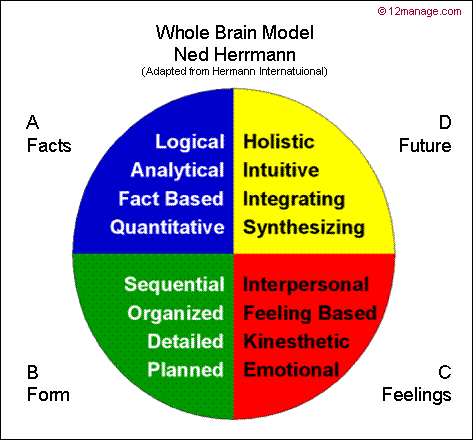
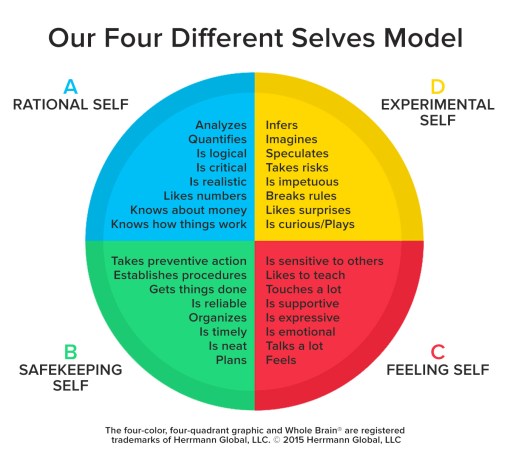
Our human brain is divided into right and left quadrant. Each of them functions completely different from one another. Both sides are connected through Copus Collasum, a thick band of nerve fibres. The left side is very organized, logical, fact-based and controls the right side of the body whereas the right side seems to be instinctive, intuitive, creative, chaotic, emotional and control the left side of the body. To understand better, let’s take the whole brain model of Ned Hermann :
So, each of the 4 quadrants has it’s own specific purpose.

947B06A8-7A43-4D69-BE4A-0782591234ED

Rarely, people utilize the whole brain state in their whole lifetime. According to genetical inclination and also the social upbringing, a person is habituated to use whichever half, he is inclined to use more. Most of us end up using one part of the brain more often than the other. This can be indicated from the progress or the outcomes we get from the decisions, we make in life. As a result, some people end up being a left-brain bias while some as right-brain bias. Depending on the right and left brain qualities scale, each of us can be measured how bias we are, in using which half of the brain we prefer or habituated more to use. Researches show the majority of the people fall in the left brain dominance than the right brain. As the person grows older and older, in the half he uses more, the neuronal pathways become stronger and stronger, and the other half remain untapped and wasted. We start living in patterns and specific patterned thinking which we have adopted over the years. We are unaware of our default thinking pattern. We fail to realise and understand that using the two halves together or rather the whole brain, makes us wiser, help us to make better decisions, perform better, more productive and lead a happier life. The benefits are immense. Our awareness comes very late when we face difficulties, failures, make wrong decisions or end up being unsuccessful in many aspects of life. So, my curiosity is can I rebalance my brain and change my thinking pattern? How do I try to balance both the halves and perform better in life? How do I learn my brain synchronization?

BBD1634D-6CA7-4224-9CDB-4EA53ECA9A40

Yes, we can rebalance our brain. But, then it’s not possible overnight. Just as a habit takes time to develop so also it takes time to change too. But let’s understand what whole-brain thinking is all about. You have access to all the two halves or the four quadrants of the brain equally at the same time. Instead of your usual thinking preferences, being able to adapt to learn thinking from different aspects (from different quadrants) and come to a better decision which would improve your performance and outcome of a particular task in hand. This means capable of leveraging the different thinking aspects available for that particular task and come to a better decision which may yield a better outcome.
Therefore, different mental processes, courses, exercises are programmed and developed to improve our whole-brain thinking. Some of the easiest ways are :

Seated young man with crossed arms gesture

1. Crossed Position: Normally, the left half of the brain controls the right side of the body and so is the right half controls the left side of the body. Depending upon the thinking brain biases, we shift from left side thinking to the right side thinking throughout the day. We fail to keep the brain in sync during thinking because of the patterned thinking behaviour that we have adopted over the years. When you stand or sit cross-legged and arms crossed, the control and co-ordination of either side cross the midline of the brain therefore both the halves of the brain is accessible at the same moment, that is the brain is synchronized. When the brain is in sync, we can access this super learning and thinking capabilities. There are various exercises and movements where either side crosses the midline and help brain synchronization like mind squat, cross crawl.

C24F3301-1EAC-485D-B901-FAFA389EAE90
2. Meditations and Binaural beats: Deep meditation has a powerful effect on brain synchronization. Using binaural beats introduces 2 frequencies of different tone at the same time which helps the brain goes into a meditative state and brain synchronization. However, these are practices which need to be done regularly to yield results.
3. Alternate Nostril Breathing.
4. Learning a musical instrument.
5. Yoga: Postures like Vrikrasana (tree pose), Garudasana (Eagle pose)

FE8A1A58-E049-40D4-B7AB-7B6C1C5E76E9

FA88BDE0-1DC5-4AAE-83A4-02201F621DF0

Thanks for reading.

Blessings and much love to all 💐

Post: Mental Rehearsal: Does visualization work? 🙌

Hello everyone! Have a great Sunday 🙋🏻
D258CB07-CD4F-4281-8613-E198DE528CA4

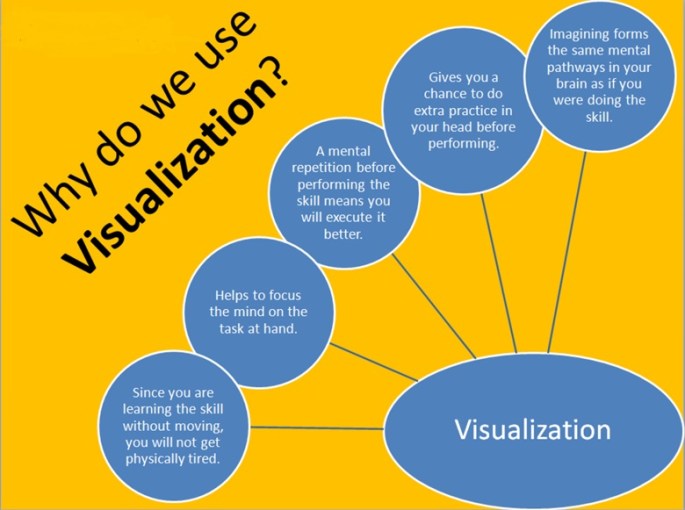
What is this concept of mental rehearsal? It is an active visualisation technique through the individual’s mind to demonstrate the performance of a particular task just as the way he wants it to be. By doing it repeatedly, there can be subjective learning and actual performance improvement. Researches in performance psychology have been using visualization techniques through mental rehearsal methods to improve the performance in case of athletes and other areas of sports.
Well, it has proved successful in case of sports but also been tried for other areas of psychotherapy to treat mental illness. Can this technique be used in a normal person like us? Can you tap the huge potential of this technique of mental rehearsal and bring improvement in some areas of your life where you lack? Say, any tasks like performing on stage, appearing an exam, public speaking, or trying long-distance running, staying fitter, healthier, overcoming fear so on. The answer is absolute yes. The more we visualize ourselves, the more we perform for success.
E7D0C974-BA06-4DCA-BD59-3FBE34F749D0
Interestingly, neuroscience researchers have shown that by the mental rehearsal of a particular activity, the thought alone (not performing the task physically ) and having it repeatedly can build up new circuitry in the brain. This can bring about objective changes in that particular area of a person’s life. This happens because when the person perform the particular task with focused attention in mental rehearsal (just the thought of performing) and do it repeatedly, the brain understands it as a true physical performance and start building neural pathways of the new learning. The brain cannot differentiate between a real and imaginary and takes this imaginary performance as a truly physical experience. Therefore, as the person changes his mind, the brain physically changes too and vice versa. So it becomes cyclical. The frontal area of the brain covers the larger part of the brain. It carries out all the major activities of thinking, analyzing, planning, decision making. It is in this area where, we learn, remember new things, explore new things. So, when you focus on a particular area with full attention (the thought alone), cut down all external distraction, the frontal area of the brain lowers the awareness from all external stimuli of the outside environment and the body. When the brain is so focused on that particular thought at the present moment, that’s when actual physical changes happen, new neural pathways start forming. The brain and the body believes that as an actual physical experience.
45EF6AA3-D0FB-447E-88F7-23AD10C7EE07

The question is how can we apply this in our everyday life? Every person or individual wants to be his/her best version. Every person loves to be successful in some area or the other. Every person wants to be happy in life. If you sit down today and start analysing your life and find out which areas in life, you lack. How can you bring about changes in those areas to improve your quality of life? You start to focus on one particular area of life at a time. Start doing a mental rehearsal of performing better in that area, or visualising a success scenario, or intentionally changing that aspect of life. Performing this mental rehearsal every day with full attention (closed eyes), least distraction from the external stimuli and environment. Doing repeatedly for days with some focused attention. Then, slowly the mind changes, the brain start to change too, new neural circuitry forms. When this mental rehearsal of the particular thought is done repeatedly for days, the new neural connections become stronger and stronger. That’s when the person’s behaviour starts changing, or the objective intentional changes start appearing in that area of his life. Whatever the area could be, like performing better in academics, in office, at work or a particular task. Or changing his/her approach or behaviour towards his health, fitness, other people, any relationship or in any areas, the person strives for.
0B1D79C3-9FA6-4A17-A029-97531E932994
But bringing out this change isn’t easy as it is said. But then, it is also very feasible too. The problem is that our mind is too crowded with stress, thoughts, burden and everyday events. It’s really difficult to remain focus on a particular thought or activity even for a single minute before the mind slips. To bring a change in any aspect of life, you need to have a strong intention, a strong will to make it real. Therefore, mental rehearsal of any kind needs to have a very concentrated focused mind. For, this you need to prepare your mind. This is a daily practice. Most of the time, certain practises as Yoga, meditation, mindfulness helps greatly to create a stable and a focused mind. You cannot learn it overnight. It is a practise which keeps getting better with time.
62E96447-D2F8-4438-863F-C066419B08B8
Some simple tips of mental practices are like
1. Sitting or lying in a comfortable position, keeping your spine straight.
2. Closing eyes is necessary to reduce the external distraction.
3. Breathing evenly and regularly. It is slow deep breathing.(Parasympathetic breathing)
4.Visualization, being detailed and specific of exactly what kind of change and in which area of life you want. And doing it repeatedly every day.
5. Doing mental rehearsal is only effective by being in the present moment. To learn, being in the present moment, try focusing your breath at several moments of the day. When you are at the present moment, there is no fear or stress of any sort.
6. Letting go of fear, everyday stress as much as possible. Don’t overthink.
7. While doing mental rehearsal, stay focus as much as possible.
The focus of mind can be learned by trying to stare an object for some time. The longer you learn to focus on a particular thing, the more is your mind under control and attentive. This is like muscle training. The more you practice, the more you get better with time.

I, myself believe in this practise of mental rehearsal. It did help me improve in some areas of life. Each individual has an inner world of wisdom. Each of us deserves to lead a successful, happy life or deserve to get whatever we want from life. The more we explore this untapped potential, brilliance and can implement in our daily life, the better we can be successful or at least can be the better version of ourselves in life.

Thanks for reading.
Blessings and much love to all 💐

Post: How about a smart healthy brain 😇😍, anytime, any age? : 5 ways to facilitate the process.

Hello everyone ! Have a wonderful weekend🙋🏻

Neuroplasticity and Neurogenesis, two terms commonly used when it comes to brain health. We, just don’t need to dive so much into Neuroscience to learn what they mean and how we can help ourselves to keep our brain healthy. Brain health is important because as long as our brain is healthy, we keep learning new things and our memory is intact. As ageing progresses, we can prevent ourselves from certain chronic conditions like dementia, Alzheimers and Parkinson’s disease by maintaining good brain health.

Neuroplasticity, meaning that our brain is continuously changing through our entire lifetime depending upon our experiences, the environment, habits, behaviour. Neural pathways keep rewiring and dewiring depending upon what is necessary and what is no longer useful. Therefore, being in a positive environment, thinking and feeling positive is all very important.

Neurogenesis meaning formation of new neurons, that is our ability to learn new things and retain in our memory. Previously, it was believed that neurogenesis stopped once we reach our adulthood, that is around the age of 20. Now, researches have shown, that neurogenesis occurs throughout our lifetime. So, we can learn until the day we die. In our brain, the neurons are formed from the neural stem cells and progenitor cells which are in the Hippocampus mainly and also in other regions of the brain. Though every day, new neurons are formed, before, they could get matured, many of them get pruned. A special protein BDNF (brain-derived neurotrophic factor) has been identified which is responsible for promoting the maturation, survival and maintenance of the neurons.

So, how do we facilitate this process of neurogenesis and maintain the level of BDNF? 5 simple ways

1. Exercise: Any exercise which can increase the heart rate mainly aerobic exercise, running, brisk walking.


2.Food: Rich in omega 3 fatty acids like fishes (salmon, tuna, sardines), avocados, chia, hemp seeds and nuts. Other sources which help are turmeric, blueberries, goji berries, lotus roots, algae, green tea, coffee. However, too much caffeine is detrimental to neurogenesis.

3.Emotions: Experiencing positive emotions like joy, excitement, love and feeling good, stimulate Neurogenesis. Such emotional experience can appear by being creative, learning a new skill, going out in Nature, proper sleep, listening to Nature sounds, good music and sex. A positive relationship with partners, peers, relatives is helpful. Being in chronic stress, anger, anxiety are detrimental to neurogenesis.

4.Mind stimulation: Cognitive abilities like reading, learning, memorizing, discussing new ideas, taking up music lessons, problem-solving, all stimulate neurogenesis. Cognitive reserve (resilience against brain damage) can be built up by engaging mind stimulating activities or intellectual work.

5.Meditation: Prayers and meditation can stimulate neurogenesis. Practising mindfulness, compassion, being in silence, stillness all facilitate neurogenesis.

Some lifestyle factors which can decrease neurogenesis are a high intake of carbohydrate, sugar, fried foods, inflammatory foods, chronic caffeine intake, smoking, alcohol, obesity, chronic stress, lack of sleep, negative emotions like sadness, depression, lack of engagement, boring life. Direct trauma to the head can be very detrimental to neurogenesis. Nowadays, even environmental pollution is quite hazardous to brain health.

If you are intending to learn more about lifestyle changes that you can do to improve your brain health, I recommend the book: Neurogenesis diet and lifestyle by Dr Brant Cortright

Thanks for reading. Take care.

Blessings and Much love to all 💐

Post : Stillness 👤

Hello Everyone ! Happy Friday 🌼 and have a great weekend ahead 🙋🏻

Every day, in this hustle-bustle of life, there is too much noise to ever be in silence. The cacophony of sounds distract us all the time and our mind is filled with too many overcrowded thoughts. By the end of the day, you are too exhausted physically and mentally with this craziness. But then, can this drama of the outer world ever pause? The answer is yes, unless, we allow ourselves to be paused and listen to the silence.

Yes, the essence of being silent in stillness even for a short time can be a source of great strength, highly rejuvenating not just mentally but physically too. It gives you the much-needed fuel before you step into a new day. We feel stillness is difficult behind all the distractions. Everything gets in our way. It’s only when we become aware and learn to listen to the stillness, we get time to truly rest.

The best day to practise stillness is right from today. Each morning or evening or summer or winter has its kind of stillness. Sitting or lying down, after breathing deeply with eyes closed, away from noises and trying to follow up your natural breaths for some time will let your life simply, drawn into this darkness where there is no limitations or constraints. Though it may sound simple, it isn’t that easy. But then, this is a practice. Initially, you are so caught up with thoughts that the mind slips for tomorrow’s meeting, the emails that you have to check, you have to meet up a friend, your next meal to be prepared come all your way. I know my friends, this is a little difficult, as you are trying to focus on nothing and there isn’t any goal to reach.

You start forming a habit when you are doing every day for a couple of minutes. Some days are difficult with too much clutter of thoughts while some days are easy to focus. That’s all ok, my dear friends. As the days pass by, you will learn to enjoy this silence, the peace. The darkness within this stillness has much more to say than anything else. I have tried myself and am still learning and enjoying the process. You will experience inner peace and wisdom, your spiritual growth. This is what people call as meditation or the sacred stillness is all about.

I have already talked about the science point of view ( in some of my previous posts) what meditation, stillness bring about changes in the brain and also in the physical wellbeing (reduces inflammation).
Practising stillness also helps in a better quality of sleep. So, the benefits are plenty. I am not exactly using the term “meditation” as there are several methods of guided thought meditations. Here, I am simply talking about the stillness, listening to the silence which helps to nourish us both physically and mentally. It gives us a deeper sense of connectedness, perhaps with the Divine.

Whether or not, to practise stillness or meditation is entirely our choice to make. We can start listening to silence and practise stillness or continue to hide from it.

Thanks for reading.

Blessings and much love to all 💐

Post : Your quirky Subconscious mind 😇

In your, every day lives, the brain functions as two major parts – Conscious brain and Subconscious brain. Out of this, 90-95 % of your actvities are carried out by our subconscious brain which acts as an auto pilot. This is your habitual brain. While only 5 % is your thinking brain, the cortical brain, who does the conscious brain activity.

The subconscious mind is more of the inner primitive brain also called the limbic brain which does your automatic, habitual behaviours, which is also responsible for your emotions, feelings, reactions, fears, impulses and reflexes in your everyday lives. So, think, how important a role this subconscious mind plays in our day to day life.

From the day, you were born till 6-7 years of life, your brain is in the hypnotic stage. That means, you observed everything in your environment, programmed every good or bad habit from the people surrounding you, picked up every single activity you have seen. That’s how, the subconscious mind got programmed. As you grew up, you started understanding things slowly but you still picked up habits, beliefs, feelings, emotions, reactions of people, your parents, teachers, friends surrounding you.
By the time, you became an adult, you have already developed a personality, habits, traits, thinking patterns, which are very much part of you. Your subconscious mind takes the upper hand in controlling your life which you are not even aware.

Your subconscious mind is not your enemy. Because you cannot do without it. Whatever activities you perform like walking, speaking, eating, writing, driving are all because of your subconscious mind programming. Then, how does it affect your life?

When it interferes with your life purpose, your goal, your performance, your task, then it starts affecting your life. From childhood, apart from the huge lists of habits that you have, you might have picked up a certain negative pattern of thinking like fear of failure, low self-esteem, pessimistic thinking, fear of challenges, impulsiveness which can be stumbling block to succeed. Most of the time, you are not even aware of. You become frustrated, sad and disheartened. You read motivation books, watch motivating videos, make tons of effort. Still, unknowingly, you come back to your old thinking pattern. This is because you have developed this habitual thinking pattern over the years. Sometimes, in spite of knowing your faults, you are unable to change. You go through your same fear, worry, negative thinking again and again. Then, how can you change?

To reprogram your subconscious mind :

Keep repeating your changed beliefs and affirmations:

To break a habit and reprogram your mind for a new habit will take time. Your subconscious mind is habitual, so, to learn a new habit and reprogramme your subconscious mind would take some time.
Firstly, decide on what you have to change in yourself. Frame that belief or affirmation in your mind. The subconscious mind does not understand verbal language so using metaphors is a convenient way. Then, keep repeating and reaffirming daily till you can form it a habit. It can take a long time and years. But, this is the most convenient and effective way to change your subconscious mind.

Then, there are other methods, like energy psychology, hypnosis, Psych -K where the brain is brought to the alpha-theta a wave stage, and then the belief is slipped into your subconscious mind. I have not much idea about these methods because I have never tried them. You can get more information on them, if you are interested in

https://www.brucelipton.com

Thanks for reading.

Take care. Much love to all 💐

Post: 4 interesting facts about gut feeling. Is it same as intuition? 💁🏻

Why is the term ” gut “ attached to the word ” feeling”? Off course, there has to be a reason. More preferably, a scientifically researched fact.

1.Your gut is lined by a network of neurons. It is found that about 100 million neurons are lined across the gut ( alimentary canal ) which are even more than in the spinal cord or the peripheral nervous system but is less than the brain. This is called the enteric nervous system. So, gut feeling is also referred to as the ” second brain”. The brain and gut are connected through this network of neurons which is the gut-brain axis. Your gut, the enteric nervous system can act independently from the brain, the central nervous system. But, most of the time, it is overridden by the brain. That is the reason, most of the time, we ignore or consciously don’t acknowledge our gut feeling.

2.The most important aspect of gut feeling is quick and automatic, appear even before the brain starts thinking logically. The gut makes similar chemicals as the brain do while thinking. It makes a quick evaluation of the situation at hand and gives feedback. It cannot analyse and do logical thinking as the brain.

3.The huge microbiome flora in the gut not only influences the gut alone with what diet you eat but also has the perception of this world and can influence the mind and behaviour. They influence the body’s level of serotonin, which is a neurotransmitter that regulates the feelings of happiness. That is the reason a healthy diet, good sleep, good exercise can influence your mood and behaviour.

4.Your gut feeling is not intuition. Intuition is something to do with your highest level of consciousness, it is said to be the voice of the soul.
Whereas gut feeling is your very human instinct. This feeling comes collectively from the neuronal network in your gut which gives you feedback based on your past experiences with the intent to keep your body safe and protected. It concerns your fear and struggles for survival.

You don’t feel right when a particular person is around you, or you feel uncomfortable in a particular situation or when you feel something is not right for you to eat, are all your gut feelings. It centres around your struggle and fear-based on your past.

Intuition is your inner voice, which may tell you choose a particular career path, or follow a certain dream or choose to be with someone.

You can rely on your gut, and choose to remain safe and not take any risk. In most instances, you use your logical brain to choose depending on your past experiences what works for you safe and better.
Or you can hear your intuition and work beyond your reaches to something unknown in the past in your life experiences, or the ones which appear in your dreams.

So, you have a choice to make at every moment throughout your life.

Thanks for reading.

Take care. Much love to all 💐