
Hello everyone! Have a wonderful Monday 🙋🏻♀️
Maturity is……



Thanks for reading.
Blessings and much love to all 💐

Hello everyone! Have a wonderful Monday 🙋🏻♀️
Maturity is……
Thanks for reading.
Blessings and much love to all 💐
Hello everyone ! Have a wonderful and safe day 🙋🏻
” You can change your brain just by thinking differently ” Dr Joe Dispenza.

We do the daily thinking and task performing by both parts of our mind: Conscious and subconscious mind.The conscious mind is the creative part of the brain, which thinks, absorb new knowledge, new ideas, analyse things and objects. The subconscious mind is a habitual mind which functions on programmes that we have downloaded in the course of our lifetime. The subconscious mind works about 95% of our day to day time doing all the activities based on its habitual nature.
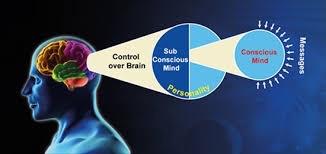
How we think and behave depends on our past memories and experiences that we had till date in our life-term. That’s is how we generate our thinking pattern and everyday thoughts and feelings. So, we experience our daily reality, the so-called perceived truth through the filter of the past, which is the result of the memories, beliefs and experiences.
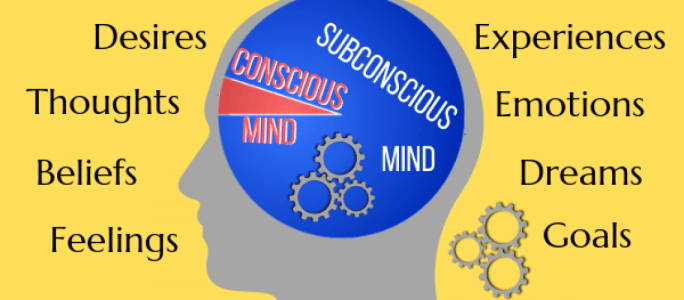
That’s how, an ordinary person like us lead a routine life based on old habits, which is run by our subconscious mind programming. We get comfortable and become used to it, so any new change or trying to change a better or improved habit becomes a difficult and challenging task for us.

So, how is an experience create a memory in the brain? When we have an experience, the sensory organs collect the different data of senses from the external environment and send them to the brain. In the brain, there is an influx of neuronal charges which create a specific pattern of the neuronal pathway. The brain produces a chemical or feeling which we called emotion associated with the neuronal pathway. So, the experience related to the emotion/feeling creates a memory in each of the body cell. That is how a particular event is recorded in our brain and body cells. Therefore, each thought is always associated with a feeling or emotion. Happy or good thoughts create delighted emotions and good memories, while unpleasant or sad thoughts have an anxious mood or emotions and an unpleasant memory attached. This series of thoughts and memories appear every day and become our thinking pattern and behaviour and develop into habits. Our state of being, our wellness also depends on this pattern of thoughts and behaviour.

So, can we create a change at any age? Modern researches have shown that the human brain can change or build up new neurons and pathways at any age. This process is called Neuroplasticity. There is no age or gender limitation for this change to happen. A thought, belief or habit is difficult to change because it gets hardwired in the brain due to continuous repetition during our lifetime. So, a change is possible when we consciously shift our paradigm from these sets of limiting beliefs and behaviours. Most of the time, our thoughts and opinions get stuck in the limitations, and we fail to think beyond our conscious and analytical mind. Change is possible at every point in time. Enough researches have proved that transformation is possible in our thinking pattern, behaviour and habit at both physical and mental level in a measurable way. The person who is aware and becomes proactive to change or build a new empowering and better practice of thinking pattern and behaviour can easily taste success and happiness in this lifetime.

Because of the habitual nature of our subconscious mind, the habit of new thinking and behaviour needs a particular method to be implemented to bring about a change. Mere affirmations and positive thinking cannot alone lead to a shift in thinking or behaviour. It is valid only on those moments when we think with our conscious mind. Once we forget with our affirmations, the old thinking pattern and subconscious behaviour take over. Some studies have shown that it takes around 21 days to develop a new habit or a thinking pattern. But, this depends more on the individual and his willingness to bring about a change.
Certain methods:
1.Continuous repetition over a certain period until it gets reprogrammed in our subconscious mind. We can try this practice on our own.
2. Hypnosis: Practicing self-hypnosis of the affirmations or the change mostly during bedtime or early morning hours when the mind is less engaged is a useful tool. Practising it everyday, the subconscious mind can be reprogrammed to this new belief or thought. This method needs a therapist but can be practised on our own too.
3. Energy psychology: Different modalities exist which require the help of a trained and professional therapist like in methods such as Psych K, brain synch method, resonance repatterning.
More information: www.brucelipton.com
Thanks for reading.
Blessings and much love to all 💐
https://9713bwro7r5r4w1bnlp3reun3c.hop.clickbank.net/?tid=140519
Hello everyone ! Have a wonderful and safe day 🙋🏻

“The best use of imagination is creativity, the worst use of imagination is anxiety”. Deepak Chopra.
Humans are the only species since evolution, who have the most evolved mind. They can undoubtedly imagine both constructively and destructively. So, it’s our thoughts alone which can make or break us.
Being anxious is having an uninvited guest into your house, which you are trying to avoid, but still, he refuses to leave.

Anxiety is a state of mind, not a disease. Every day, we generate about 70,000 thoughts, out of which majority of them are negative and repetitive thoughts which do not serve any purpose. Thoughts are the main stimulator of our state of wellbeing. Whether you are physically healthy or not, thoughts are only instrumental which determines our state of wellbeing. It’s the day to day thoughts that creates our perceptual reality which we believe our real world. Hence, this is the hard truth that needs to be acknowledged by us.
It’s essential to educate ourselves that thoughts typically creates our reality. So, if we modify our thinking pattern or start creating empowering thoughts and beliefs, we can easily change the world around us.
Therefore, thoughts are so powerful that they can push you to the peak of physical and mental wellbeing or dumped you in the pit of depression and anxiety.

So, how does anxiety builds up?
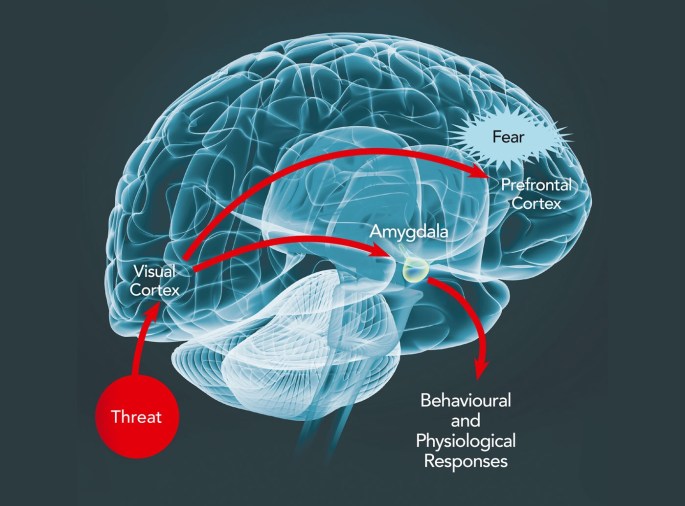
Out of 60,000 to 70,000 thoughts generated, every day, about 90% of them are just repetitive and negative thoughts. There is overthinking and rumination of the same type of thoughts. As the cycle continues, there is an alteration in the chemical makeup of the brain. Dopamine and serotonin, the mood regulators get depleted in the brain. The production of BDNF (brain-derived neurotrophic factor) gets consumed, and slowly there is shrinkage in the size of the brain. When the cycle becomes vicious, and anxiety state becomes chronic. It started to interfere with daily activities. Such a state is regarded as an Anxiety disorder. As chronic stress get elevated and reaches the threshold, there are significant changes taking place in the brain.
Some noticeable changes are :
1. The more the brain is engaged in anxious thoughts, the more the ‘anxious neural pathways’ are strengthened.
2. The brain is stuck in the state of ‘high alert’, becomes more reactive to the stress receptors for possible threats which are mostly imaginary.
3. The fear centre in the brain becomes more prominent and more significant.
4.Not just the chemistry, but changes start appearing up to the DNA level in the brain.
5. Brain ageing process also fastens.
6. The circadian rhythm is disturbed, and the sleep cycle gets disrupted.

Simple ways to get rid of the anxiety state :
1. Firstly, it is better to face the anxiety. More avoidance will lead to more exaggeration. So, visit your fears, and start being an observer. Being an observer of your mental state, create a sense of indifference, feels like you are different from your state of mind. You understand that the mind and body have created a false association to any external object or stimulant as the triggering factor.

2. Diaphragmatic breathing: Long bouts of inhalations followed by long rounds of exhalation. The deep breathing technique: Like taking a prolonged deep breath of inhalation by counting 1-4, then, a pause of 1-4, followed by an exhalation of 1-4, then another break of 1-4, and the sequence continues. That is why this technique is known as four-square breathing. This slow and deep breathing causes the oxygen to reach your brain, and the parasympathetic nervous system gets activated. It can be an instant stress reliever.
3. Naming your anxiety is as expressing your state of mind to another person. Putting words, and explanation of your anxious thoughts will stimulate the frontal cortex. Your brain will be more attentive in the frontal cortex and deviated from the fear centre, which is responsible for the anxious state.
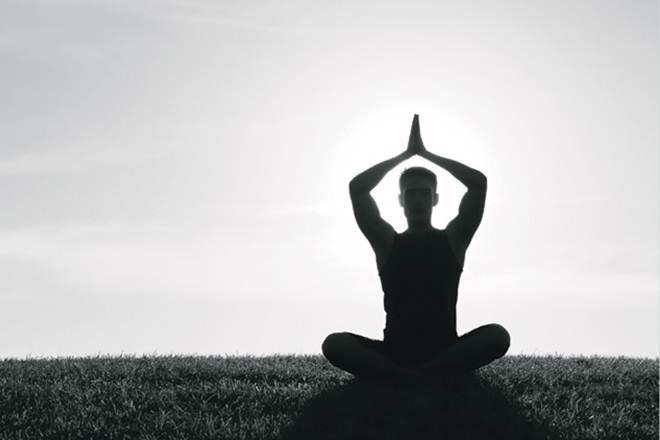
4. Mindful and relaxation techniques like mindfulness, meditation, yoga, which all goes to help stimulate the parasympathetic system, which is for relaxation.

5. Plant-based food is known to have a calming effect on the human mind.
Thanks for reading.
Blessings and much love to all 💐
Hello everyone! Have a safe and wonderful weekend 🙋🏻♀️
Some random clicks of mine….





Thanks for reading.
Blessings and much love to all 💐
Happy International Yoga Day !


Thanks for reading.
Blessings and much love to all 💐
Hello everyone ! Have a wonderful and safe day 🙋🏻

Scientists are yet to give a proper standard definition of emotion. Enough researches are done in the past and are still going on. Yet, it is quite challenging to define this experience of mind called ’emotion’. Emotion is usually a state of mind which is neurophysiological. It can be linked to the person’s personality, thought process, feeling, mood or temperament. It’s a mental state where he/she may experience either pleasure or displeasure. So, every day and every moment, a person’s emotional state may vary.

Researches have revealed that the left side of the brain is a logical and more analytical half while the right side is imaginative, creative and emotional. There is a total of at least 27 emotions which appear in the human mind. Everday, both positive and negative emotions surface in the human mind throughout the day. As the flickering mind keep reacting and responding to the different internal and external experiences, so does the emotion keep changing. I think emotion/feelings have a lot to do with our subconscious mind. The subconscious mind, with its conditioning and tendencies, ingrained through our life journey. Therefore, depending on these tendencies, the emotional state may vary from individual to individual for the same human experience.
Having an emotion, pleasant or unpleasant, we blame it to the external environment. But we fail to acknowledge that our internal environment has a greater role to play than any external environment when it comes to our emotions. Here, I would like to emphasize more on the negative emotions that are generated in our mind daily because they have a toxic effect both on our physical and mental health. We can at least try developing a habit and make behavioural changes to reduce or try getting rid of them as much as practically possible for the sake of our wellbeing.
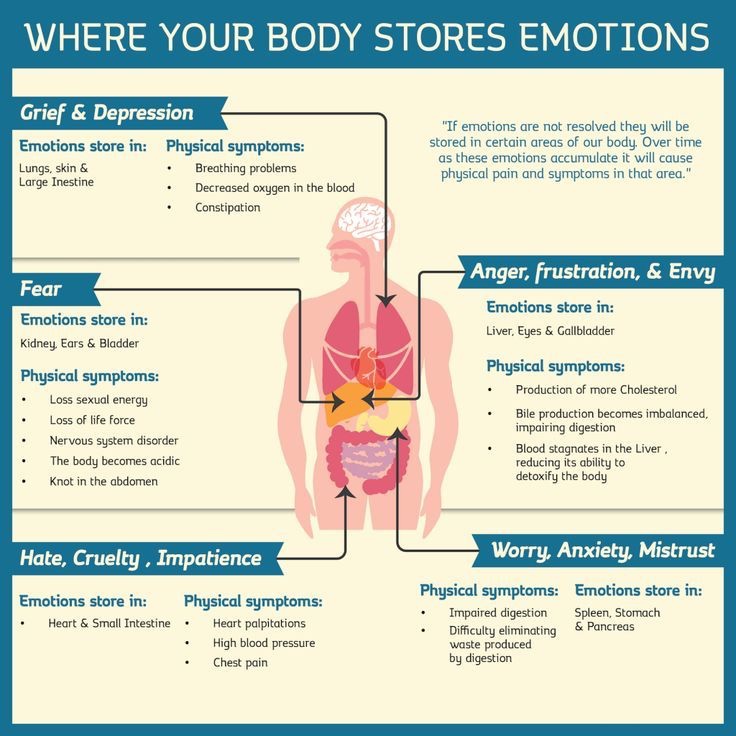
The sources of negative emotions evolve through a toxic and adverse thought process like anger, pride, ego, greed, jealousy, hatred, lust, infatuation and so on. So, how do we stop ourselves or at least try getting rid of them daily? It is an ever-evolving process and learning experience that grows with time.
Six ways, we can try getting rid of them are :

1. Replacement techniques: Every time an unpleasant experience happens, the negative emotion of anger, pain, hurt, resentment appears. Further, the mental pattern of overthinking and ruminating makes it worst to bear. Being aware of our state of mind is an important step to initiate. And the slowly deliberate attempt of replacing the negative thinking pattern with a positive and a more constructive thought process. It is something that isn’t easy at all. But, it isn’t impossible either. It’s a habit that has to be grown and nurtured through time. Therefore, replacement with a better pattern is an efficient method.
2. Bring in the opposite action: Intentionally doing an act of service or showing good conduct even in a bitter experience. It can lead to a change in our mental state to a more positive environment and reduce the negativity. No matter what the other person’s reaction, you remain in a positive and gratitude state. It can help us get rid of negative emotion and maintain a balanced state of mind.

3. The mind of service: Every individual is deep down selfish. We live, work, desire all the time for our own selfish needs. We feel we will be happier this way. But, we end up suffering because of our selfish desires and needs. We need to realise this sooner or later. The more, we grow towards an unselfish mind, a mind in service to others, the lesser is the negativity around.
4.A bigger picture: Whenever we breed a negative emotion towards a person or a situation, we tend to have a narrow perspective. We become selfish as our ego hurts, and our ‘sense of self’ is threatened. Realizing this fault of our’s is a great help. Being self aware of our narrow-mindedness is a crucial step. It will help us to view the person or the situation in a wide broader picture. Therefore, we become less judgemental towards the state or the person.

5. Nurturing positive emotions: We need deliberate efforts to boost positive feelings of compassion, kindness, love and gratitude. Nurturing these emotions can substitute negative emotions of anger, hatred and jealousy. Cultivating a habit of doing good to others can create good mental impressions and thereby bring good feelings of joy and happiness.

6.Meditation: The daily practices of meditation, nature walk, chanting, yoga, creative activities enhances self-awareness. Through self-awareness, we can gain better clarity of mind. We have better control of our mind, emotions and actions.
Thanks for reading.
Blessings and much love to all 💐
Hello everyone! Have a great day 🙋🏻


Thanks for reading.
Blessings and much love 💐
Hello everyone! Have a great Sunday 🙋🏻
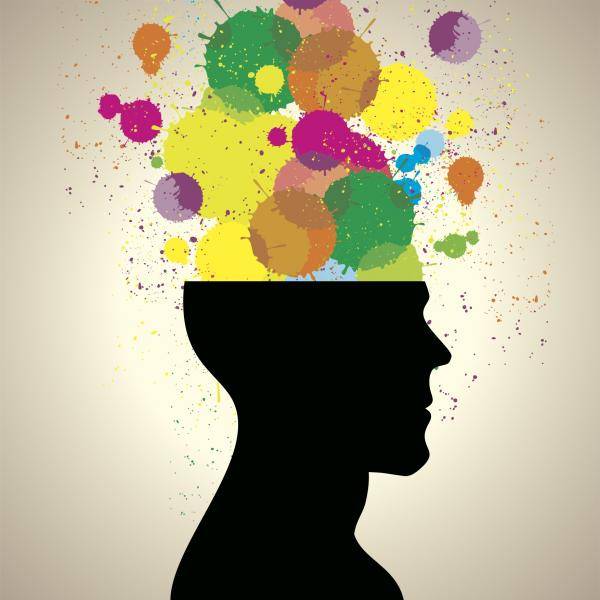
What is this concept of mental rehearsal? It is an active visualisation technique through the individual’s mind to demonstrate the performance of a particular task just as the way he wants it to be. By doing it repeatedly, there can be subjective learning and actual performance improvement. Researches in performance psychology have been using visualization techniques through mental rehearsal methods to improve the performance in case of athletes and other areas of sports.
Well, it has proved successful in case of sports but also been tried for other areas of psychotherapy to treat mental illness. Can this technique be used in a normal person like us? Can you tap the huge potential of this technique of mental rehearsal and bring improvement in some areas of your life where you lack? Say, any tasks like performing on stage, appearing an exam, public speaking, or trying long-distance running, staying fitter, healthier, overcoming fear so on. The answer is absolute yes. The more we visualize ourselves, the more we perform for success.
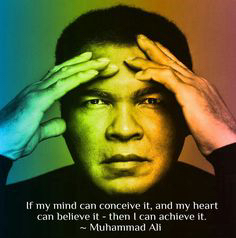
Interestingly, neuroscience researchers have shown that by the mental rehearsal of a particular activity, the thought alone (not performing the task physically ) and having it repeatedly can build up new circuitry in the brain. This can bring about objective changes in that particular area of a person’s life. This happens because when the person perform the particular task with focused attention in mental rehearsal (just the thought of performing) and do it repeatedly, the brain understands it as a true physical performance and start building neural pathways of the new learning. The brain cannot differentiate between a real and imaginary and takes this imaginary performance as a truly physical experience. Therefore, as the person changes his mind, the brain physically changes too and vice versa. So it becomes cyclical. The frontal area of the brain covers the larger part of the brain. It carries out all the major activities of thinking, analyzing, planning, decision making. It is in this area where, we learn, remember new things, explore new things. So, when you focus on a particular area with full attention (the thought alone), cut down all external distraction, the frontal area of the brain lowers the awareness from all external stimuli of the outside environment and the body. When the brain is so focused on that particular thought at the present moment, that’s when actual physical changes happen, new neural pathways start forming. The brain and the body believes that as an actual physical experience.
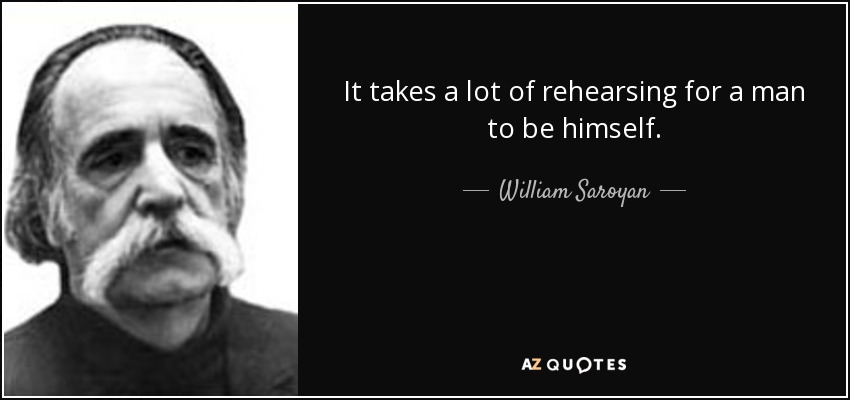
The question is how can we apply this in our everyday life? Every person or individual wants to be his/her best version. Every person loves to be successful in some area or the other. Every person wants to be happy in life. If you sit down today and start analysing your life and find out which areas in life, you lack. How can you bring about changes in those areas to improve your quality of life? You start to focus on one particular area of life at a time. Start doing a mental rehearsal of performing better in that area, or visualising a success scenario, or intentionally changing that aspect of life. Performing this mental rehearsal every day with full attention (closed eyes), least distraction from the external stimuli and environment. Doing repeatedly for days with some focused attention. Then, slowly the mind changes, the brain start to change too, new neural circuitry forms. When this mental rehearsal of the particular thought is done repeatedly for days, the new neural connections become stronger and stronger. That’s when the person’s behaviour starts changing, or the objective intentional changes start appearing in that area of his life. Whatever the area could be, like performing better in academics, in office, at work or a particular task. Or changing his/her approach or behaviour towards his health, fitness, other people, any relationship or in any areas, the person strives for.
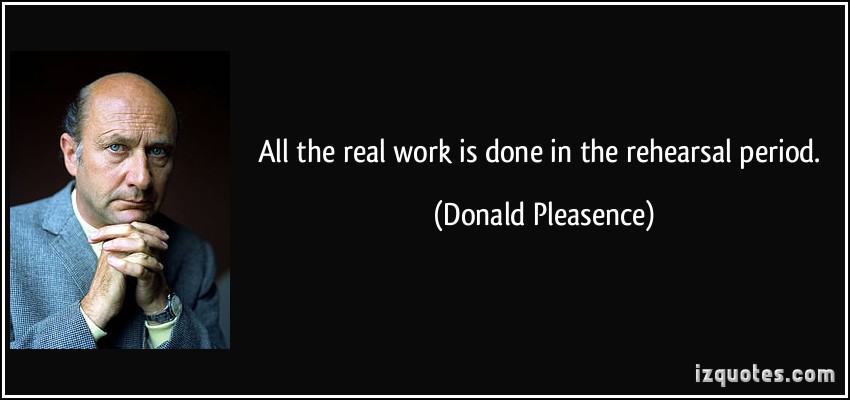
But bringing out this change isn’t easy as it is said. But then, it is also very feasible too. The problem is that our mind is too crowded with stress, thoughts, burden and everyday events. It’s really difficult to remain focus on a particular thought or activity even for a single minute before the mind slips. To bring a change in any aspect of life, you need to have a strong intention, a strong will to make it real. Therefore, mental rehearsal of any kind needs to have a very concentrated focused mind. For, this you need to prepare your mind. This is a daily practice. Most of the time, certain practises as Yoga, meditation, mindfulness helps greatly to create a stable and a focused mind. You cannot learn it overnight. It is a practise which keeps getting better with time.
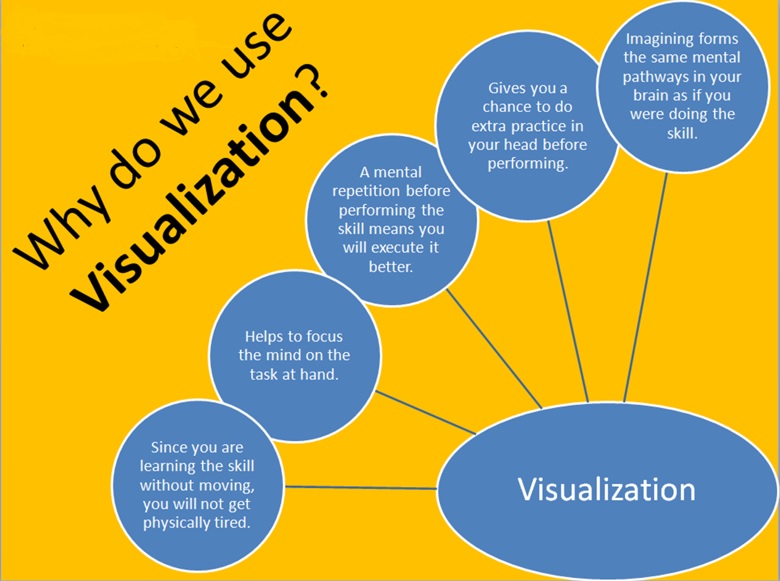
Some simple tips of mental practices are like
1. Sitting or lying in a comfortable position, keeping your spine straight.
2. Closing eyes is necessary to reduce the external distraction.
3. Breathing evenly and regularly. It is slow deep breathing.(Parasympathetic breathing)
4.Visualization, being detailed and specific of exactly what kind of change and in which area of life you want. And doing it repeatedly every day.
5. Doing mental rehearsal is only effective by being in the present moment. To learn, being in the present moment, try focusing your breath at several moments of the day. When you are at the present moment, there is no fear or stress of any sort.
6. Letting go of fear, everyday stress as much as possible. Don’t overthink.
7. While doing mental rehearsal, stay focus as much as possible.
The focus of mind can be learned by trying to stare an object for some time. The longer you learn to focus on a particular thing, the more is your mind under control and attentive. This is like muscle training. The more you practice, the more you get better with time.
I, myself believe in this practise of mental rehearsal. It did help me improve in some areas of life. Each individual has an inner world of wisdom. Each of us deserves to lead a successful, happy life or deserve to get whatever we want from life. The more we explore this untapped potential, brilliance and can implement in our daily life, the better we can be successful or at least can be the better version of ourselves in life.
Thanks for reading.
Blessings and much love to all 💐
Hello everyone! Have a great Monday 🙋🏻♀️
We need both mind and body equally to carry out our daily activities. As we age, we face the challenges of ageing, living, working, struggling to have a fit mind and a body. Therefore, food being an important source of energy, we need to give our undivided attention to what we consume daily. This Mind diet is a routine plan of what we need to consume daily to keep our mind healthy and prevent us from Alzheimer’s, dementia and other age-related illness.

Pinterest.com
Thanks for reading.
Blessings and much love to all 💐
Hello everyone ! Have a great day 🙋🏻

Our mind is illusional. Whatever, we think and perceive is our own derived illusion. It’s our biggest friend and at the same time can be our biggest enemy. Therefore, a common quote says ” You may die a hundred deaths without a break in the mental turmoil “ Our mind makes up everything that happens in our life – good or bad, big or small, ugly or beauty, sad or happy, success or failure, it ‘s all within this thing, called mind. So, how do I control this thing ‘mind’ and remain focus on my goal and life purpose?

Understanding the mind, and its content is very important and fundamental. What makes our thought world? How do thoughts are generated? We build up mental impressions through the different inlets of this outer world. The inlets can be :
*Five senses: sight, hear, smell, touch, taste
*Memory: That has been built up over the years of this outside world experience, right from the day we were born.
*Activity: That we perform , habituated and do throughout the day.
We create thought by an idea backed with emotion. Through different inlets, we build up thoughts as our mental content every day. We generate, perceive, analyse, process and ruminate our entire thought world. So, we keep doing the same mental activity of thinking, analysing, ruminating every day. The thinking pattern doesn’t change. So, does our behaviour and habits. It is uninterrupted, a never-ending process which we may not be even aware.
According to Yoga Psychology ( Yoga Sutras), our thought world mainly depends on mental fluctuation (Vritti) and thoughts (prataya). The mental impulses (vritti) are created through the different inlets like the senses, memory, activity which inturn create mental impressions generating thoughts (prataya). This is the reason, when we are in a positive , vibrant environment, surrounded by positive people, we generate positive, beautiful, creative thoughts. But, when we surround ourselves with negativity, we generate negative thoughts of guilt, anger, pain, hurt, jealousy and so on.

Normally, what happens, when we centred our mind for a particular activity, at the office or home. There are endless distractions. Okay, we try to control the distraction or cut down to some extent, but still mental fluctuations and wondering thoughts continue to distract us. This is because the memory continues to generate unstable thoughts in an unstable mind.
Therefore to manage our mind, we need to control our mental fluctuation and thoughts. The only way to control them is through a concentrated mind. A concentrated mind can be achieved through the power of attention. The power of attention is our very own property (which arises from self) which we can achieve by practising and training our mind. It is a steady power of awareness which is created at our own will. It is the only capability that we can learn to develop for mind control. Whereas, the mental fluctuations (impression) and thoughts are greatly influenced by our outer world, the external distractions. They are not completely within our control.

The different states of mind depending on the power of attention can be defined as
*Ordinary mind: When both the mental fluctuations (vritti) and thoughts (prataya) are unstable. The mind is rather restless distracted, jumping from one thought to another.
*Focused mind: When there is less mental fluctuation (stable vritti) but thoughts are still wobbly (unstable prataya). This is the learning mind.
*Concentrated mind: When both the mental fluctuation (vritti) and thoughts (prataya) are on the same line, stable enough. This is the highest level of attentive mind.
*Meditative mind: When the vritti and prataya are concentrated at the same point, on a similar goal. That is the mind is concentrated at one point say, your attention is entirely on your breath or a point of focus. That is when both mental fluctuation and thought are at the same point. This is the highest level of concentration.
The power of attention is similar to a focused beam of light where all your energies are focused. With this power of attention, you can learn, achieve, complete tasks and attain success in whichever areas of life you want to. That is the reason, we should always learn to perform an activity or task one at a time. So, we give our full power of attention. Handling multiple tasks all at a time can be like a scattered beam where all your energies are distributed. You can be able to do some while some are left undone. Your mind will keep fluctuating and your attention span will be variable and unstable.

So, how do I learn to achieve a concentrated mind with the ultimate power of attention? How do I control my mind, my inner thought world, daily? How do I focus my mind on one activity at a time? How do I take charge of myself? This is a self-learning task, an ongoing process. Two comprehensive ways:
1. To achieve the power of attention, two important things matter the most :
Awareness: Being consciously aware all the time. Feeding our thought world and thought process with positive, constructive and creative thoughts.
Will: Self-training and developing a restrained impulse towards worthy goals, purposeful life.
2.Control of thoughts:
*Exposure to right kind of thoughts: Feeding the mind everyday with right kind of thoughts. Reading good books, being in a positive, good company, surrounded by positive vibrations.
*Right behaviour: Good conduct, right behaviour pattern influence thoughts and emotions. That means reframing our cognitive abilities. Correcting our behaviour patterns as on when required.
*Right lifestyle and habits: Maintaining a regulated lifestyle and habits will greatly influence our mind. You cannot have a stable mind with an unstable lifestyle.
*Purposeful life: Working towards a specific goal, understanding and working towards a meaningful life. Developing a stable mind through meditation and prayers. This cannot be achieved overnight. It is an ongoing, self-learning process. You and I have to keep working on it daily.
Thanks for reading.
Blessings and much love to all 💐
References: Science of Focus by Pravrajika Divyanandaprana (Vivekavani)
 3H:health,happiness,healing