
Hello everyone. Have a wonderful and safe day 🙋🏻♀️

Courtesy: Pinterest
Thanks for reading.
Blessings and much love to all 💐

Hello everyone. Have a wonderful and safe day 🙋🏻♀️
Courtesy: Pinterest
Thanks for reading.
Blessings and much love to all 💐
Hello everyone ! Have a wonderful and safe day 🙏

“Adrenal Fatigue” is a laymen term which we frequently come across or must have heard often these days. Stress is a common thing these days which we encounter in our everyday life, especially in today’s time. In every aspect, not just in personal and professional lives, but also financial, health-related and not to forget this pandemic time of COVID 19.

Not a medical diagnosis, this term ‘adrenal fatigue’ was coined by a Naturopath named James Wilson. He referred it to a set of unspecified symptoms which arises due to the hypofunction of the adrenals.

When adrenal glands, a small pair of organs which lies above each kidney doesn’t function at an optimal level, there is an imbalance. When the body is in a state of prolonged stress, the adrenals keep secreting hormones like adrenaline and cortisol. These hormones are meant to stimulate the sympathetic nervous system during fight or flight response. Without the presence of any potential threat, the person tends to remain in this fight or flight response state due to chronic stress.

So specific symptoms appear like
anxiety,
high blood pressure,
elevated heart rate,
puffy face,
Sleep disturbances
weight gain and fatigue
As a result of the prolonged release of cortisol, the adrenals tend to get fatigued and burn out. Hence, the term adrenal fatigue aptly is referred to such a state.
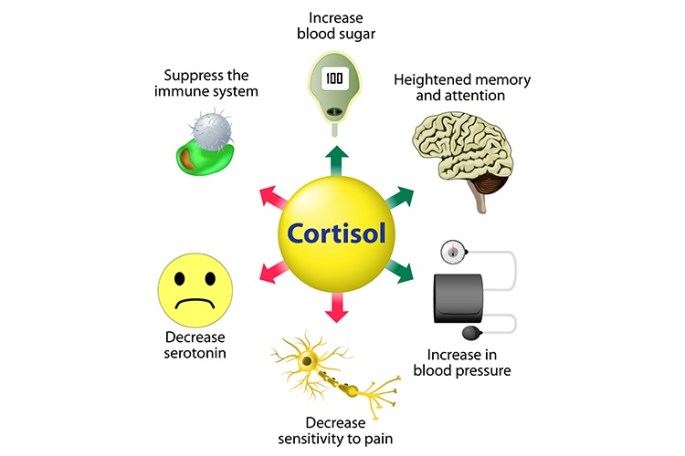
Cortisol, as such, is not a harmful hormone. This is a useful hormone which, since evolution has been with us, which helps us with our survival instinct to protect us from potential threat or danger. Typically, this hormone is produced at a necessary level to carry out its normal function of helping in the metabolic process in the body. Cortisol is always at a balance with the growth hormone, which is secreted by the pituitary. The growth hormone is an essential hormone for growth and regeneration. But as we age, the growth hormone release decreases. So, there is a somewhat an imbalance of the growth hormone and cortisol balance. That’s where the different troubling symptoms start appearing.

Some ways when cortisol can be lowered in the body naturally:
1.Increase growth hormone release by sleep, exercise like walking.
2. Intake of Vitamine D3 of 10,000IU daily, Vitamin like B1 and B5, which also supports the adrenals. Sun exposure can be beneficial in this aspect.
3. Omega 3 fatty acids are useful for the adrenals—wild fishes like salmon, codfishes, flax seeds, avocado are some sources.
4.Minerals like potassium, magnesium: Banana, soy products like tofu, edamame beans, walnuts, almonds.
5. Herbs like Ashwagandha, Ginseng, Rhodiola.
6. Relaxation methods like mindfulness, meditation, yoga


Specific hormone-like Oxytocin which is also called the love hormone, secreted by the posterior pituitary, helps to balance the cortisol level in the body. Some simple ways to increase or ensure the release of oxytocin in our daily life
1. Take a walk, spend time in nature, or with a pet.
2. Self-love and self-care
3. Laughter
4. Hugging and cuddling
Thanks for reading.
Blessings and much love to all💐
Hello everyone ! Have a wonderful and safe day 🙋🏻

“The best use of imagination is creativity, the worst use of imagination is anxiety”. Deepak Chopra.
Humans are the only species since evolution, who have the most evolved mind. They can undoubtedly imagine both constructively and destructively. So, it’s our thoughts alone which can make or break us.
Being anxious is having an uninvited guest into your house, which you are trying to avoid, but still, he refuses to leave.

Anxiety is a state of mind, not a disease. Every day, we generate about 70,000 thoughts, out of which majority of them are negative and repetitive thoughts which do not serve any purpose. Thoughts are the main stimulator of our state of wellbeing. Whether you are physically healthy or not, thoughts are only instrumental which determines our state of wellbeing. It’s the day to day thoughts that creates our perceptual reality which we believe our real world. Hence, this is the hard truth that needs to be acknowledged by us.
It’s essential to educate ourselves that thoughts typically creates our reality. So, if we modify our thinking pattern or start creating empowering thoughts and beliefs, we can easily change the world around us.
Therefore, thoughts are so powerful that they can push you to the peak of physical and mental wellbeing or dumped you in the pit of depression and anxiety.

So, how does anxiety builds up?
Out of 60,000 to 70,000 thoughts generated, every day, about 90% of them are just repetitive and negative thoughts. There is overthinking and rumination of the same type of thoughts. As the cycle continues, there is an alteration in the chemical makeup of the brain. Dopamine and serotonin, the mood regulators get depleted in the brain. The production of BDNF (brain-derived neurotrophic factor) gets consumed, and slowly there is shrinkage in the size of the brain. When the cycle becomes vicious, and anxiety state becomes chronic. It started to interfere with daily activities. Such a state is regarded as an Anxiety disorder. As chronic stress get elevated and reaches the threshold, there are significant changes taking place in the brain.
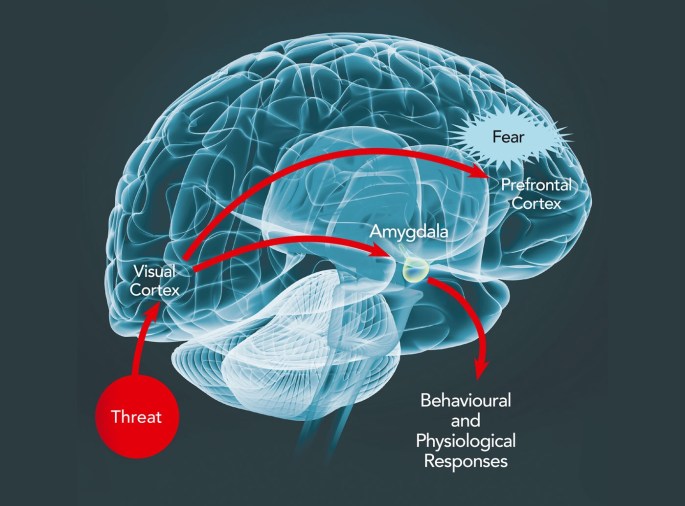
Some noticeable changes are :
1. The more the brain is engaged in anxious thoughts, the more the ‘anxious neural pathways’ are strengthened.
2. The brain is stuck in the state of ‘high alert’, becomes more reactive to the stress receptors for possible threats which are mostly imaginary.
3. The fear centre in the brain becomes more prominent and more significant.
4.Not just the chemistry, but changes start appearing up to the DNA level in the brain.
5. Brain ageing process also fastens.
6. The circadian rhythm is disturbed, and the sleep cycle gets disrupted.

Simple ways to get rid of the anxiety state :
1. Firstly, it is better to face the anxiety. More avoidance will lead to more exaggeration. So, visit your fears, and start being an observer. Being an observer of your mental state, create a sense of indifference, feels like you are different from your state of mind. You understand that the mind and body have created a false association to any external object or stimulant as the triggering factor.

2. Diaphragmatic breathing: Long bouts of inhalations followed by long rounds of exhalation. The deep breathing technique: Like taking a prolonged deep breath of inhalation by counting 1-4, then, a pause of 1-4, followed by an exhalation of 1-4, then another break of 1-4, and the sequence continues. That is why this technique is known as four-square breathing. This slow and deep breathing causes the oxygen to reach your brain, and the parasympathetic nervous system gets activated. It can be an instant stress reliever.
3. Naming your anxiety is as expressing your state of mind to another person. Putting words, and explanation of your anxious thoughts will stimulate the frontal cortex. Your brain will be more attentive in the frontal cortex and deviated from the fear centre, which is responsible for the anxious state.

4. Mindful and relaxation techniques like mindfulness, meditation, yoga, which all goes to help stimulate the parasympathetic system, which is for relaxation.

5. Plant-based food is known to have a calming effect on the human mind.
Thanks for reading.
Blessings and much love to all 💐
Hello everyone. Have a beautiful and safe day 🙋🏻

Being irritable at times, feeling less energetic, having sleep disturbances may not be familiar with me alone but with many of you as well. We blame it to our lifestyle of working up to late hours, stress, anxiety or maybe having too much tea/ coffee in the day. But, we fail to understand that this could be the reason for the deficiency of mineral-like Magnesium—an unknown epidemic which most of us are generally not acquainted. About 80% of the population suffer from magnesium deficiency, so imagine how prevalent the problem exists.

A vital mineral as well as an electrolyte, Magnesium is used in many biochemical processes within our body. Lifestyle habits like stress, anxiety, lack of sleep, sugar intake, having carbonated drinks can deplete magnesium storage in the body. Even the soil where crops and greens are grown can be devoid of Magnesium. Therefore, many reasons contribute to magnesium deficiency issue. So, despite following a healthy diet, we may end up having a magnesium deficiency.

Magnesium is a vital mineral used as a co-factor in many of the essential enzymatic biochemical processes. Energy production cycle called the Krebs cycle; it plays an important role. Magnesium contributes as a vasodilator, anti-inflammatory, anticoagulant. It is used in a considerable amount in the mineralisation of bones. Almost 60% of Magnesium is stored in bones, and the rest is stored in the red blood cells, kidney.
Clinically, Magnesium deficiency or Hypomagnesemia is measured by a blood test or magnesium level in urine. But, despite being such a common problem, many physicians failed to acknowledge it because of lack of enough researches or maybe it isn’t easy to measure the exact level in the body.
Some common causes of magnesium deficiency are:
1. Decreased intake: High intake of processed food and prolonged fasting.
2. Malabsorption: Irritable bowel syndrome-like Crohn’s disease, frequent laxative use and diarrhoea.
3, Certain conditions like SIADH (a condition in which the body secretes too much of antidiuretic hormone),
4, Acute pancreatitis, Burns, lactation, diabetes, excessive sweating and alcoholism.
5. Medication that causes of depletion of stored Magnesium are antibiotics, antivirals, antiepileptics,
6. Uses of Cisplatin, corticosteroids, proton pump inhibitors and diuretics.


Some common symptoms are :
1. Muscle twitching, cramps, spasm.
2.Tiredness, dysphagia.

3. Irregular heartbeats.
4. Migraine headache.
5. Insomnia
6. Kidney stones
7. Weight gain
8. Anxiety
9.Autoimmune diseases
10. Ringing in the ears.

Usually, the ideal dose is about 400mg/day. The important sources can be dietary sources like Almonds, nuts, seeds, spinach, pulses.
Other methods are magnesium ionic drops, magnesium oils for body massage and supplements. Oral supplements are available in bound form like Mg oxide, citrate, glutamate, glycinate, taurate and so on. But, supplementation should be used under a physician’s supervision.
Thanks for reading.
Blessings and much love to all 💐
Hello everyone ! Have a wonderful and a safe day 🙋🏻

Wikipedia’s meaning of grit is ‘perseverance and passion for long term goals’. This phrase seems to be more of a hard personality trait which can be the most valuable one when nurtured in our life’s success story. Angela Duckworth, a psychologist, made ‘grit’, the term of character trait, famous in her extensive research on its immense potential. She analysed different clusters of individuals from a diverse background. Her study has shown that persistent efforts with directed practise to hone a particular skill and focus towards a chosen goal can invariably lead to success more than just being talented or intellectually sharp. Having been born talented or born with an intelligent IQ is a blessing. But, if efforts are not enough to hone the ground talent, the talent remains unexplored and wasted. It’s a fact that not every one of us is equally gifted. But, yet, each one of us is born with this natural capacity of the inner strength of grit. Holding onto this innate capacity of grit can give us the courage to follow our dreams in the quest for success in life’s journey. To develop a skill or to unfold a success story, a mere talent or a sharp IQ is not enough. It is the continuous effort and perseverance to follow the passion and the learning from every failure that goes to make the person successful. Failures contribute more than success because, with each failure, you learn more and understand better.

Unlike animals or lower creatures, human beings are born knowing nothing. They are just born with only one ability that is to learn. It is this character trait to discover and learn more that goes to make the difference. The Japanese philosophy of Kaizen is prevalent and mainstream, not only in business but also in every sphere because it resonates entirely with self-improvement approaches. It says, success can be virtually ahead, if we organise us, with continuous and constant improvements in honing a skill directed towards a targeted goal. Therefore, grit outdoes talent.


The simple strategies that go to develop the capacity of grit: some of the outlines that Angela Duckworth ‘s book “Grit” has highlighted.
1. Understanding self, start questioning yourself. A self-analysis on what intrigues you the most, what exactly resonates with your personality and what gives us the ultimate joy in doing so. Understanding and acknowledging your inclination towards a passion is essential. When the clarity is centred, organising yourself or self-disciplining, building upon a growth mindset, the skills to develop, the strategies to follow, are the keys that are needed. Then, start building up short term goals and a greater purpose in this endeavour. Higher levels of goals, a greater purpose is co-related to the power of grit. Following a random passion, without any intention or targeted outcome is a hobby or a past time. So, a goal and a correct path are essential.

2. Strive to improve every day. Slowly, each day, taking one step ahead. Improving and progressing in polishing your skill is necessary. Competing yourself to perform better than your previous day’s progress. Pushing yourself each day to try adjusting the expertise. Each time, you fail, you learn and understand better. Though failures are frustrating at times, failures give you a lot of information and better feedback than anyone else. It helps you to reflect upon and try again. So, a continuous effort of deliberate practice is essential.

3. Building up a growth mindset is what matters the most. In a fixed mindset, you think that your abilities are firm, you are unable to grow further. You are what you are. That is how a fixed mentality functions which are not true at all. Even neuroplasticity says that the brain can change or undergo changes continuously irrespective of age. So, the brain has an enormous capacity to learn more and more and transform changes accordingly. So, it’s essential to practise and honing a skill which can bring out differences in the neural pathways.

4. Improve and boost your morale. With each time failing, your motivation levels dropdown. Your negative thoughts keep haunting you continuously. Sometimes, your confidence becomes so low that you find difficult to sustain. In such a case, use a past positive memory of a good learning experience where you felt proud of yourself as the guiding memory. This ‘feel-good’ factor will help you disrupt your negative thinking pattern and push you to focus back and continue learning and attaining the skill and help you for striving to succeed.
Thanks for reading.
Blessings and much love 💐
Hello everyone ! Have a wonderful and safe saturday 🙋🏻





Pics clicked by me.
Thanks for reading.
Blessings and much love 💐
Hello everyone ! Have a wonderful and safe day 🙋🏻

Why is gut health so relevant these days ? Because, in the majority of the diseases, researches have shown that the underlying cause is due to an unhealthy gut.

Most of us are not aware of the fact that within the twist and turn of the internal coils, that is the intestines, there is often a war between the good and bad bacteria. This struggle results in gut imbalance and thereby cause several health issues like autoimmune diseases, hormonal imbalances, mental health issues, metabolic diseases and even skin problems like acne, depigmentation and psoriasis.
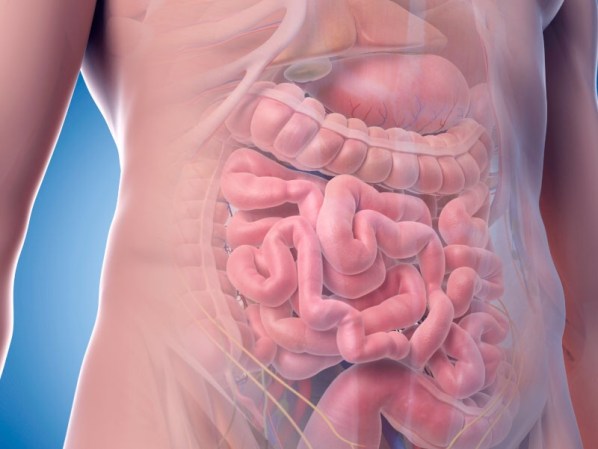
As we must have already known, the digestive tract carries millions of colonies of bacteria. The right bacterial flora within the coiling of the intestines is bestowed upon many functions to perform to maintain a healthy body. They are responsible for breaking down food into energy, eliminate waste and toxins, and most important is to support the immune system. So, our gut health is under immense pressure to perform well.

The gut, when encountered with a burst of harmful bacteria from any food sources, there is a war between the good and the harmful bacteria, and a sudden state of imbalance arises. Therefore, this gut imbalance may lead to different health issues, as mentioned above.
Common symptoms and diseases of improper functioning of the gut are:

1. Slowing of metabolism: This may result in decreased energy production, less absorption of nutrients and deposition of toxins in the different parts of the body. So, there is a lack of energy, tiredness and fatiguability. We may suffer from vitamin and mineral deficiencies as absorption of nutrients is poor.

2. Digestive issues like gas bloating, diarrhoea as the good bacteria are continuously struggling to restore the balance. Irritable bowel syndrome, acid reflux, colitis are some symptoms of invasion of harmful bacteria.

3. Mental health issues like depression, anxiety, mood fluctuation may occur. As toxins get deposited in different parts of the body due to the harmful bacteria, they may interfere with the production of happy hormones like serotonin and other neurotransmitters that can elevate the mood.
4.Lack of sleep: The gut imbalance causes hormonal imbalance, and the serotonin cycle, which regulates the sleep cycle gets wholly disrupted. So, the person with gut issues may suffer from sleep disturbances.

5. Autoimmune diseases like Lupus, Crohn’s diseases, rheumatoid arthritis appear where the underlying issue can be an unhealthy gut.
6.Skin issues: When gut inflammation start spreading to other areas of the body, including the skin, there are issues of acne, eczema, psoriasis, complexion disorders, especially on the face.
7. Metabolic problems like diabetes type 2, stubborn weight gain, and obesity are common with gut issues.
Some useful ways to keep a healthy gut:

1. Eating less or no sugar at all as the sugar becomes the medium of growth of harmful bacteria.
2. Drinking lots of water dramatically helps to eliminate the toxins and also facilitate the digestive process.
3. Chewing food with each bite, about 30- 50 times. Though it may sound tedious, this mastication process may help the food to digest and absorb the nutrients properly.
4. Consuming more fibrous food help to form the stool bulk and help eliminate waste and toxins.

5. Mono meals as preparing a single meal with combining many food ingredients which allows the body to digest food better.

6. Consuming fermented food (pickled vegetables) and probiotics help to flourish and restore the good bacterial flora.

7. Effective foods are bone broth (contain collagen which cleanses the gut), ginger, blueberries, peppermint oil, healthy fats like omega-three fatty acids, all benefit the gut.

8. Low impact exercises: Low intensity exercises like rebounding, stretching, walking, yoga and low impact cardiac workout can be helpful for gut health.
Thanks for reading.
Blessings and much love 💐
Happy International Yoga Day !


Thanks for reading.
Blessings and much love to all 💐
Hello everyone! Have a wonderful and safe day 🙋🏻

Brain fog is a state of foggy, ambiguous thinking. It may be associated with a lack of concentration, a short span of memory loss, anomic aphasia, susceptible to distraction. Brain Fog is a loosely framed term not in medical terminology. There is no evidence of neuropsychological evidence. So, it has no proper medical diagnosis. As far as symptoms are concerned, we may all relate to the concept of brain fog from time to time.
But, yes, when such symptoms are stable and have been steady for quite some time, we surely need clinical assistance. When the difficulty with cognitive functioning becomes problematic, interferes with daily activities, people surrounding you have noticed the symptoms, and slowly they are progressive and declining, we surely need neurological evaluation.

Common symptoms:
Slow thinking
Difficulty focusing
confusion
Lack of concentrating.
Forgetfulness.
Common causes of brain fog :

1. Depression is a state where there is pre-occupied thinking of sadness, worries, hurt, loss, persistent failure. This thinking pattern progresses to affect mood and impair cognitive and behavioural functionalities.
2. Anxiety is a state when there is ruminating about failures, lows of life, worries and so on.
3.Chronic illness or continuous physical pain.
4.Untreated sleep apnoea.
5.Alcohol, drug abuse
6.Chronic Fatigue syndrome.
7.Medications: Benzodiazepines, topiramate, anticholinergic drugs.
8.Sleep deprivation
9.Pregnancy.
10.Appetite disturbances, poor nutrition.

A neuropsychological evaluation is necessary by formal testings of Core battery tests, a general cognitive assessment like memory, attention, language, motor function and visual-spatial and so on. Treatment is based on the underlying cause and symptoms.

Any one of us can have brain fog at some point or the other. The general lifestyle of living in stress, anxiety, overthinking, sleep disturbances can easily affect our thinking and behavioural pattern from time to time. It’s essential to be more aware of our mental state and be proactive to notice and correct the gap or shortcomings by bringing out changes in our lifestyle. Some changes lifestyle like :


Improving diet with more brain-boosting foods and probiotics.
Cutting down inflammatory foods
Improving sleep cycle.
Increased physical activity.
Try not to be self-critical.
Socializing.
Self-care to de-stress ourselves. (developing hobby, being creative, sports)
Thanks for reading.
Blessings and much to all 💐
Hello everyone ! Have a wonderful Sunday 🙋🏻

We, all know and read enough about our body’s defence mechanism and network called the immune system. It is a system comprising of tissues, cells, proteins and biological processes that defend our body from any outside invaders like microorganisms and pathogens.
Though we have such an efficient immune system, yet we fall into sickness, disease several times during our lifetime. The reasons for a weak immune system are plenty. In today’s time, stress is the most dominance cause to have a weakened immune system. Then, lifestyle trends like the sedentary way of living, obesity, smoking, alcoholism and poor nutrition being some of the common causes.

But, at the same time, there have been drastic changes in the societies and communities to bring awareness about healthy way of living, healthy eating. More and more people have started to transform their lives in a healthy way of living and dining.
But, despite gradual changes in lifestyle and eating habits, yet many people still fall sick and suffer from a weak immune system. The reason is our mental state which is too much drown in our daily stress, anxiety and tension. Not just exercising and eating healthy meals packed with vitamins and minerals help, but also a sound and stable mind is more necessary for a body’s perfect cognitive, hormonal and immune system to function at an optimum level.

So, to maximize the immune status of the immune system ,we require a healthy physical state and a healthy state of mind.
To keep a healthy mind : 3 ways of improved thinking process….

1. Homeostasis: When we self-inquired within us, we will always observe that we have an awareness that works through this body, mind complex. This awareness is very much in sync with the universal field of consciousness. We understand that everything is happening around us are experiences that we experience through the mind-body complex.

Therefore, it is essential to realize that every experience we have is enabled through the field of awareness. In every experience, it is necessary to shift towards awareness. Then, in that case, both good or bad experiences, we have, cannot affect this body and mind complex so intensely. Say, during fear, or stress, when we shift our awareness to the universal field of consciousness, we become more like an observer to the experience of fear and anxiety. The biological system remains unaffected, and we stay calmer and in homeostasis.

2. Healthy Emotions: Shifting attention to the universal field of awareness is quite difficult initially. As we identify ourselves too much with our body and mind, so we feel we are separate entities. So, it’s essential to cultivate divine emotions of compassion, love, empathy, which helps us to connect more and more to the universal field of awareness. It helps us to connect more with the web of life and healing.

3.Metacognition: Develop our innate capacity of metacognition. That is to understand and start thinking about our thinking process. Being aware and more focused on every present moment, instead of being preoccupied in the past or future. Concentrating on every present moment prevents the mind from scattered thinking process, which can be the reasons for unnecessary stress, anxiety, fear and negative thoughts. This is the reason mindful thinking and practices are very useful.
Thanks for reading.
Blessings and much love 💐
 3H:health,happiness,healing