
10 facts behind this human behaviour: Why act of cleaning is deeply satisfying?

1. Organizing or cleaning your space, room, or home isn’t about tidiness, but being in control of a world that feels otherwise uncontrollable. It’s about a mental state with clarity, being organized and being at peace with oneself. Psychologically, the environment we live in reflects our mental state. In a world full of everyday stress, chaos, and overwhelming uncertainties, cleaning becomes a tool, a therapy to make ourselves feel organised, meaningful and at peace. Clearly, this act can help reduce stress hormones and release endorphins, which can lift the mood.

2. Many people, even after a stressful day, have a habit of cleaning and tidying their stuff after reaching home or their living space. Psychologically, when emotions are overwhelming and stressful, our brain tries to do things which are tangible, grounding, and clarifying, which makes us feel more in control. These actions give the brain a sense of relief and stability, an escape in an otherwise uncontrollable world.

3. In the brain, activities like reorganising the bookshelf, arranging the office table, cleaning and tidying the home, folding clothes in the closets, cleaning the kitchen, washing the dishes, vacuuming the floor stimulate the parasympathetic nervous system, the reward system, releasing dopamine, the happy hormone. These small acts instantly feel rewarding, light and happy. A tidy living space, home, or office gives the subconscious mind a feeling of security, stability, and organization.

4. Psychologically, on the flip side, a disorganised, messed-up space gives the mind a sense of cluttered thoughts, incoherence, ambiguity, confusion and anxiety. In an already stressful, loud world, you feel more overwhelmed, stressed, where things and people are unpredictable, uncertain and reactive. So, for a change, cleaning, organising, and rearranging makes people feel instantly happy, stable, predictable and certain.

5. Research shows that a cluttered, anxious, stressful mind raises the cortisol hormone. On the other hand, the environment we live in reflects our mental state. So, a messy, cluttered space clearly affects our mental state. The subconscious mind feels confused, lacks clarity, and is incoherent in a disorganised space. So, rearranging the room, furniture, things, clothes, books gives an instant emotional high, certainty and sense of control. The truth is, cleaning isn’t about habit, it’s about emotional regulation, choosing to change the emotional responses of stress, anxiety, chaos to stability, calmness and clarity.

6. Emotional regulation, by definition, is the ability to regulate our emotional responses from a state of uncontrolled, overwhelming situation by making behavioural changes with a healthy coping mechanism to a state of emotional grounding, stability and a sense of control. Examples of emotional regulation are deep breathing, going for a walk, journaling, light exercise and doing tasks like rearranging the books, furniture, cleaning the kitchen, doing the dishes and so on. It’s the ability to change a negative situation’s impact to a more productive and fulfilling one.

7. The strategies of emotional regulation can be summed up as :

• Recognise: Identifying the emotions like anger, anxiety, ambiguity and incoherence.

• Respond: instead of reacting negatively, changing the situation’s impact to a more productive, controlled and tangible behaviour like going for a short walk, rearranging the books on the shelf, cleaning the mess, folding clothes in the closet, cleaning or mopping the floor or any similar activity.

• Reappraisal, like changing the emotional response to more rewarding outcomes like stability, calmness, sense of control and certainty.

• Reflecting on the change of behaviour and situation gives deep satisfaction and happiness.

8. Activities like cleaning a room, realigning a corner, rearranging books, furniture, cleaning a countertop or mopping the floor are not just tidying or organising acts or behaviour but something more deeper as emotional relief or emotional satisfaction. It’s about reconnecting oneself, bringing a sense of control, stability in a world of external chaos, a stressful day or an overwhelming situation. So, for many people, organising and cleaning their home or their living space becomes a daily emotional ritual and therapeutic.

9. People who keep doing such activities, while they keep performing the acts, they also process their emotions, release the stressful thoughts, anxiety, ease the confusion, bringing more clarity and stability. In fact, by doing such activities, as the visual clutter slowly fades away by physical actions, internally, the mental clutter slowly subsides, emotions and thoughts become more under control, and thinking becomes clearer and regulated.

10. To sum it up, in a world full of uncertainties and unpredictability, organising, rearranging, and cleaning gives an instant outcome which the brain interprets as safety or being under control. When a book or a thing is placed exactly where it belongs, refolding a dress and placing it back in the closet, cleaning the otherwise dirty countertop, it’s like reconnecting with oneself, which gives the subconscious mind that instant boost or reward of comfort, safety and stability in an external world of chaos or an uncontrolled environment.

Thanks for reading.

Peace and love 🙏

Change for the better 🙌

Hello everyone ! Have a wonderful and safe day 🙋🏻

” You can change your brain just by thinking differently ” Dr Joe Dispenza.

img_1301


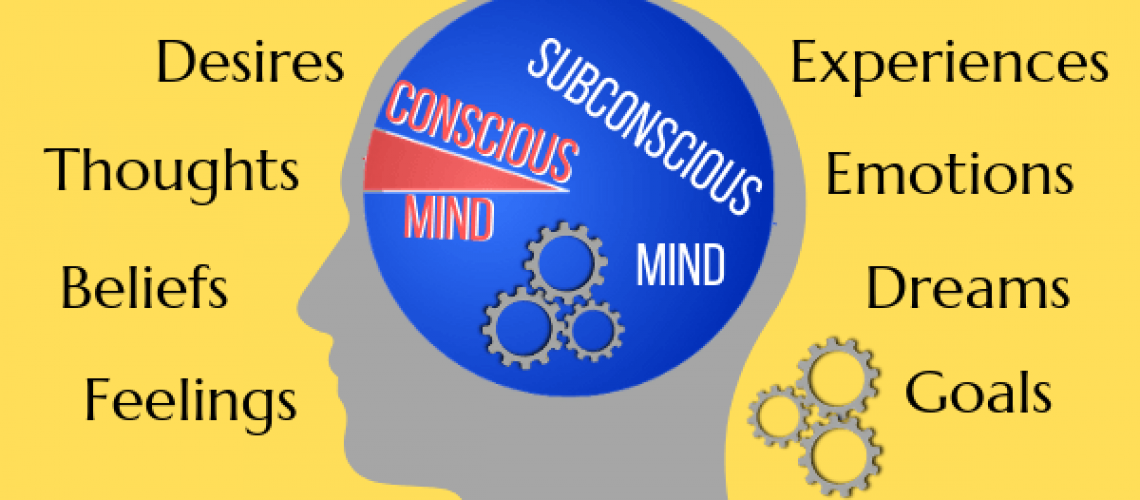
We do the daily thinking and task performing by both parts of our mind: Conscious and subconscious mind.The conscious mind is the creative part of the brain, which thinks, absorb new knowledge, new ideas, analyse things and objects. The subconscious mind is a habitual mind which functions on programmes that we have downloaded in the course of our lifetime. The subconscious mind works about 95% of our day to day time doing all the activities based on its habitual nature. 


img_1298

How we think and behave depends on our past memories and experiences that we had till date in our life-term. That’s is how we generate our thinking pattern and everyday thoughts and feelings. So, we experience our daily reality, the so-called perceived truth through the filter of the past, which is the result of the memories, beliefs and experiences.

img_1299

That’s how, an ordinary person like us lead a routine life based on old habits, which is run by our subconscious mind programming. We get comfortable and become used to it, so any new change or trying to change a better or improved habit becomes a difficult and challenging task for us.

img_1303

So, how is an experience create a memory in the brain? When we have an experience, the sensory organs collect the different data of senses from the external environment and send them to the brain. In the brain, there is an influx of neuronal charges which create a specific pattern of the neuronal pathway. The brain produces a chemical or feeling which we called emotion associated with the neuronal pathway. So, the experience related to the emotion/feeling creates a memory in each of the body cell. That is how a particular event is recorded in our brain and body cells. Therefore, each thought is always associated with a feeling or emotion. Happy or good thoughts create delighted emotions and good memories, while unpleasant or sad thoughts have an anxious mood or emotions and an unpleasant memory attached. This series of thoughts and memories appear every day and become our thinking pattern and behaviour and develop into habits. Our state of being, our wellness also depends on this pattern of thoughts and behaviour.

img_1300

So, can we create a change at any age? Modern researches have shown that the human brain can change or build up new neurons and pathways at any age. This process is called Neuroplasticity. There is no age or gender limitation for this change to happen. A thought, belief or habit is difficult to change because it gets hardwired in the brain due to continuous repetition during our lifetime. So, a change is possible when we consciously shift our paradigm from these sets of limiting beliefs and behaviours. Most of the time, our thoughts and opinions get stuck in the limitations, and we fail to think beyond our conscious and analytical mind. Change is possible at every point in time. Enough researches have proved that transformation is possible in our thinking pattern, behaviour and habit at both physical and mental level in a measurable way. The person who is aware and becomes proactive to change or build a new empowering and better practice of thinking pattern and behaviour can easily taste success and happiness in this lifetime.

img_1302

Because of the habitual nature of our subconscious mind, the habit of new thinking and behaviour needs a particular method to be implemented to bring about a change. Mere affirmations and positive thinking cannot alone lead to a shift in thinking or behaviour. It is valid only on those moments when we think with our conscious mind. Once we forget with our affirmations, the old thinking pattern and subconscious behaviour take over. Some studies have shown that it takes around 21 days to develop a new habit or a thinking pattern. But, this depends more on the individual and his willingness to bring about a change.

img_1304

Certain methods:
1.Continuous repetition over a certain period until it gets reprogrammed in our subconscious mind. We can try this practice on our own.
2. Hypnosis: Practicing self-hypnosis of the affirmations or the change mostly during bedtime or early morning hours when the mind is less engaged is a useful tool. Practising it everyday, the subconscious mind can be reprogrammed to this new belief or thought. This method needs a therapist but can be practised on our own too.
3. Energy psychology: Different modalities exist which require the help of a trained and professional therapist like in methods such as Psych K, brain synch method, resonance repatterning.

More information:  www.brucelipton.com

Thanks for reading.

Blessings and much love to all 💐

https://9713bwro7r5r4w1bnlp3reun3c.hop.clickbank.net/?tid=140519

Beliefs : Mine and yours ✊

Hello everyone ! Have a wonderful day..

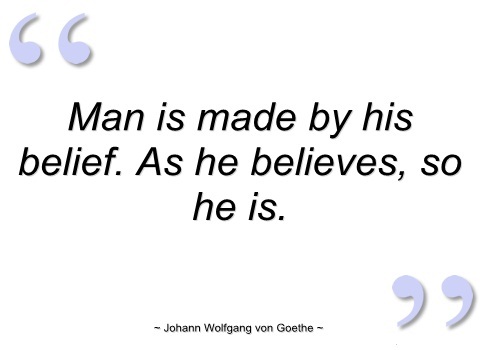
Beliefs are a certain pattern of thinking in our brain that must have been perceived and ingrained in the course of our lifetime. It is a way of making sense and understanding the world around us, the people, behaviour, perceptions, facts, realities. Beliefs can be on our faith, religion, things, people and the world in which we live. Based on our beliefs, we assume something or someone as good or bad, whether something is worthy, acceptable or achievable. The mental representation of our beliefs makes us create our boundaries and limitations concerning every aspect of our lives. It is these subconscious mind beliefs which autopilot our day to day life, career path or choices, or the life journey itself.

Since the time of human evolution, certain thinking pattern has been carried out as strategies to learning, simplify things or conceptualized certain experiences, facts or perceived realities. The perceptual beliefs are mainly based on sensory experiences. That is how beliefs keep moving from one generation to another. As the child grows up, his whole personality and belief system start moulding and developing based on his parents, his experiences, environment in school, college and other authoritative figures. Whether true or false, facts or distorted, the person already grows up with a set of a belief system which helps him undertake his life journey. Since our beliefs are rooted deeply in our subconscious mind, our mind will constantly look out ways and means to prove them right. This is what the subconscious programming does. Every action, behaviour, habit, the emotion of our’s are all based on our belief system.

Beliefs are not necessarily based on truth. They can be based on distorted facts or can be misconstrued or can be simply mistaken beliefs. They can be negative or self-limiting beliefs. Many of our beliefs are based on observations, what we think, hear or see the physical world around us. So, as we start learning more and more, a wider understanding of this world, opened up to a great sea of knowledge and Science, we realise that some of the beliefs which we have been carrying, holds no truth in them. They are just false beliefs. But in spite of knowing clear information about the fact, we still hold onto such beliefs, unable to change them. They are so much ingrained in us and are difficult to change.

Certain examples of common disempowering beliefs, some of us may have like
I am not good enough.

I am not lucky enough.
I have to achieve a certain level of success to be happy in life.
I cannot trust the people around me.
I am not attractive enough.
I cannot lose weight.
I am not good at public speaking.
I am not a happy person.

These are some examples of subconscious programmed beliefs that we hold onto to be true. So, subconsciously, we will behave and act trying to proof or validate them, each time to be true.
The realisation comes much later in life when we fail to achieve something, unable to achieve our goal, failed relationship, unsuccessful career path.
Therefore, a real soul searching, self-awareness is required to identify our self-limiting beliefs which made us fail or difficult to achieve our full potential in
whichever aspect of life, it may be.

Some simple ways, we can try changing our beliefs :

•Changing the old pattern of beliefs is not an easy task. You have to be completely self-aware.
•Try putting down in a note because writing gives you a clear understanding of the mind.
•Once identifying your self limiting beliefs, reframe them with an empowering positive belief like I am good enough to succeed or I deserve to be happy, no matter what.


• Then, start
reminding yourself consciously every day with your new beliefs. Keep repeating because your subconscious mind learns by habit and repetition. It takes a long time. Reminding and repeating does create an impression in our subconscious mind and the outcome of our new beliefs will soon unfold.

Thanks for reading.

Blessings and much love to all 💐

Post : Your quirky Subconscious mind 😇

In your, every day lives, the brain functions as two major parts – Conscious brain and Subconscious brain. Out of this, 90-95 % of your actvities are carried out by our subconscious brain which acts as an auto pilot. This is your habitual brain. While only 5 % is your thinking brain, the cortical brain, who does the conscious brain activity.

The subconscious mind is more of the inner primitive brain also called the limbic brain which does your automatic, habitual behaviours, which is also responsible for your emotions, feelings, reactions, fears, impulses and reflexes in your everyday lives. So, think, how important a role this subconscious mind plays in our day to day life.

From the day, you were born till 6-7 years of life, your brain is in the hypnotic stage. That means, you observed everything in your environment, programmed every good or bad habit from the people surrounding you, picked up every single activity you have seen. That’s how, the subconscious mind got programmed. As you grew up, you started understanding things slowly but you still picked up habits, beliefs, feelings, emotions, reactions of people, your parents, teachers, friends surrounding you.
By the time, you became an adult, you have already developed a personality, habits, traits, thinking patterns, which are very much part of you. Your subconscious mind takes the upper hand in controlling your life which you are not even aware.

Your subconscious mind is not your enemy. Because you cannot do without it. Whatever activities you perform like walking, speaking, eating, writing, driving are all because of your subconscious mind programming. Then, how does it affect your life?

When it interferes with your life purpose, your goal, your performance, your task, then it starts affecting your life. From childhood, apart from the huge lists of habits that you have, you might have picked up a certain negative pattern of thinking like fear of failure, low self-esteem, pessimistic thinking, fear of challenges, impulsiveness which can be stumbling block to succeed. Most of the time, you are not even aware of. You become frustrated, sad and disheartened. You read motivation books, watch motivating videos, make tons of effort. Still, unknowingly, you come back to your old thinking pattern. This is because you have developed this habitual thinking pattern over the years. Sometimes, in spite of knowing your faults, you are unable to change. You go through your same fear, worry, negative thinking again and again. Then, how can you change?

To reprogram your subconscious mind :

Keep repeating your changed beliefs and affirmations:

To break a habit and reprogram your mind for a new habit will take time. Your subconscious mind is habitual, so, to learn a new habit and reprogramme your subconscious mind would take some time.
Firstly, decide on what you have to change in yourself. Frame that belief or affirmation in your mind. The subconscious mind does not understand verbal language so using metaphors is a convenient way. Then, keep repeating and reaffirming daily till you can form it a habit. It can take a long time and years. But, this is the most convenient and effective way to change your subconscious mind.

Then, there are other methods, like energy psychology, hypnosis, Psych -K where the brain is brought to the alpha-theta a wave stage, and then the belief is slipped into your subconscious mind. I have not much idea about these methods because I have never tried them. You can get more information on them, if you are interested in

https://www.brucelipton.com

Thanks for reading.

Take care. Much love to all 💐

Post : 5 inspirational thoughts to begin your day.

‘Each morning we are born again, what we do today, what matters the most” Buddha

As soon as you wake up in the morning, the first thoughts that come across our minds are the worries and challenges that are niggling us for some time. It happens because of our habitual thinking and default subconscious mind programme. We get carried away by the same habitual programme. We follow the day with the same habits, actions, and end up with the same worries or some more to add up. Nothing new is expected or doesn’t happen.

So how do we change? Remember, change starts in our thoughts. The biggest source of motivation is our own thoughts. So start thinking differently, start breaking your daily thinking pattern.

” Nobody can go back and start a new beginning, but anyone can start today with a new ending”

5 thoughts to begin my day.

1.Gratitude; Waking up with gratitude and being thankful for having a life and with loved ones around. ” It is through the gratitude of present moment that spiritual dimension of life opens” Eckhart Tolle

2.Openminded: Waking up with an open mind with optimism. I am open to endless possibilities that the Universe can offer. Keeping an open mind, all struggles and challenges seem very small and can be easily worked out.
” There are no limits to what you can accomplish, except the limits you place on your thinking” Brian Tracy

3.Worthiness: Waking up with a feeling of self-worthiness is immensely self-empowering. A sense of self-worthiness can itself be self-motivating and inspirational. You don’t have to look outside.

4.Goal oriented: It is important to set some goals in the morning for the day. It gives you a much-needed clarity, to begin with.
But set higher goals in life which are beyond your reach at present. So that you can always have something to look forward and work towards it.

5.Fulfilment: Waking up in the morning with a sense of fulfilment, satisfaction so far in your life journey gives the much-valued joy and happy state of being.