Is gluten bad ? 😇

Hello everyone ! Have a wonderful and safe day 🙋🏻

img_1413

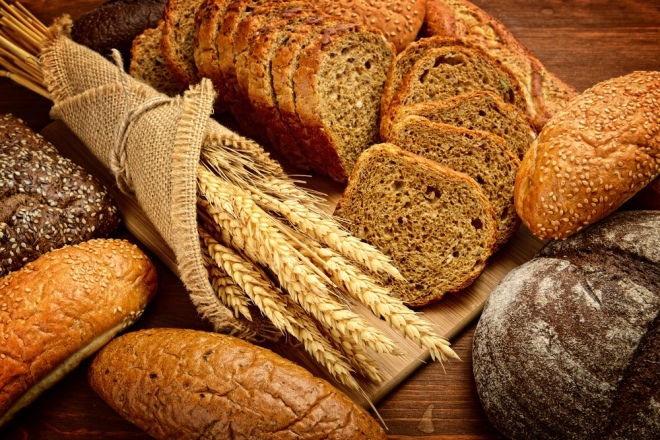
What is Gluten? Wheat is a grain that contains carbohydrate, protein and lots of nutrients. The protein found in wheat is called gluten. Gluten is also found in rye and barley. Gluten is not only used in bread, cakes, pizzas, pasta but also ketchup, sauces, spreads and even in some cosmetic products like lipsticks.

img_1416

It is used widely in various products because it provides the structure and is an excellent stabilizing agent. Structurally, gluten contains a protein network of Glutenin and Gliadin. It also contains starch (carbohydrate) molecules and gas bubbles.

img_1414

How the body reacts to gluten?
Generally, having a carbohydrate-rich diet spike up blood sugar, leading to various weight issues and insulin resistance. Whenever gluten enters the body, the body’s immune system mistaken them for foreign bacteria, and start reacting against the intruders (gluten particles). This immune response provokes inflammations. Typically, inflammation is temporary and is supposed to stop when the bacteria or foreign body is expelled. But when the process of inflammation becomes chronic, every organ system is affected, and various diseases may occur over time.

img_1415
There is another effect of gluten concerning the body. Zonulin is a protein which is naturally present in our body which modulates the Intestinal barrier functions. It maintains the permeability of the tight junctions in the intestinal lining, preventing any particles from the gut to leak into the bloodstream. Gluten is found to interfere in the function of Zonulin. This phenomenon was first discovered by a great researcher Alessio Fasano. He has also found that the modern variety of wheat, which are hybrid types, affecting human health is on the rise. Therefore, the human body is not equipped to eat a massive amount of gluten every day. So, having more and more gluten is taking a toll on the health of many people.

Coeliac disease or celiac disease

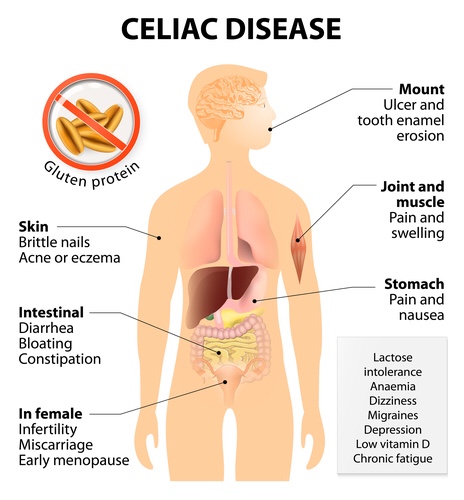
Celiac disease: In Celiac disease, the body’s immune system reacts strongly to the gluten particles causing a damaging effect on the small intestine. The leaky gut syndrome is quite common in these cases. The symptoms are mainly chronic diarrhoea, abdominal distention and pain, brain fog, joint pain and weight loss. The incidence of Celiac disease is increasing day by day. Many of the cases remain undiagnosed, which may end up in other types of Autoimmune diseases, inflammatory diseases or even cancers. The condition can be screened by a blood test and small intestinal biopsy. Such people are strictly recommended for a gluten-free diet.

img_1418

Gluten sensitivity: Another condition emerging is Gluten sensitivity. Such condition is also called Non-Celiac disease gluten sensitivity because these people are negative of Celiac disease. When gluten is removed from their diet, most of the symptoms get resolved. Researches are still going on to confirm the actual cause of immune response in these people. If not gluten, maybe other triggers like fructans (starch) molecules called FODMAPs can be the reason. These cases are challenging to diagnose.

img_1420

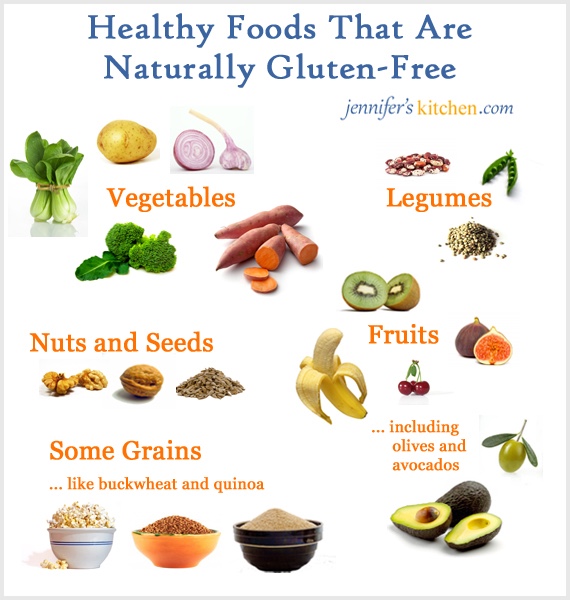
Gluten-free diet: When we walk down the aisle of a Supermarket, we get to see plenty of products with gluten-free tags. Not all gluten-free products are healthy. Since gluten is removed, they use other binding agents or synthetic compounds to compensate for the structure and palatability of the product. Moreover, a gluten-free diet is found to have low micronutrients like folate and iron. So, a gluten-free diet should be adopted only if clinically advised.

Gluten-free for whom?
Celiac disease; People diagnosed with Celiac disease should ultimately adopt a gluten-free diet.
Gluten sensitivity: May benefit from a gluten-free diet but should make arrangements to compensate for nutritional deficiencies.

img_1419
People like rest of us who have no regular symptoms or never had prominent abdominal issues can have gluten in a fair amount in the form of whole-grain food as long as we have a balanced diet with plenty of vegetables and fruits.

Thanks for reading.

Blessings and much love to all 💐

https://9713bwro7r5r4w1bnlp3reun3c.hop.clickbank.net/?tid=140519


Gut Health 🙌

Hello everyone ! Have a wonderful and safe day 🙋🏻

img_1010

Why is gut health so relevant these days ? Because, in the majority of the diseases, researches have shown that the underlying cause is due to an unhealthy gut.

img_1011

Most of us are not aware of the fact that within the twist and turn of the internal coils, that is the intestines, there is often a war between the good and bad bacteria. This struggle results in gut imbalance and thereby cause several health issues like autoimmune diseases, hormonal imbalances, mental health issues, metabolic diseases and even skin problems like acne, depigmentation and psoriasis.

0912-AppleWatch

As we must have already known, the digestive tract carries millions of colonies of bacteria. The right bacterial flora within the coiling of the intestines is bestowed upon many functions to perform to maintain a healthy body. They are responsible for breaking down food into energy, eliminate waste and toxins, and most important is to support the immune system. So, our gut health is under immense pressure to perform well.

img_1012
The gut, when encountered with a burst of harmful bacteria from any food sources, there is a war between the good and the harmful bacteria, and a sudden state of imbalance arises. Therefore, this gut imbalance may lead to different health issues, as mentioned above.

Common symptoms and diseases of improper functioning of the gut are:

img_1019

1. Slowing of metabolism: This may result in decreased energy production, less absorption of nutrients and deposition of toxins in the different parts of the body. So, there is a lack of energy, tiredness and fatiguability. We may suffer from vitamin and mineral deficiencies as absorption of nutrients is poor.

img_1020

2. Digestive issues like gas bloating, diarrhoea as the good bacteria are continuously struggling to restore the balance. Irritable bowel syndrome, acid reflux, colitis are some symptoms of invasion of harmful bacteria.

Man having problems/ insomnia, laying in bed

3. Mental health issues like depression, anxiety, mood fluctuation may occur. As toxins get deposited in different parts of the body due to the harmful bacteria, they may interfere with the production of happy hormones like serotonin and other neurotransmitters that can elevate the mood.
4.Lack of sleep: The gut imbalance causes hormonal imbalance, and the serotonin cycle, which regulates the sleep cycle gets wholly disrupted. So, the person with gut issues may suffer from sleep disturbances.

img_1022
5. Autoimmune diseases like Lupus, Crohn’s diseases, rheumatoid arthritis appear where the underlying issue can be an unhealthy gut.
6.Skin issues: When gut inflammation start spreading to other areas of the body, including the skin, there are issues of acne, eczema, psoriasis, complexion disorders, especially on the face.
7. Metabolic problems like diabetes type 2, stubborn weight gain, and obesity are common with gut issues.

Some useful ways to keep a healthy gut:

img_1014

1. Eating less or no sugar at all as the sugar becomes the medium of growth of harmful bacteria.
2. Drinking lots of water dramatically helps to eliminate the toxins and also facilitate the digestive process.
3. Chewing food with each bite, about 30- 50 times. Though it may sound tedious, this mastication process may help the food to digest and absorb the nutrients properly.
4. Consuming more fibrous food help to form the stool bulk and help eliminate waste and toxins.

img_1017
5. Mono meals as preparing a single meal with combining many food ingredients which allows the body to digest food better.

img_1016
6. Consuming fermented food (pickled vegetables) and probiotics help to flourish and restore the good bacterial flora.

img_1018
7. Effective foods are bone broth (contain collagen which cleanses the gut), ginger, blueberries, peppermint oil, healthy fats like omega-three fatty acids, all benefit the gut.

img_1023

8. Low impact exercises: Low intensity exercises like rebounding, stretching, walking, yoga and low impact cardiac workout can be helpful for gut health.

Thanks for reading.

Blessings and much love 💐

8 truths of Leaky gut syndrome 🙌

Hello everyone ! Have a wonderful and safe day 🙋🏻

img_0790

Time and again, it has been proved by extensive Medical researches that most of the chronic illnesses, including autoimmune disorders, type 1diabetes, irritable bowel disorders, migraine are all associated with gastrointestinal disorders. A patient who suffers from chronic symptoms’, the history should be thoroughly investigated for an underlying food or lifestyle habits that may be co-related.
Our body is not a single entity, nor each of its organs works independently of each other. Every structure, including the skin, tissues, mucosal lining, organ, system including a huge colony of microbiota are all interconnected and work together as a biological system. Not only this, the immune system, biochemical processes, endocrine and the autonomic nervous system, are all very much interdependent. Therefore, while considering any chronic disorder, the entire system has to be taken into account, including food habits and lifestyle in the process of management of such illnesses.
img_0791

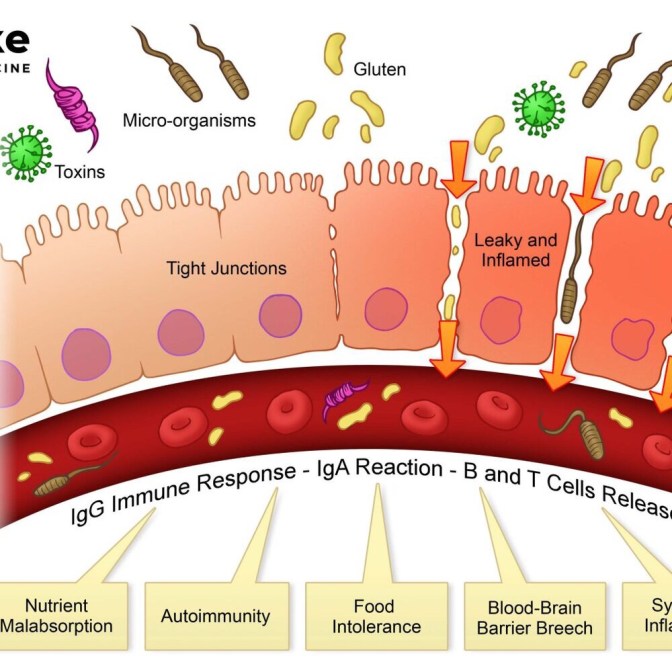
1. The food, we eat reaches the intestines where they are bind to enzymes where filtration and absorption take place. Then, the nutrition of the food is absorbed in the bloodstream through the intestinal barrier. Without digestion, the food cannot escape directly through the intestinal/gut wall. The intestinal lining is typically intact and tight. It doesn’t let food, bacteria or toxins to escape directly to the bloodstream. Nutrients of food also absorbed through small villi on the intestinal wall. Usually, there are tiny holes of 1-7 microns in the gut lining through which the nutrition permeates into the bloodstream. When there is Leaky gut, the holes become bigger about 200-300 microns, and the intestinal villi are damaged too because of which the intestinal integrity is lost. That is the reason leaky gut is also called intestinal permeability. There is directly permeability on the gut lining through which the food material, bacteria, toxins escape into the bloodstream. The immune system comes into play and starts reacting. There is extensive inflammation of the intestinal lining and its structures. There is swelling and slowly scarring of the intestinal walls.

2. Evidence has proved that genetic predisposition is one of the leading causes of leaky gut. But, emerging researches have shown the not only DNA is to be blamed alone. Lifestyle conditions like high gluten diet, fat, sugar-rich diet, smoking, alcohol, stress, pain killers (non-steroidal anti-inflammatory drugs) and food intolerance are some of the common conditions predisposing leaky gut. Therefore, leaky gut commonly found in chronic conditions like Celiac disease, irritable bowel syndrome, Crohn’s disease, HIV/AIDS, cystic fibrosis, chemotherapy and radiotherapy patients. Leaky gut not only creates symptoms in bowel disorders but also linked to most conditions of autoimmune origin. It may be associated with autoimmune diseases like Lupus, Type 1diabetes, multiple sclerosis, rheumatoid arthritis, psoriasis, Chronic fatigue syndrome, asthma, allergies and mental illness. Autoimmune disorders are difficult to diagnose and treat. They can be managed and controlled but has no permanent cure.

3. Trigger factors of leaky gut are like a gluten-rich diet, dairy-rich, soy food or drugs like antibiotics or over the counter pain killers like aspirin, acetaminophen which may disturb the intestinal lining and cause leaky gut. Such triggers lead the immune system to be activated, causing an immune response in the body to produce antibodies against our own body’s intestinal tissue lining, causing inflammation. This inflammation can increase the intestinal permeability that is the escape of food and toxins directly into the bloodstream leading to symptoms like pain, diarrhoea, joint pain, fatigue, headache and depression. As Leaky gut is associated with a number of symptoms, so, it is called Leaky Gut syndrome. 

img_0795

4. Common symptoms are
Diarrhoea, Constipation
Pain abdomen, bloating
Skin rashes like acne, eczema, rosacea
Brain fog, memory loss
Depression
Chronic Fatigue
Joint pain.

5. Though strong evidence shows that many chronic conditions are associated with an underlying cause of leaky gut. Leaky gut is still not considered an official medical diagnosis, nor it has a standard protocol of treatment. A proper detailed history of the patient can detect the leaky gut condition. Therefore the management also differs from individual to individual depending on the full range of trigger factors.

img_0796

img_0792

6. Diet and lifestyle changes do help a great deal in such conditions. Drugs that suppress the immune response and also to control the inflammation are required in some cases. The most important message is that we know our body better than anybody else. Even if we go to the best of the specialist physician, we should do what works best for us. Never stop self investigating and self-analysing yourself about why and what may trigger or lead to such symptoms. Be your observer, and make changes accordingly, which may be very helpful.

7. Hold on to basics. As, from my own experience, the best thing is leading a simple life; more fundamental is food and lifestyle, less is the list of complications or symptoms of chronic illnesses. Stick to the essential food habits that you may have inherited from your ancestral lineage because that’s how your genetic makeup and your body is comfortable. Follow work, exercise and sleep balance. Always maintain calmness of mind by using techniques of meditation and mindfulness because a healthy mind has a high impact on the physical body.

img_0793

img_0794
Other measures that can be beneficial are:
To limit the amount of carbohydrate from the diet.
To eat more of fermented food (Kombucha, sauerkraut, kimchi, yoghurt)
Limiting dairy products and using more probiotics in the diet.
Eating more of soluble fibres in the diet.
Limiting the use of antibiotics and pain killers and using them only when necessary.

8. Vitamin deficiency of D, A, C, Zinc are related to increased intestinal permeability. So, dietary sources and vitamin supplements can be helpful to some extent. Vitamin D also suppresses inflammation in the gut. Certain supplements like Curcumin, L glutamine, collagen peptides, Zinc and probiotics are also helpful in some instances.

Thanks for reading.

Much love and blessings for all 💐