Post: Why is the pineal gland (the third eye) considered so powerful ? 6 wonderful scientific facts.

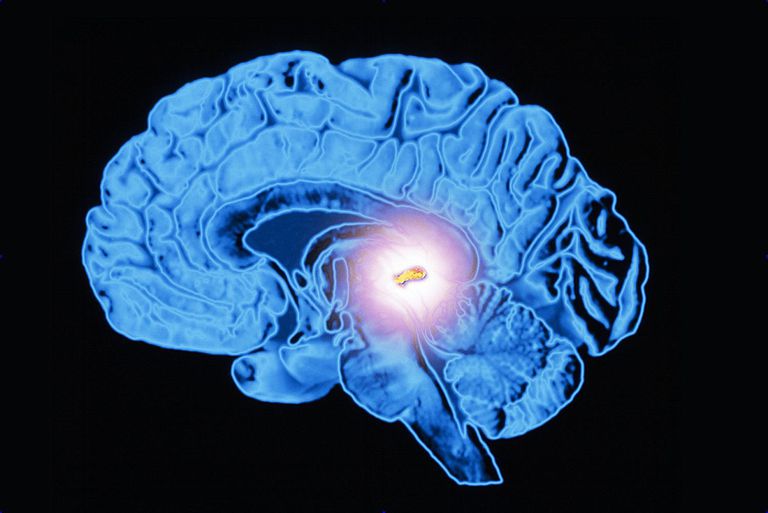
Anatomically, the pineal gland is a pea-sized endocrine gland which is located in the epithalamus, near the centre of the brain. Functionally, it is a part of the endocrine gland as it secretes the hormone melatonin, which is synthesized from serotonin, which maintains our day-night cycle, circadian rhythm, our natural biological clock.

Some mains functions of the pineal gland are :
Sleep cycle (circadian rhythm)
Reproductive functions and fertility
Bone growth
Body temperature
Water balance
Blood pressure
Immune system
Longevity and anti-ageing.

Scientific researches have proved that, besides maintaining the sleep cycle, the pineal gland has many important roles to play, hence it is quite a crucial organ.

Some 6 wonderful facts about this tiny gland;

1.Master Gland : Considered as a master regulator with the hypothalamus of the endocrine system, it controls hormone signals to all organs of the body. It has a dual neuroendocrine role, much bigger role than only maintaining the melatonin, sleep cycle. Besides, melatonin, serotonin, it also secretes biogenic amines like Catecholamines (Noradrenaline). Now, researches show that pineal gland is responsible for the release of pituitary hormones and so it is the master conductor of the endocrine system. Therefore, all the body’s vital functions are controlled by this organ.

2. Sixth sense :Since it has a rich adrenergic nerve supply, it is found to be very sensitive to our energy field, both magnetic and electric fields (vibrations) which we are normally not aware. Normally, we are aware of what our five senses feel. So, this gland is responsible for the “sixth sense.”, the bioelectromagnetic field (vibrations). This is what is called an Expanded consciousness. Animals have normally a bigger pineal gland so have a larger bioelectric field. They respond to vibrations while communicating which humans don’t use as we, humans have languages.

3. Third eye: Since the ancient time, it is regarded as the “third eye” (in many ancient mythologies like Egypt, Greek, Chinese and Hindu). Now science-based studies proved that it indeed contains rod-like cells (pinealocytes) that are similar to those of eye. There are both dark and light pinealocytes. The gland is connected to the eyes to detect light and dark stimuli and stimulate the release of melatonin.

4. Anti ageing :Melatonin which is released by the pineal gland is found to be a powerful anti-oxidant. It has about 200% more oxidative power than vitamin E and also vitamin C. Therefore, it is a strong hormone against oxidative stress, so very important in anti-ageing.

5. DMT :Pineal gland mediates the release of serotonin and dopamine. Both are considered as happy hormones. Therefore disruption in circadian rhythm can affect the release of melatonin which is synthesized from serotonin in Pineal gland. Another mystery fact is increased scientific evidence have shown pinoline and DMT( dimethyltryptamine) have been naturally producing in the pineal gland, help in mood, perception, consciousness, dream state and cognition. DMT is produced naturally during deep sleep in the unconscious state. It can be produced in deep meditation at a conscious level by experienced meditators like monks and yogis. DMT has a psychedelic effect, an elevated state because it gives the visionary experience, a state of transcendence, body and spirit connection.
6. Awakening : Since it is the most powerful organ, pineal gland activation can help you give more clarity about the world, and perform at your most optimal potential. It can help you perform brilliantly in any task.
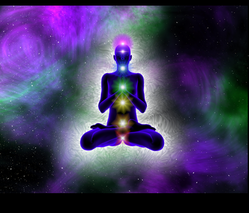
Many practices like deep meditation, Kundalini yoga, Chi Kung (Chinese) like deep breathing, tapping, focussing (at the centre of forehead), laughing (being happy), light music and being in darkness can awaken the pineal gland. Pineal gland activation also helps to balance the body’s 7 chakras or 7 healing energy sources. Neuroscience has proved that activation of this gland can give profound spiritual experiences, out of the body experiences. Practising deep meditation and concentration daily can slowly help to activate the pineal gland.

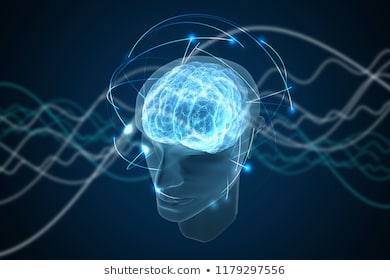
Post: Consciousness😇: 4 interesting facts.

Hello everyone ! Have a great Monday 🙋🏻

Not going by any standard definition, consciousness, actually is a continuous flow of thoughts that is running non-stop within the brain with regard to both objective and subjective experiences in the world. It is an ever-changing process, shifting from one thought to another moment by moment.

Your conscious thoughts are based on your experiences, emotions and feelings associated, sensation about this world. And it is continuously changing.

One moment you are sitting on your desk for work, another moment you are anxious about tomorrow’s meeting, the next moment you smile remembering a sweet memory from your recent holiday, then you focus on your work, but at the same time your thought shift about meeting your friend at lunchtime. It is a continuous flow of thoughts.

Consciousness has been a topic of research and discussions for many decades for scientists, psychologists and philosophers. Many studies are done on the state of consciousness during sleep, meditation, dreaming, hallucinations and so on. Different theories and different understandings have been expressed. Still tons of studies are going on. It is an ever-evolving field.

4 Interesting facts on Consciousness:

1.Awareness is the most important aspect of consciousness. It is your awareness that makes you conscious about the unique flow of thoughts that shift from one moment to another about your experiences, memories, feelings of both subjective and objective world. Your consciousness is so ingrained in you that it becomes a part of who you are. It is this consciousness of yours which makes you aware of what is right or wrong and help you make opinions, choices, decisions in any aspect of life.

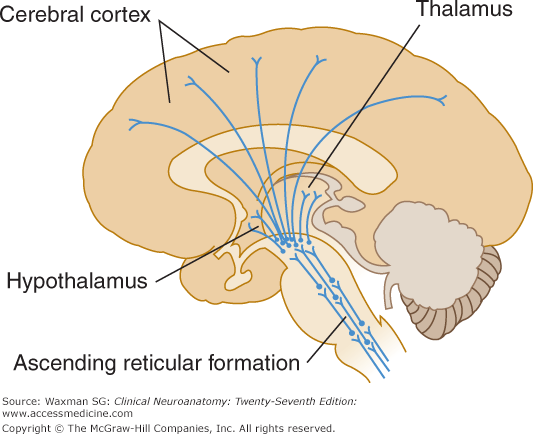
2.Parts of the brain: Brain imaging studies have been successful to determine which parts of the brain are responsible for consciousness. It is a series of neuronal exchanges within the neural pathways in the brain which contribute to your state of consciousness. Since, there is an interplay of much neuronal exchange, so when a person has a localised brain damage, consciousness is not lost but can be changed or reoriented.

Cerebral Cortex: It is the most important part of consciousness. This part of the brain is responsible for understanding, analysing, perception, execution and control of voluntary actions. That is the reasons in case of very small children (up to 6-7 years of age), they remain in a hypnosis state of consciousness as their cortex is not fully developed. As they grow up, into adults, the cortex slowly develops and so is their understanding of this world grows.

Thalamus: This is a relay station where both sensory and motor signals are received from the body and relayed to different parts of the brain as required.
The reticular formation also plays an important role in wakefulness, alertness and sleep state.

3.Level of consciousness: Consciousness is not only when a person is fully aware, or awake in the environment, but also a state of sleep or relaxed state. Different brain and brain waves study revealed that the level of consciousness differs in different brain waves states. Brain waves are a pattern of waves occur due to impulses exchanged between the neurons within the brain.

Beta waves (14 to 30 Hz): Such waves are dominant during wakefulness, fully alert state. Decision making, analysing, mental activity and so on.

Gamma waves (30 to 42 Hz): This is high frequency, fastest brain waves when there is rapid processing of information but in a quiet brain state.

Alpha waves (9-13 Hz): Such waves flow when you are in a relaxed, calm state. It is a resting state or a meditative state. It is also a learning state, when new information can be absorbed and mind /body integration.

Theta waves (4 to 8hz): Dominant as low-frequency waves during sleep and deep relaxation. It is the state of dream, imagery, also hold fears or nightmares of the past. It can last for a very short span and can be access to information, learning, intuition.

Delta waves (below 4 Hz): Dominant as slow waves during deep dreamless sleep, unconscious state.

4.Vibration: Advance brain imaging study reveals that exchange of information, communications in between the neuron pathways within the brain originates with some kind of vibrations and resonance. Fundamentally, it is true because everything in this universe is moving, resonating vibrations with various frequencies. Therefore the activity of the brain also functions on the different frequency of vibration that originates within the brain as different brain waves pattern.

Albert Einstein has said it long before that ” Everything is in vibration”

Thanks for reading.

Blessings and much love to all 💐

Post: 10 magical facts to keep smiling 😊.

Hello everyone! Have a great day 🙋🏻

Who doesn’t like to see a smiling face as soon as you wake up in the morning? Seeing someone smiling at you at home, office, travel everywhere you go simply lift up your mood. In fact, it is the easiest way to boost your mood, health, longevity, coping up with success, setbacks, and challenges in the life journey.

10 magical facts of smiling :

1.Endorphins: Not just a genuine smile, even if it is not so genuine, a smile can help the release of endorphins which can relieve the body from stress and pain. The natural release of endorphins helps in reducing everyday stress and anxiety. Therefore, keep smiling throughout the day, it will keep you away from stress. It will help you to keep your mood elevated.

2.Social health: We are always attracted to smiling, happy people. It is a part of social health. With genuine smiling, we can build up trust while dealing with people. Building a relationship with trust is long lasting. Smiling helps you get motivated, work harder while performing tasks and increase productivity at work.

3.Open mind: Smiling keeps our mind open, relaxed. Often stress, limits our attention to people, perceptions, thinking. But with smiling, we are open up to a wider perspective, a wider view which helps in multitasking and help in facing the challenges easily.

4.Anti-ageing: Smile lift up your face and makes you look younger. A genuine smile uses all the facial muscles of your face. In fact its a good facial muscle exercise. A good smile helps you release stress, helps your heart to keep you live longer.

5.Heart-friendly: Smiling slow the workload of heart, relaxes your body. Therefore, it helps you to reduce blood pressure (though temporarily) and also keep you away from heart diseases.

6.Boost Immune system: When the body is out of stress, in a happy mood while smiling, the immune system works better, reacts quickly against invaders.

7.Pain killer: Studies have shown that endorphins or happy hormones released while smiling can ease the pain. So that is why endorphins are called natural pain killers. Smiling can help release endorphins from hypothalamus and pituitary quickly.

8.Successful: Studies have shown that people who smile often, appear more confident, approachable, motivated hence are likely to get promoted, successful at work.

9.Infectious: Yes smiling is infectious, not only it lifts our mood but also change other people’s mood around us make it easier and happier in whatever task performed or at home. The facial expression is an unconscious automatic response so when someone sees a smiling face, they smile you in return.

10.Improves relationship: Time and again, it has shown that people always get attracted to a smiling, humorous person. People who smile tend to be more attractive and trustworthy than people with other neural expressions.

Thanks for reading.

Blessings and much love to all 💐

Keep smiling 😊

Post :Fear Factor !

Fear Factor !

In each one of us, life runs with a common drive, call emotion. Whatever action we do, there is an emotion behind. Not only human, but all animals have emotions. So, fear is also a basic emotion, an instinct for a potential danger. 

Whenever we see, feel, sense some kind of danger/threat, biologically, the amygdala and hypothalamus in the brain get instantly activated. The stress hormones like cortisol, adrenaline are pumped in the blood stream which result in rapid heart beat, high blood pressure, dilated pupil, tightening of big muscles and sweating, ready to run, fight or response. Actually, this is our biological mechanism, a protective response which helps us to survive. Fear, as an instinct is not bad at all. In fact when fear comes, our mind becomes focus, sharpened at the particular task and we can perform better. It is an adaptive mechanism.The instinct is short lived and the body comes back to its normal homeostasis.

Feeling little fear for an upcoming event, job interview, exam, speech, stage performance is a natural instinct. In fact, it would help you to be more focus on the up coming task. Instinctual fear for fire, height, speed or some kind of potential danger to life is all natural. So fear is adaptive and protective when short lived. 

But then, why fear affect us ? When fear becomes habitual, crippling, excessive, it will eventually affect our mental and physical health. When fear is imaginative, irrational, unrealistic, it gets you into real trouble. It will affect your daily life. Then, it is no longer instinctive. It becomes habitual in the sub conscious mind for some imaginative events or ideas which is not even real or that has never happened. In such cases, it is very difficult to get out of such mind frame. Constant fear can lead to anxiety. Anxiety and stress not only have negative impact on your health but also the daily functioning of life. To get out from a habitual fear, a default sub conscious programme, you need to be constantly aware of such moments. The most important thing is your will power, the trust and belief in yourself to bring out the change. This is not an easy task. But, yes, it is possible and you can overcome fear eventually. At times, professional help might be necessary, if the situation is out of control. 
When it comes to fear, childhood is an important phase. Unrealistic, irrational fears inculcated in childhood may result in anxiety, phobias and even panic attacks in future life. 

Simple tips to overcome your fear in everyday life. 

Start facing your fear. The first or second time, you may tumble, but slowly you will overcome. 

As I have already mentioned, by being more aware of such moments, know yourself why you get anxious or fearful and being prepared for such moments. So next time, when it comes you know, it is just your imaginative mind. Take a few deep breathes, and it goes away after a while.

Try maintain a calm mind, exercise, yoga and meditation surely helps in calming the mind. 

Your spirituality or faith in something that is higher than you makes you feel connected and safe.

But lastly, yes, if fear is out of control, medical/professional help is necessary. 

Thanks for reading.

Peace and love 🙏