Is Floatation therapy beneficial ? 3 observations.

Floatation therapy or sensory deprivation tank is a new kind of therapy which has become very popular worldwide especially in the United States and Europe, offered by various health and wellness centres and spas.

The floating tank is an isolating, soundproof tank in a dark room which is cut off from all sorts of environmental stimuli. The water in the tank is adjusted at skin temperature and saturated with mostly Epsom salt (magnesium sulphate) so that the salted water can provide the buoyancy to help you float. As you enter the tank, remain floated in the salted water for an hour, all kinds of external stimuli of your senses are cut off. In darkness and deep silence, it is supposed that the brain enters into a state of deep relaxation.

Quite several studies have been reported to prove that in such a relaxed brain state, some health benefits can occur. Based on the scientific shreds of evidence, studies carried out, certain observations can be found.

  1. Since there is completely cut off from external stimuli, sensory deprivation, the brain enters into an enhanced creative state, a psychosis-like experience and increases chances of hallucinations. Such a brain state can help in clear and focus thinking. Deep relaxation can enhance both physical and mental healing.

2.Studies have shown that sensory deprivation state has reported having helped in a significant reduction of stress, tension, anxiety-related disorder, chronic insomnia, depression and irritability. The cardiovascular health has been improved in some cases which are mostly related to chronic stress and sleep problems. Some individuals have found to experience deep solace, peace, spiritual experience and an overall wellbeing state.

3.Many studies have been carried out on athletes during sensory deprivation state. It has effectively improved strenuous physical recovery by decreasing the blood lactate level, thereby reducing muscle pain, stiffness and fatiguability. Therefore, it has helped improve the performance level.

My impression on this floatation therapy is it does have some really useful health benefits. So, if comfortable, an individual can opt for this therapy with all necessary precautions. As the nature of this therapy is non invasive, zero gravity (weightlessness), it is normally safe. Usually, 7- 10 sessions of one hour each can bring about significant changes. Usually, such therapy is safe for all including pregnant women. But you should always need to ask your physician before going as motion sickness or mild issues can be discomforting.

The only danger is the risk of drowning which is rarely possible provided that the depth of water is appropriate. The risk of drowning is only possible under the influence of sedatives ( drugs or medication) or alcohol which should be avoided.

Post: Dealing self-criticism. 3 interesting ways.

Blame it on human nature, we have been self-critical, not once but several times, not on a single day but very often. Why do we do it? Is it right to be self-critical? How can I stop myself being self-critical? Why are we so harsh on ourselves? Am I not human, who can be flawed yet successful? Who can make mistakes in life and learn from them? Who can change and improve slowly? Why can’t I be compassionate and empathetic towards myself? Is it so hard?

When you are self-critical, you are in a negative frame of mind, you take things negatively, you are too harsh on yourself and judgemental. Such individuals lack compassion not on himself alone but also for others. He is too judgmental and cynical on himself and also of others. Being self-critical is so harmful that you have no room for self-improvement and progress in life for fear of failure. Such individuals end up having low self-esteem, isolation, depression and loneliness in the long run.

Therefore, how can I change my attitude towards being self-critical? 3 interesting ways.

  1. Understanding “self”: Develop a solid understanding of “self” as an individual, the understanding of self-concept. Who am I as an individual? Understanding “self”, in all aspects, your physical self, your social self and your competency self, that is your ability to provide yourself with necessities of life. Accept and acknowledge both your strengths and weakness. Understanding your purpose and motives in life is important. Once you accept your uniqueness, you won’t compare yourself with others. Because comparing yourself with others is often a reason for self-criticism. Each one of us is embarking a unique journey through ups and downs of life.

2. Worthiness: It’s important to know your self-worth and self-value to avoid being self-critical. I am using both terms together as they are often interconnected. When you have a sense of self-worth, that means you value yourself. Acknowledging your capabilities, your qualities are important both in personal and professional life. This is related to all our thoughts, emotions, behaviours which are related to our worthiness and value as an individual. When you do that, there is no room for comparison, competition, jealousy for other’s success or achievement. When you start being empathetic towards your self, you are empathetic towards others too. This is important because, we as humans always deals with humans everywhere, people, places, work, home, society. This makes life easier and smooth sailing.

3.Positive attitude: Wisest way to deal with self-criticism is changing and keeping a positive attitude towards it. Instead of carrying a negative mind frame, whenever, I am self-critical, I need to remind myself that it is a way of self-improvement and self-analysis. I need to develop, nurture that aspect of my life which help me in my growth both as an individual and performing life necessities. The message should be clear in my head, that I, myself work upon, wanting to bring about a positive change in me for my growth and benefit and not for someone’s else.

Post: Masking Personality 😎 3 interesting reasons why we should never mask our personality.

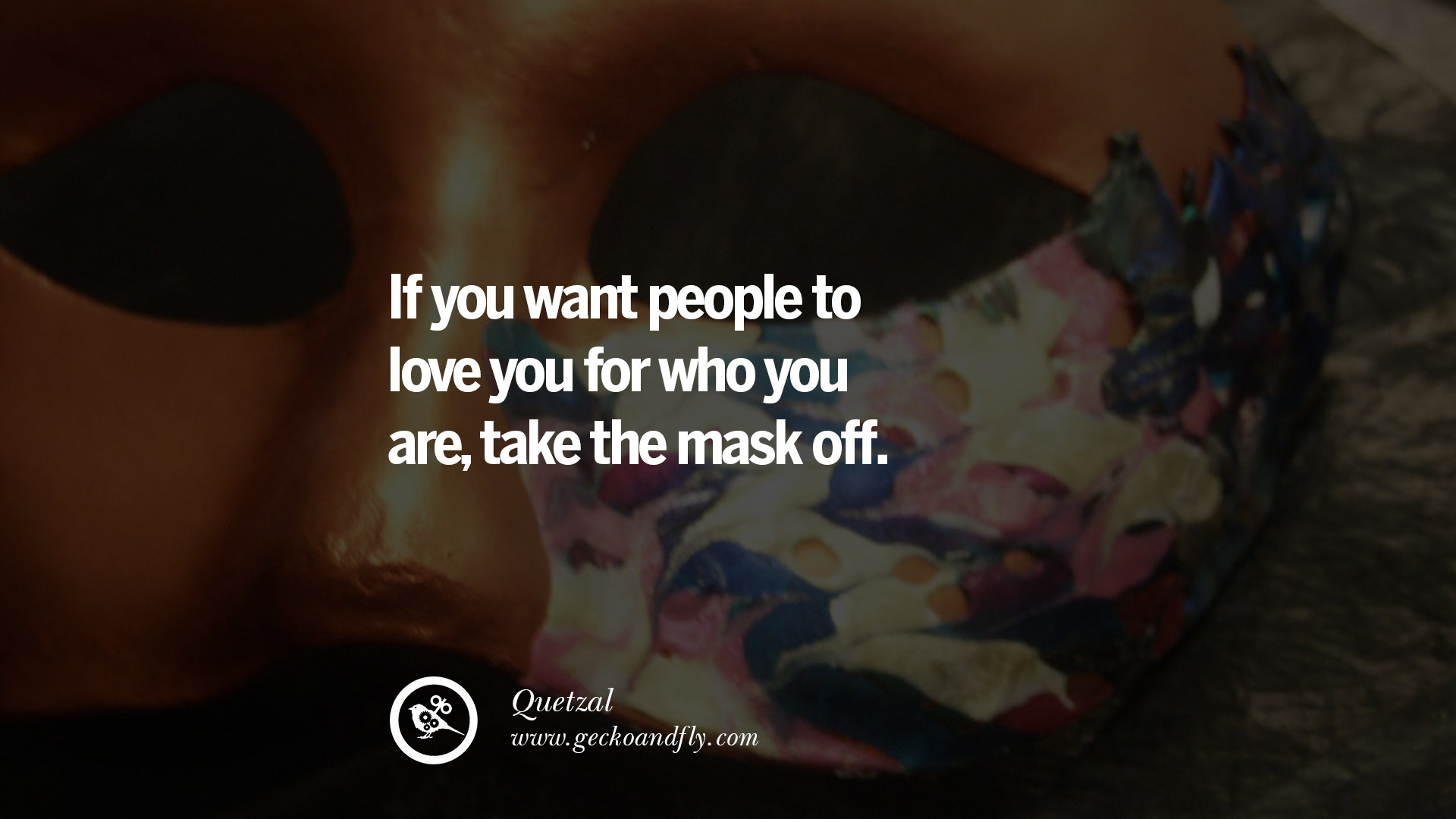
Masking is hiding our natural personality to deal with certain deep-rooted insecurities, fear, hurt, pain, sadness or sometimes social pressure/harassment.

You try to hide an emotion or insecurity behind a mask which completely contradicts your true feeling. Like, some examples, when you feel you are not loved, you try to hide behind the mask of being a bully. When you are in pain or hurt, you try to hide behind a mask of anger. In life scenarios too, if you are not happy with a job or in a relationship, you try sometimes to mask your true emotions and act as if everything is fine. But how long can you wear the mask and hide the true feeling? Is it right to live life with your trapped emotions?

3 interesting logical reasons for which you should never hide your emotions.

1.Potential: When you live with a mask, that means you have hidden a part of you. Maybe in that hidden part of your’s, you have a skill, talent or quality which would have helped you to utilise your full potential at work life or career. Just because of any fear or insecurity, you keep masking your true self, does not let you grow or progress as a full-fledged human being. So, in the process, you are unable to utilise your full potential, or you are wasting your potential in both personal and professional growth.

2.Calmness/comfort: Isn’t it discomforting to live with a fake personality? It is even worst to forged yourself to be someone else which you are not. To hide a part of your’s, you put up a mask, to hide another emotion, you put up a second mask and in the spurious process, you end up wearing many masks. After sometimes, you start forgetting your true self. All these are very exhausting which will affect both your mental and physical wellbeing in the long run. The day when you let out your emotion freely, you feel very calm, solace on that particular day. So, instead of masking yourself, when you start being true to yourself, not worry what other people think, you become much calmer and happy in life. The people who value you with your true self stick around you.

3.Healing: In any kind of healing, spiritual, mental or physical you need to surrender yourself completely. But when you hold back, masked your feeling, not only you are cheating yourself but also underutilizing your power of healing. In any kind of physical or mental healing to happen, you need a free, liberated mind. Scientific studies have shown, that healing, remission becomes quicker, when you free your mind with all sorts of trapped emotions.

Post: 5 interesting physical changes that happen in your brain during meditation.

I do practise everyday my daily routine meditation for around 20 to 30 mins. I do it every day as a part of my yoga routine. Being a medical professional, I always had the inquisitiveness to know behind the science for meditating.
Many types of research and studies have been going around behind the science and physiological changes that happen during meditation. Since there are too many studies and too much research floating around in various media, it is very confusing sometimes. By now, all of us know that meditation benefits us to be more focus, reduced stress, mindful, calmer and compassionate.

But I would like to highlight more on the actual physical changes that can happen to the brain on regularly meditating based on scientific studies. Meditation by any religious, traditional and yoga form mainly follow two methods of focusing.

Single focus method: In this method, you have to focus on a particular thing, maybe your breathing, or the area between your eyebrows (the pineal gland) or maybe the physical sensation around your body. When you wander, you bring your focus back to the particular thing that you are focusing on.

Open focus method: In this method, when you close your eyes, you don’t focus on a particular thing. You keep your focus open on the dark, wide-open space around you. Whatever thoughts, come your way, you are aware of them and let them go without focusing on them.

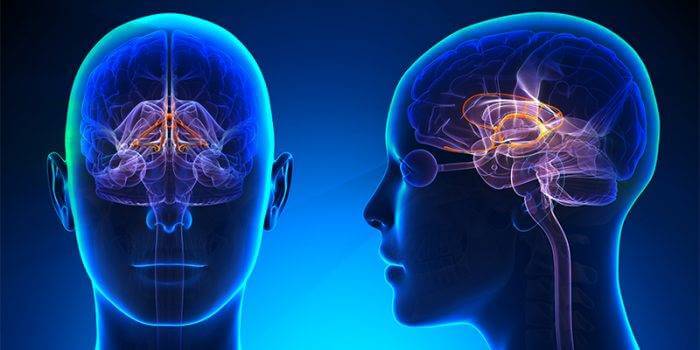
What happens to your brain when you do meditation daily for 20mins to an hour for 8 to 10 weeks? Physical changes have been reported in the limbic brain based on various researches.

Amygdala: This is a part of the limbic brain which is responsible for most of your emotional stimuli mainly fight or flight response. This area is responsible for stress, fear, anger, violence, pain and so on. Meditation causes to shrink the amygdala, making it smaller than it’s the usual size. Therefore, due to these physical changes, your response to these emotions of stress, fear, anger is reduced considerably and you become calmer.

Pons: This is a part of the brain stem which is mainly responsible for processing all sensory inputs, and vital activities like sleep, respiration, swallowing, facial expression. Meditation has helped to strengthen the pons, thereby improving all its vital functions.

Posterior cingulate: This part of the brain is responsible for “understanding self” and controlling the wandering thoughts. When you process any kind of information, this part of the brain is responsible for the relevance of self and the degree of subjectivity. Meditation helps to strengthen this part of the brain which in turn helps you to take a more wider approach to issues, and be more considerate towards self. It helps you to be non-judgemental and not take things personally. Precuneus is also part of the limbic cortex which helps in self-relevance. It is responsible for happiness state. Meditation helps strengthen this area too.

Left Hippocampus: This part of the brain is for long term memory and cognition. Meditation helps to increase the volume, the grey matter in this area. So your memory and cognitive abilities start improving.

Temporo Parietal Junction: This part of the brain is responsible to help you understand perspective to any issues. It is this part of the brain which is responsible to understand the other person’s view, be more empathetic and compassionate. Meditation helps to strengthen this area in the brain.

2 intrinsic rewards behind adapting to a healthy lifestyle.

“Happiness lies, first of all, in health.” George William Curtis

Whatever your goal is, maintaining a fit body, weight loss, maintaining your blood sugar, cholesterol or reducing stress, adopting changes in lifestyle is not hard. But maintaining them is a tough calling. Old habits are hard to quit.

Avoiding a piece of brownie, or an extra glass of wine during Christmas or thanksgiving is far less appealing than on a normal routine day. You have no time to think about that extra calories in those moments. Hitting the gym or jogging in the morning on a cold chilling winter doesn’t seem appealing at all even if it may affect your lifestyle changes goal.

Evidence-based researches have shown that people get motivated to adopt and maintain their lifestyle goals based on 2 types of reward system.

1.Hedonia; When lifestyle goal is associated with more superficial outcomes like you are looking good, losing weight, your wrinkles have reduced, your belly fat has reduced. These rewards are short-lived, gives you superficial pleasures and temporary satisfaction but lack a deeper meaning or a purpose. So, when you default your routine, may give you unhappiness as you will miss the superficial outcomes.

2.Eudaimonia: When your goal is attached to a more deeper meaning or a purpose, you tend to get motivated longer or even life long. In the process, lifestyle changes don’t become a forceful routine but instead, turn into spontaneous habits which gives you more lasting benefits. Emotions are mainly expressed due to the limbic brain. When we are deeply happy, contented, this feeling has a lasting memory in the structures amygdala and hippocampus. So, when you have a purpose, a satisfying meaning which gives happiness, attached to your lifestyle changes, you are always motivated to follow.

Some examples of different scenarios while attaching your lifestyle goal to a purpose :

A middle-aged woman has started to become physically active, taking her exercises regularly to build up more stamina to look after and play with her grandchildren.

A young loving husband who was obsessed with junk food and alcohol, have started to quit his habits and adapt to a healthy lifestyle for the sake of his wife and his newborn child.

A young man or a woman who had a past unhealthy way of eating, irregular routine start to adapt healthy eating and lifestyle for the sake of his/her career.

A doting grandfather starts taking care of his diet and maintains his routine physical activity so that his diabetes is better controlled and that he can be alive for a long time to spend his days with his growing grandchildren.

Attaching lifestyle goal with a purpose, not only help you in overall health-related aspects but have also other hidden rewards. You are more in charge of your life, you have self-acceptance and self-respect as an individual, believing yourself better, improved relationship with others and overall personal growth.

Thanks for reading.

Peace and love 🙏

Post:4 ways of dealing with emotional sensitivity. How do I learn to be thick-skinned?

“As a highly sensitive person, every little thing elicits a strong reaction in me.”

― Tracy M. Kusmierz,

When it comes to dealing with life challenges, being thick skinned, is said to be wise. But is it not right to express your authentic feeling? Expressing your true feeling makes you the most lively and compassionate human being. Being sensitive doesn’t make you a weak or broken individual. Many successful people who happen to be sensitive have been very successful like Steve Jobs or Albert Einstein.

Psychologically, a sensitive person can have any personality trait. He or she can be either extrovert, introvert or in between. Sensitivity doesn’t make you a disadvantaged individual. Being sensitive to some extent can help you both in personal and professional lives.

The most important quality of a sensitive individual is you can easily empathise another person. You are more compassionate in dealing with matters. You tend to listen and understand more to other people’s need.
But yes, overstimulated or hyper reactiveness can have some negative impacts. You are more anxious and tensed up easily. You can get easily hurt and focus on negative thinking. You can never let go of your stress and pressure. You tend to always compare yourself with other people’s life and success. You harbour a fear of rejection in whatever you do. You tend to take things personally.
Being hypersensitive can be even more harmful leading to looming sadness, depression and suicidal tendencies.

So, how do I deal with my sensitivity in my day to day life? 4 ways to tackle this trait of yours.

1.Firstly, self-accepting the fact that yes, being sensitive is quite ok. Self-acceptance would help you to use sensitivity as your strength rather than a weakness. Being empathetic would help you resolve matter easily in both personal and professional field.

2.Self-assessment is important. Writing down or keeping yourself tracked in whichever aspects you are more emotional and sensitive would be wise. Identifying the triggers of your sensitivity would be very helpful. Being aware is the key. This will let you overcome the anxiety and tension and will help you understand yourself better.

3.Take things slowly and calm down. When you are clouded with anxious thoughts, you are unable to think clearly. You tend to get more sensitive and ruminate. So, take things slowly, breath, relax. So, once mentally, you are stable and cleared out, you realise, things are not that serious as you thought of.

4.Let out your emotions. Hiding your true feeling or tuning it down doesn’t do any good to both your physical and mental health. When you feel the hurt, pain, anger, let out your emotions. This will help you feel much lighter. Letting out emotions help you to move forward, take decisions further.

Post:What does a meaningful life mean ? 4 interesting views:

Each one of us has a different meaning about life. Some may give a materialistic meaning while some may think spiritually. Life is a journey through two realities, birth and death. Every day, a family celebrate the birth of a newborn while another family mourns the death of a member. So what is this life mean to us from this journey from birth to death? Maybe each one of us has a purpose, or a goal or some may have none and live life as each day as it comes.

We are quite aware that, with the physical entity, we do hold a powerful mind and a beautiful soul. So, the meaning of life cannot be limited to materialistic things and success, it has to have a deeper meaning. Psychologically, many studies and research are carried out in this area. Keeping aside the scientific approach, how, generally individual like us view life as meaningful?

4 interesting point of views. : These are not based on great personalities’ s quotes or any research-based. They are just general views/opinion of the common individual like us which are not judgemental.

1.Loving yourself and loving the people around you, especially your loved ones who give you a sense of belonging and safety. You keep working for them, providing emotional and materialistic support. You do frame some goals and purpose based on this love and keep thriving for it. For some, this becomes a meaningful life, as it gives you much satisfaction.

2.Some may have a bigger purpose. Some may view life as more meaningful by helping others in whatever ways they can. They live life with an open arm, willing to help whoever comes their way and in whatever means they can. They do it, not because of any gain, but it gives them a sense of fulfilment, the meaning of being alive.

3.Some work towards a purpose, a goal to bring about a change in human race, environment, or whichever aspects of life that appeals to them. They keep working hard towards this goal to bring about the change and make this world a better place than the one that they found it to be. Because of this purpose, make their life more meaningful and inspiring.

4.Some derive meaning to life by staying at the moment. Instead of thinking too much about the future or ruminating the past, staying at the moment gives them real meaningful life. Challenges, problems do come daily, tackling them daily make their life more interesting and meaningful to them. Instead of focusing on life purpose, they find more meaning in life by overcoming challenges daily.

Post: What does it mean to understand “self “? 5 understandings

Knowing oneself is the most important skill that we need to survive in this world. So, how is this sense of self-defined? Psychologically, “self” is defined as knowing his/her strengths/weaknesses, likes/dislikes and whatever traits, qualities, fears, desires, the person possess.

This sense of self is something that we develop over the years as we grow up. Depending on the environment, culture, values, thinking pattern that we grow to contribute to this sense of self. Therefore, self-awareness has been an interesting topic nowadays.

Self-awareness is the most basic, innate consciousness of our very own existence in this world. In fact, being self-aware helps not only to understand oneself but to understand other people’s perception, thoughts at the moment.

5 understandings for this sense of self:

1.Strong sense of self: Understanding “self” is very important as an individual because we are always under influence of other people, family members, co-workers, in society, social media (current times) and end number of sources. Therefore, having a strong sense of self, in spite of various influences, gives you clarity about your goals, purpose in life. It helps you maintain your self-esteem and confidence through your journey.

2.Realisation: Having a strong sense of self gives you a clear understanding of your strengths and weaknesses, likes and dislikes. Therefore, you can choose your life path better, be it in career, following your interest, passion.

3.Believing yourself: Having a strong sense of self also contribute to your self-belief. Believing yourself is important while performing any task. Even if you face failure number of times, believing in yourself will surely sail you to success. Your self-belief helps you overcome the criticism and discouragement, you face from others. Because, in this world, all kinds of people exist, some would always criticise you, in spite of your success or failure while a few do encourage and uplift you.

4.Boundaries: Knowing self is very important in today’s time. When and what to say “no” is an important aspect of being strong to your sense of “self”. Today’s time is full of distractions, demands, obligations, requests, persuasions, peer pressures which can even mislead or cause self-destruction. So having a strong sense of self, knowing your boundaries is not just very important but help you remain stick to your goals and ambitions in life.

5.Time for yourself: Appreciation your own sense of self, giving time yourself, not only help you to understand yourself better but also help you grow as an individual. Therefore spending some time alone is not only healthy but useful to acknowledge and respect yourself as an identity.

Post: Don’t we lose patience sometimes ? But yes, patience is important. 5 realisations.

In my life, I have realized whenever I have disappointed myself, it’s not for any reason but only because of my lack of patience. I have realised it a number of times that I end up making wrong decisions only due to my hasty approach. I did suffer a lot in the past in a number of aspects of my life. Slowly I have started realising my drawback. Since then I am working on my own patience skill.🤞

Wherever we go, whatever task we do, or whichever relationship we are into, need time and patience to come to an outcome. Starting from our daily routine, getting stuck in the traffic jam, waiting in a queue, performing a task, a baby crying, boss yelling, quarrel with a loved one, all of them require our patience skill👏😥

Therefore, patience is very important in life. 5 realisations:

1.Compassion: Patience helps you become compassionate towards others. If you want peace, hassle-free life, you need to be empathetic towards others. Instead of reacting, or getting irritated towards the other person, with patience, you can understand him/her and settle down in peace. Instead of reacting towards a cranky baby, you can remain sober, compassionate. Patience helps you become more tolerant and accepting 🙂

2.Relationship: In any kind of relationship, we react very fast. With patience, instead of reacting, being defensive, if you understand the person’s perspective, remember his/her positive qualities, take enough time to respond. Things turn out differently. A relationship grows more mature.🙂 .Impatience can damage a relationship based on hasty decisions.

3.Talent becomes a success: In life, if you have a talent, skill, you need to nurture it slowly and steadily with patience. Great things take time. In spite of ups and downs, patience will help you sail through. With perseverence and patience, giving enough time and effort, you can develop into a success story. 🙌

4.Healthy: In life, with full of stress, anxiety, patience helps you to be non-judgemental, understand a situation better and give clearer thoughts. Therefore, taking the right decisions, responding calmly in any circumstances gives no frustration, anger, stress and help lead a healthy peaceful life. 👍

5.Good attitude: Keeping patients doesn’t only mean waiting for a long time, or waiting for the right moment but instead waiting with the right kind of attitude🤘🏻. In life, certain situations are challenging, persisting, struggling through a long haul. Patience helps you build a positive approach, an optimistic attitude through the struggle to achieve the goals or whatever you desired.✌️

Post: Comfort zone is comforting but limiting. 5 simple ways to get out.

To do something new, creative, different, the dynamic is scary, fearful and risk bearing. Not many of us like it. In our daily grind, we have responsibilities, financial liabilities and goals to meet. Who likes to risk the liabilities and do something different and add to more stress in the daily routine?
This happens not only at work, but also doing something creative, or following a passion.

Being in a comfort zone makes you complacent, close-minded and vulnerable to change. You live life just because you are alive.
But life isn’t about just being alive, you are here to celebrate, enjoy and feel happy for your existence in this life journey. At the end of the day, we all agree life is too short. Each one of us is responsible for the kind of life we lead.

So the phrase typically comes ” step outside your comfort zone “
Whether you become successful or failure isn’t important. It’s the satisfaction, enjoyment, confidence and the self-growth you gained through the process that gives you so much joy and happiness that truly matters. So let’s do it

1 Start taking a task or project which you thought you cannot make it. Start working on it.
2 Start doing something creative. Take a music, art, photography, dance class which you would love to do but embarrass to try out.
3 Bring changes in your routine exercise regime. Try something different which you think you cannot do.
4 Choose a fear ( stage fear, giving speech, height) something you have, confronts it.
5 Reach out to someone whom you wanted too but hesitated or join a like-minded group of your interest.